Nitish Kumar Arrives in Delhi for Rajya Sabha Oath, Signals National Political Shift
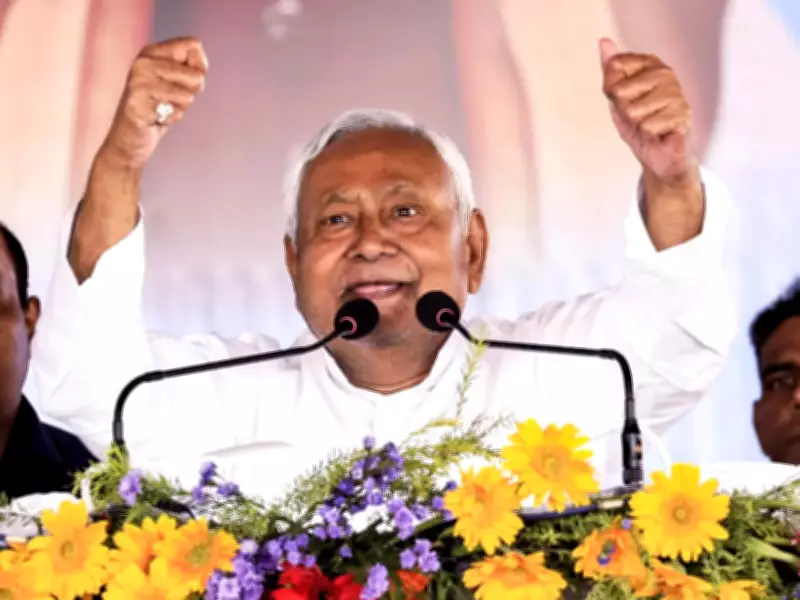
In a significant political development, Bihar Chief Minister Nitish Kumar arrived in Delhi on Thursday, formally initiating his transition from state-level leadership to a prominent role on the national stage. He is scheduled to take the oath as a Rajya Sabha member on Friday afternoon, a move that fulfills his long-standing personal ambition of serving in all four legislative bodies of India.
Historic Oath and National Ambitions
An official confirmed that Nitish Kumar will be administered the oath in the chamber of Rajya Sabha Chairman C P Radhakrishnan. This milestone marks his entry into the upper house, adding to his extensive political career that includes tenures in the Bihar Legislative Assembly, Bihar Legislative Council, and Lok Sabha.
Upon reaching his Delhi residence, Nitish Kumar engaged in a brief media interaction, a rare public appearance after an extended period. He stated, "Tomorrow I will take the oath as a member of the Rajya Sabha, and now I will stay here. I have worked in Delhi for a long time, and I will work here again." This declaration underscores his intent to remain politically active in the national capital, signaling a strategic shift in his focus.

Bihar Connections and Succession Plans
Despite his move to Delhi, Nitish Kumar hinted at maintaining strong connections with Bihar, suggesting he will frequently travel between the two cities. When questioned about his successor in Bihar, he avoided naming anyone directly, instead remarking, "New people will be given the responsibility." Pressed further on his preferred candidate, he smiled and added, "I have done a lot of work in Bihar for 20 years, and the work will continue going forward."
He did not address queries regarding his son, Nishant Kumar, who joined the Janata Dal (United) on March 8. However, political circles are abuzz with speculation about Nishant potentially assuming a formal role in the party or the upcoming Bihar government.
Timeline for Bihar Government Formation
JD(U) national working president Sanjay Kumar Jha, who accompanied Nitish Kumar to Delhi, revealed that the process of forming a new government in Bihar will commence after April 13. He indicated that Nitish Kumar is likely to resign as chief minister following the conclusion of Kharmas, a period considered inauspicious in the Hindu calendar.
Astrologers note that Kharmas ends on April 14 at 11:25 AM, when the Sun enters Aries, after which auspicious ceremonies can resume. With Nitish Kumar's nearly two-decade tenure in Bihar winding down, the National Democratic Alliance (NDA) is expected to select a new chief minister on April 14.
NDA Meeting and Government Transition
Sources within the NDA suggest that Nitish Kumar may convene a meeting of the NDA legislature party upon his return from Delhi to formally announce his decision to step down. This meeting is anticipated to occur on the afternoon of April 14, shortly after Kharmas concludes. During this gathering, top NDA leaders are likely to unveil the name of the new chief minister, with the new BJP-led government potentially taking oath any day after April 14.
Senior JD(U) leader and Bihar Parliamentary Affairs Minister Vijay Kumar Choudhary, present in Delhi for the swearing-in, affirmed, "Bihar will have a new NDA government soon. The new government will certainly follow the Nitish Kumar-created 'Nitish model.'" He emphasized that the entire NDA, including BJP leaders and other constituent parties, is committed to advancing the developmental work initiated by Nitish Kumar over the past two decades.
Political Implications and Future Outlook
While JD(U) leaders assert that the next BJP-led government will uphold the "Nitish model," BJP workers are enthusiastic about the prospect of securing their own chief minister in Bihar. This state remains the only Hindi heartland region where the BJP has not held the top post despite being part of the ruling coalition for nearly twenty years.

Even after transitioning to the Rajya Sabha, Nitish Kumar is expected to retain significant influence over Bihar politics, potentially serving as a mentor to the incoming government. His move marks a pivotal moment in Indian politics, blending state legacy with national aspirations.