

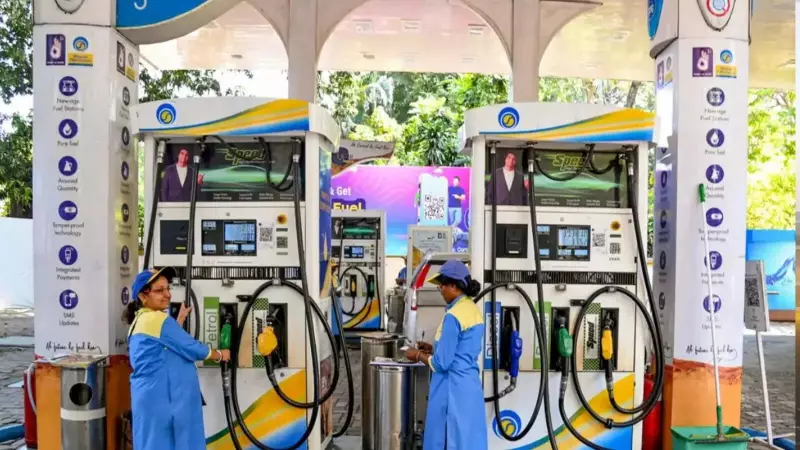
The Odisha government has announced a second extension for its strict enforcement drive targeting vehicles without valid Pollution Under Control Certificates (PUCC). State Transport Minister Bibhuti Bhusan Jena declared on Wednesday that the much-discussed "No PUCC, No Petrol" policy will now be implemented rigorously starting April 1.
Revised Timeline and Government's Stance
Originally slated to begin on January 1, the crackdown was first postponed to February 1. This latest deferral provides vehicle owners with an additional window, pushing the final deadline to March 31. Minister Jena emphasized that the extension is intended to give the public ample time to comply with the regulation. "We are giving people more time to obtain PUCC. Enforcement will begin from April 1," Jena stated.
The government is actively developing a detailed Standard Operating Procedure (SOP) for petrol pumps to follow when enforcing the rule. To simplify the process of identifying compliant vehicles, authorities are finalizing a green sticker system. These stickers, which will signify a vehicle has a valid PUCC, are likely to be distributed through the network of Regional Transport Offices (RTOs) across the state.

Challenges and Preparations
The announcement has already triggered significant activity at emission testing centres, which were typically quiet before the government's initial declaration on December 20. Following the news, these centres saw massive queues of worried vehicle owners, leading to hours-long waits and exposing a system unprepared for the sudden surge in demand.
To tackle this shortage of testing facilities, the government has promised to issue instant licences for new emission testing centres. In a parallel crackdown on malpractice, Minister Jena revealed that 42 fake emission testing centres have been shut down already.
However, fuel station operators have expressed serious practical concerns about implementing the rule. One operator highlighted the potential for inconvenience and conflict, stating, "Checking every PUCC will slow down service for consumers. We also lack the tools to verify if a certificate is authentic, which could lead to chaos and law and order issues at the pumps."
Legal Mandate and Penalties
The push for PUCC compliance is grounded in Section 190(2) of the Motor Vehicles Act, 1988, which mandates that all vehicles on public roads must meet prescribed emission standards. The frequency of testing varies by vehicle type:
- For BS-IV and BS-VI compliant vehicles, a PUCC is required annually.
- For vehicles with standards below BS-IV, the certificate is mandatory.
The penalties for non-compliance are substantial. Violators face a fine of Rs 10,000 for the first offence. Repeat offenders can be fined up to Rs 20,000, face imprisonment for up to 3 months, and have their driving licence suspended for the same period.
With the new deadline of March 31, vehicle owners in Bhubaneswar and across Odisha are urged to get their pollution certificates in order to avoid penalties and ensure uninterrupted access to fuel from April onward.






