Opposition Slams Nitish Kumar's Rajya Sabha Move as 'G2-Orchestrated Regime Change'
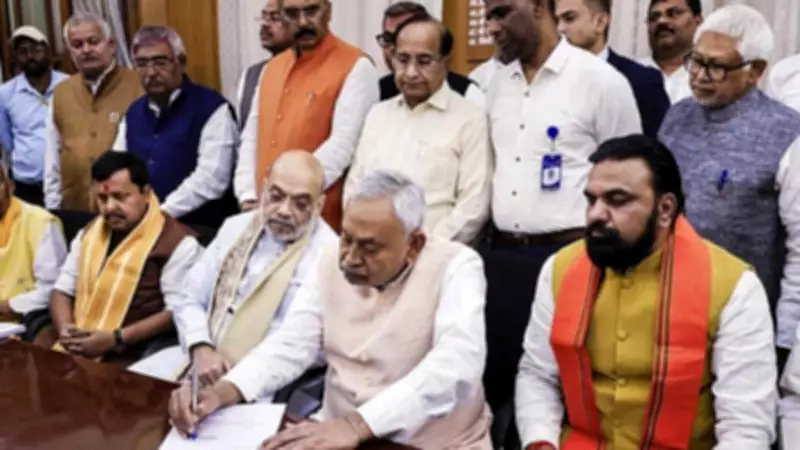
The political landscape in Bihar has been thrown into turmoil following the nomination of Chief Minister Nitish Kumar to the Rajya Sabha, with the Opposition launching a fierce attack on what they describe as a "regime change orchestrated by the G2." Critics argue that this strategic move is a blatant betrayal of the public mandate, designed to sideline Kumar from active state politics.
'Planned Design' to Sideline Nitish Kumar, Claims JD(U) MLA
Adding fuel to the fire, Saryu Roy, the lone JD(U) MLA from Jharkhand, has come forward with explosive allegations. Roy asserted that Nitish Kumar's transition to the Rajya Sabha was not a voluntary decision but rather a "planned design" meticulously crafted to marginalize him. This accusation suggests a deeper conspiracy within the political framework, implicating powerful external forces.
The timing of this development, coming just ahead of crucial state elections, has raised eyebrows across the political spectrum. Analysts point out that moving a sitting Chief Minister to the upper house of Parliament is an unusual step, often interpreted as a method to reduce their influence in regional governance. The Opposition has seized upon this, framing it as an undemocratic maneuver that undermines the will of Bihar's voters.
Betrayal of Mandate and Public Trust
Central to the Opposition's critique is the claim that this move represents a profound betrayal of the electoral mandate. Nitish Kumar, a veteran leader with a long tenure in Bihar politics, was elected by the people to lead the state government. His shift to the Rajya Sabha, critics argue, effectively removes him from the direct administrative responsibilities he was entrusted with, thereby disrespecting the democratic process.
This incident has sparked widespread debate about the role of national political alliances, referred to as the G2, in shaping state-level leadership. The term "G2" is being used by the Opposition to denote a coalition of influential political entities allegedly pulling strings behind the scenes to engineer this change. Such allegations highlight growing tensions between regional autonomy and central political strategies.
Implications for Bihar's Political Future
The fallout from this controversy is expected to have significant repercussions for Bihar's political stability. Key implications include:
- Erosion of Public Confidence: The perception of backroom deals and external interference could weaken trust in the political system among Bihar's citizens.
- Internal Party Strife: Within the JD(U), voices like Saryu Roy's indicate potential divisions and discontent over leadership decisions.
- Electoral Consequences: As state elections loom, this issue may become a focal point for opposition campaigns, influencing voter sentiment and alliance dynamics.
- National-Recional Dynamics: The episode underscores the complex interplay between national political forces and regional governance, raising questions about autonomy and control.
In response to the uproar, supporters of Nitish Kumar have defended the move as a strategic step to strengthen Bihar's representation at the national level. They argue that his experience and stature will benefit the state in Parliament, facilitating better resource allocation and policy advocacy. However, this defense has done little to quell the Opposition's outcry, which continues to frame the situation as a democratic deficit.
The controversy has also drawn attention to the broader trends in Indian politics, where similar maneuvers have been observed in other states. Observers note that the use of Rajya Sabha nominations as a tool for political management is not unprecedented, but the scale and implications in Bihar's case are particularly pronounced due to Kumar's prominent role.
As the debate rages on, all eyes are on the upcoming developments in Bihar. The Opposition has vowed to keep the issue alive, promising to mobilize public opinion against what they term a "constitutional coup." Meanwhile, the ruling dispensation faces the challenge of managing internal dissent and justifying its decisions to a skeptical electorate. The outcome of this political drama will likely shape Bihar's trajectory for years to come, making it a critical chapter in the state's ongoing narrative of power and governance.