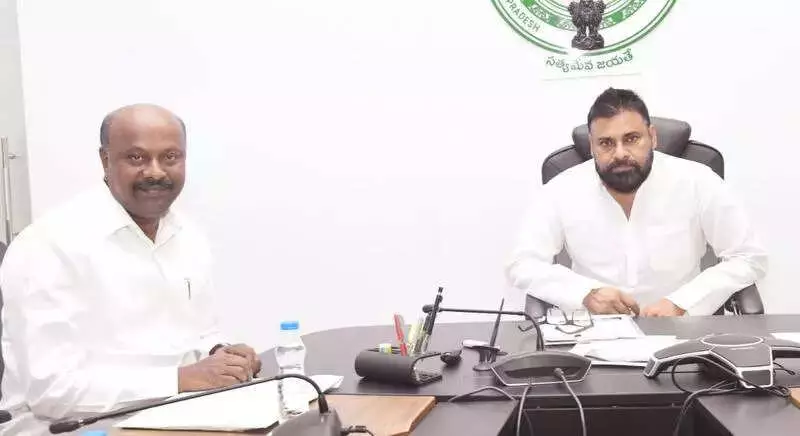
In a significant move to bolster governance and accountability, Jana Sena Party (JSP) president and Andhra Pradesh Deputy Chief Minister Pawan Kalyan has launched a comprehensive internal review of his party's 21 legislators. The exercise involves detailed one-to-one meetings to evaluate their performance at the constituency level, focusing on development works, welfare scheme implementation, and public service delivery.
Assessing Governance and Bridging Gaps
The primary objective of this review is to closely monitor the progress of ongoing projects and identify any existing gaps in delivering services to the public. During the interactions, Pawan Kalyan took stock of the various development and welfare initiatives rolled out over the past one and a half years. He specifically sought detailed updates on pending works and the future plans of each MLA for their respective constituencies.
Kalyan instructed the legislators to formulate tailored, constituency-specific strategies aimed at strengthening the local economy and creating more employment opportunities for the youth. He emphasized that development planning must address both immediate needs and future requirements. A key directive was for MLAs to remain easily accessible to the people and prioritize resolving petitions related to civic and local issues.

MLAs Present Local Demands and Challenges
According to party sources, Pawan Kalyan has so far held face-to-face meetings with nine MLAs. The discussions also covered topics like filling nominated posts, preparations for upcoming local body elections, and balancing party programmes with governance duties. He urged the MLAs to regularly engage with the party cadre, including Jana Sena activists and women representatives, and to maintain strong coordination within the ruling alliance. For organisational matters in the Machilipatnam parliamentary constituency, the Pithapuram model was suggested as a reference.
The meetings provided a platform for MLAs to raise pressing demands specific to their regions:
- Palakonda MLA Nimmaka Jayakrishna sought approvals for crucial irrigation projects, road expansion, a new bus stand, sports infrastructure, and upgrading a hospital to a medical college.
- Nellimarla MLA Lokam Naga Madhavi submitted proposals for major irrigation, industrial projects, and a fishing harbour, and requested Jal Jeevan Mission funds for drinking water.
- Pendurthi MLA Panchakarla Ramesh Babu raised issues concerning Simhachalam Devasthanam villages, pollution from pharmaceutical units, and tourism development.
- Elamanchili MLA Sundarapu Vijay Kumar highlighted the alarming rise in kidney ailments and pushed for drinking water projects and road completion.
Addressing Diverse Regional Issues
Other MLAs brought forth a spectrum of local challenges. Kakinada Rural MLA Pantham Nanaji pointed out fund constraints due to delayed local body elections. P Gannavaram MLA Giddi Satyanarayana called for flood protection works along the Godavari river. Rajole MLA Deva Varaprasad expressed concerns over coastal erosion and the need for tourism development.
Furthermore, Visakhapatnam South MLA Vamsi Krishna Srinivas requested the removal of land restrictions and the redevelopment of the Poorna market. Avanigadda MLA Mandali Buddha Prasad focused on issues faced by farmers and related irrigation problems.
This rigorous review process underscores the JSP leadership's focus on ensuring effective grassroots governance and timely project implementation. It aims to translate electoral promises into tangible outcomes for the people of Andhra Pradesh while strengthening the party's organisational framework ahead of future electoral challenges.