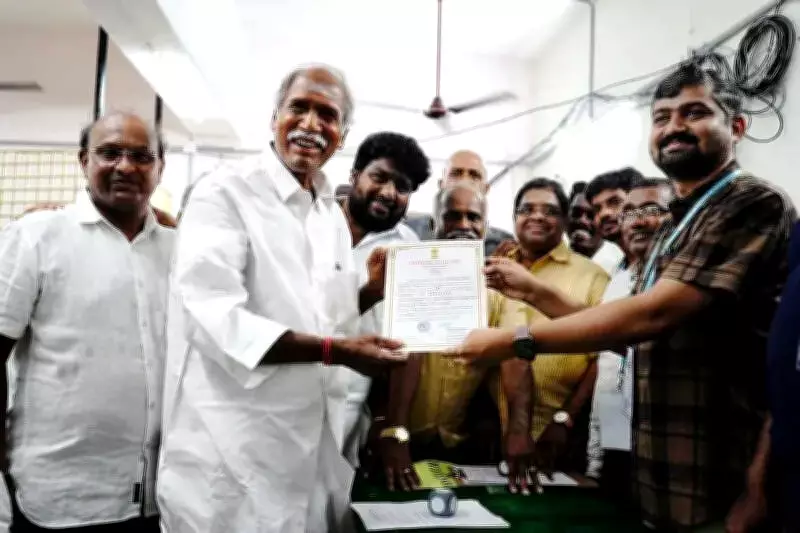
Puducherry: A fragmented opposition, the charisma of All India NR Congress (AINRC) founder and Chief Minister N. Rangasamy, and his government's welfare schemes ensured that the National Democratic Alliance (NDA) retained power in the Union Territory of Puducherry. The opposition parties, including the Congress and the DMK, failed to present a united front against the stronger AINRC-BJP-AIADMK-LJK combine.
Opposition's Disarray
The Congress fielded candidates in five constituencies that were allocated to its alliance partner, the DMK, leading to confusion among party functionaries, cadres, and voters. This internal friction decimated the INDIA bloc's chances in the polls.
Rangasamy's Dominance
Rangasamy, who contested and won from two seats, is set to become Chief Minister for a record fifth time. Apart from his maiden election in 1990, he has won all eight assembly elections he has contested since 1991.

Seat Distribution
The NDA won 18 seats (AINRC-12, BJP-4, AIADMK-1, LJK-1), crossing the simple majority mark of 16 in the 30-member House. The INDIA bloc managed only six seats (DMK-5, Congress-1). Several seats witnessed neck-and-neck battles, and independent candidates won three seats.
Reasons for Victory
Political commentator K. Murugan attributed the victory to Rangasamy's 'Makkal Mudalvar' (people's chief minister) appeal. "He is easily accessible and has an image of a down-to-earth person with a strong connect with the people. His victory in Thattanchavady with an increased margin of 4,441 votes underscores his popularity," Murugan said.
Political pundits also credited the government's welfare schemes and freebies. "The government's focus on populist schemes, including a monthly assistance of Rs 2,500 to women heads of households, free grain distribution, and a 100% increase in fixed deposit amounts under the Chief Minister's Girl Child Protection Scheme, resonated with voters," said political observer S. Balasubramanian.
INDIA Bloc's Failures
The INDIA bloc suffered from internal friction and a lack of issues to counter Rangasamy. Critics noted that the alliance failed to capitalise on anti-incumbency, largely due to a "disoriented" campaign and last-minute confusion over seat-sharing.
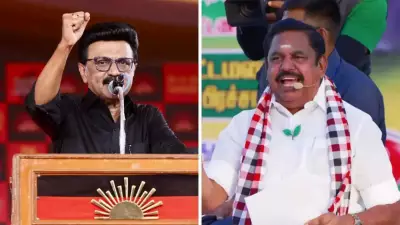
"The delay in seat-sharing and confusion over the choice of constituencies between Congress and DMK further dented the opposition's chances. The cold war between Congress and DMK leaders, including Leader of Opposition in Lok Sabha Rahul Gandhi and DMK President M.K. Stalin, cost the parties heavily, both in Puducherry and Tamil Nadu," said P. Umapathy, a Congress cadre.
TVK's Emergence
The emergence of Vijay's TVK in the Union Territory has introduced new dynamics. TVK secured significant vote shares in most constituencies, acting as a disruptor for the two major alliances.
Future Challenges
As Rangasamy prepares for another term, the focus will shift to cabinet formation and managing the demands of alliance partners, particularly the BJP and smaller constituents like LJK, who are vying for ministerial berths.
The BJP is expected to be demanding. "There is no doubt that NR (Rangasamy) will be Chief Minister, but we will insist on the creation of a Deputy Chief Minister post for BJP. That was our demand in 2021, but it was not fulfilled. We hope NR concedes to our demand," said a BJP functionary on condition of anonymity.