Punjab Chief Minister Takes Stand Against Gram Nyayalayas
In a significant development from Chandigarh, Punjab Chief Minister Bhagwant Mann has drawn a firm line against the Central government's initiative to establish gram nyayalayas, commonly known as rural courts. On Wednesday, Mann clearly indicated that his administration is prepared to block the implementation of this concept within Punjab's borders, labeling it as impractical and contrary to the interests of the legal community.
Committee Formation and Central Engagement
Addressing the concerns head-on, Chief Minister Mann announced the formation of a specialized committee comprising legal luminaries to conduct a thorough examination of the gram nyayalaya issue. He emphasized that this committee will explore all aspects in detail, and he personally intends to raise the matter with the Central government at appropriate platforms. "The state government is firmly committed to securing the interests of the legal fraternity, and no stone will be left unturned for this noble cause," Mann declared, framing the issue as one of institutional integrity and public trust.
Practical Concerns and Legal Community Backlash
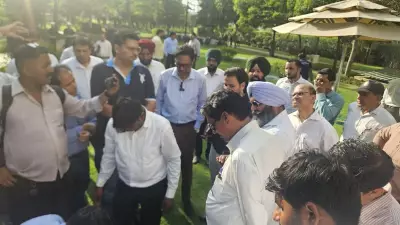
During an interaction with representatives from 65 bar associations at the municipal bhawan, Mann elaborated on the practical challenges. He pointed out that the entire state of Punjab already has access to courts within a 20-kilometre radius, making the introduction of additional rural courts redundant and unnecessary. "Due to this existing accessibility, the concept is not practically applicable in Punjab," he stated, highlighting that lawyers across the state are already expressing strong opposition to the Centre's move, citing significant inconvenience.

Mann further explained, "As per the wishes of the legal fraternity, the state government will explore all ways and means to discontinue this concept in Punjab." This stance is supported by lawyers who argue that the Centre issued notifications to establish these courts without adequate consultation with the legal community or consideration of the impact on the existing judicial hierarchy.
Infrastructure and Implementation Issues
Bar associations have raised additional concerns, claiming that gram nyayalayas are being introduced without proper infrastructure, which they believe could lead to a "mockery of the legal system". This criticism comes despite the Centre's continued push for implementation through financial incentives. Recently, the Gram Nyayalaya Scheme was extended with a dedicated outlay of Rs 50 crore, aiming to promote rural justice access.
Broader National Context and State Resistance
The resistance from Punjab is part of a larger national trend where states have shown lukewarm or outright opposition to gram nyayalayas. For instance:
- Jharkhand and Bihar have expressed concerns that these courts might conflict with traditional tribal laws, potentially undermining local legal customs.
- Other states argue that their current taluka-level courts are sufficient to handle judicial matters, questioning the need for an additional layer of rural courts.
This widespread hesitation has resulted in a significant implementation gap. Nationally, only a few hundred gram nyayalayas are operational, falling far short of the required thousands needed to meet the envisioned coverage. The Centre's efforts, including financial backing, have thus faced substantial hurdles from state governments prioritizing existing judicial structures and legal community interests.
Chief Minister Mann's proactive stance underscores a commitment to upholding the rule of law and ethical standards in the judiciary, ensuring that any changes align with practical realities and the welfare of legal professionals in Punjab.