Punjab Governor Presents Comprehensive Account of State Government's Initiatives
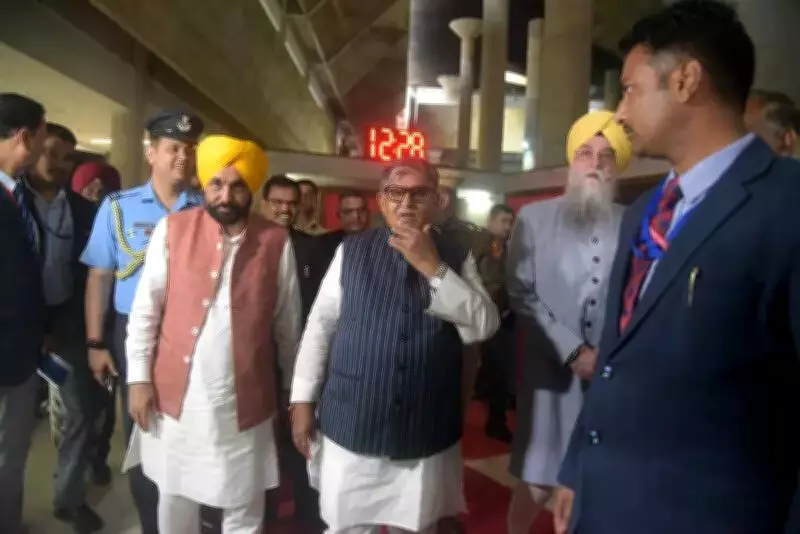
In a significant address marking the commencement of the Punjab assembly's budget session on Friday, Governor Gulab Chand Kataria delivered a detailed 51-page presentation outlining the state government's multifaceted achievements and ongoing initiatives. The governor's comprehensive account focused on four key pillars: the expansion of the public healthcare network, substantial education reforms, development of public infrastructure, and the rigorous implementation of an anti-drug strategy.
Comprehensive Anti-Drug Campaign Shows Significant Results
The governor highlighted the state's determined 'Yudh Nashean Virudh' anti-drug campaign, which has adopted a dual approach focusing on both strict enforcement and compassionate rehabilitation. This initiative has established an extensive network of 548 opioid-assisted treatment (OOAT) clinics across Punjab, complemented by 36 government-operated and 177 private de-addiction centers. Remarkably, de-addiction services have been extended to 19 jails within the state, ensuring comprehensive coverage.
Since the implementation of these interventions, the program has achieved substantial reach, with more than 10.63 lakh patients registered and provided with necessary treatment. This represents a significant commitment to addressing substance abuse challenges through both medical intervention and social support mechanisms.
Healthcare System Transformation and Universal Coverage
Governor Kataria emphasized the state's commitment to building a robust, inclusive, and people-centric healthcare system. The infrastructure now comprises 23 district hospitals, 42 sub-divisional hospitals, 162 community health centers, 523 primary health centers, 881 Aam Aadmi clinics, and an impressive 2,453 health and wellness centers.
The 881 Aam Aadmi clinics have emerged as a cornerstone of this healthcare transformation, providing 107 essential medicines and 47 diagnostic tests completely free of cost. These clinics have already recorded over 4.7 crore outpatient department visits, including 1.5 crore unique patients. The introduction of pregnancy care services at these clinics has contributed to a notable decline in the maternal mortality ratio from 105 to 90.
Furthermore, the governor referenced the recently launched universal health coverage ensured under the 'Mukhya Mantri Sehat Yojana,' which provides cashless health cover of up to Rs 10 lakh per family per year for 2,356 medical procedures, significantly enhancing healthcare accessibility for Punjab's residents.
Education Reforms and Infrastructure Development
Under the 'Punjab Sikhya Kranti' initiative, the state government has recruited a total of 13,765 teachers since April 2022, addressing staffing needs across educational institutions. The government has invested significantly in professional development, sending seven batches of 234 principals and education officers for a five-day leadership development program to Singapore.
Additionally, four batches of 199 headmasters were sent to the prestigious Indian Institute of Management Ahmedabad, while two batches of 144 primary cadre teachers received training in Turku, Finland. These international exposure programs aim to enhance educational leadership and teaching methodologies.
Punjab has emerged as a top-performing state in the PARAKH Rashtriya Sarvekshan 2024, reflecting the positive impact of these educational reforms. The government has allocated approximately Rs 160 crore specifically for safety and cleanliness initiatives in schools, with 118 government schools currently being transformed into state-of-the-art Schools of Eminence.
Anti-Corruption Measures and Future Vision
Governor Kataria stated that the Aam Aadmi Party government has adopted a zero-tolerance policy towards corruption. From January 1, 2025, to January 31, 2026, the vigilance bureau registered 135 trap cases against 20 gazetted officers, 134 non-gazetted officials, and 44 private individuals who were caught red-handed while accepting illegal gratification.
In his concluding remarks, the governor expressed optimism about collective progress, stating, "I am sanguine that we all will walk together step-by-step to re-establish 'Rangla Punjab.'" This vision reflects the government's commitment to comprehensive development across multiple sectors, aiming to restore Punjab's vibrant legacy through systematic reforms and inclusive growth initiatives.