

Punjab Escalates Demand for Rs 1.44 Lakh Crore from Rajasthan Over Unpaid Water Dues
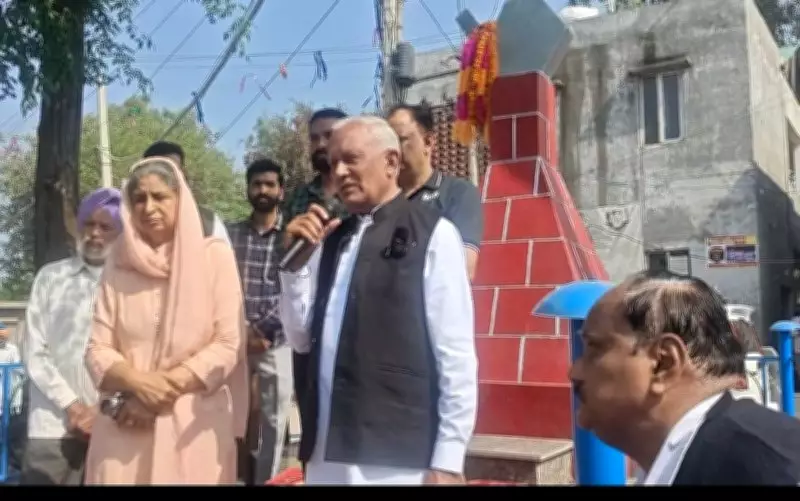
In a significant development, Punjab Water Resources Minister Barinder Kumar Goyal has reiterated the state government's firm stance to recover a staggering Rs 1.44 lakh crore from the Rajasthan government for unpaid water usage spanning decades. The demand was emphasized during a media address in Lehragaga, where Goyal stated that Rajasthan must either release these legitimate dues or immediately stop using Punjab's water resources.
Historical Context and Unpaid Bills
According to Minister Goyal, Rajasthan has owed Punjab Rs 1.44 lakh crore since 1960 for water drawn through the Ferozepur Feeder canal, with no payments made over this period. This financial obligation stems from an agreement in the 1920s between the Bikaner princely state, undivided Punjab, and the British government, which mandated payments on a per-acre basis for water usage. Payments continued until 1960, but after the implementation of the Indus Waters Treaty, Rajasthan continued to draw approximately 18,000 cusecs of water without fulfilling its financial commitments.
Flood Control and Infrastructure Investments
Amid this dispute, Punjab has been actively enhancing its water management infrastructure. The state government recently strengthened the Ghaggar River embankments at a cost of Rs 4 crore, which proved effective during the 2025 floods. Despite the river remaining above the danger mark for 10 consecutive days, communities were largely protected from its impact. Additionally, Goyal laid the foundation stone for a Rs 6.46 crore project at Makrour Sahib to further raise and reinforce these embankments, showcasing ongoing efforts in disaster preparedness.

Revolutionary Advances in Punjab's Irrigation System
Highlighting transformative changes, Minister Goyal reported that canal irrigation coverage in Punjab has surged from 26.50 percent in 2022 to 78 percent currently, with expectations to reach 86 percent before the upcoming paddy transplantation season. Key achievements include:
- 1,446 villages receiving canal water for the first time since Independence.
- An investment of Rs 6,700 crore from April 2022 onwards for canal lining, repair, modernization, and infrastructure strengthening—the highest in Punjab's history.
- Irrigation capacity expanded to approximately 75.90 lakh acres with canal water, up from only 20.89 lakh acres as of March 2022.
- Expenditure of Rs 2,000 crore on constructing and repairing nearly 13,000 km of canals, now irrigating 58 lakh acres.
Furthermore, restoration efforts have revived 7,000 watercourses, cleaned 15,539 canals, and rejuvenated 18,349 water channels. Notably, 101 abandoned canals spanning 545 km have been brought back to life, many of which had been non-functional for 30 to 40 years due to silt accumulation.
Environmental and Economic Impacts
The revival of seasonal streams alone has brought 2.75 lakh acres under canal irrigation, while restoration of old canal systems has ensured an additional 10,000 cusecs of water reaching agricultural fields. Minister Goyal likened this achievement to creating a "new Bhakra canal" without land acquisition, as it matches the flow capacity of the Bhakra Main Line. On the environmental front, Rs 477 crore from the State Disaster Response Fund has been allocated to 195 projects focused on flood control and water management, with 199 desilting sites identified and new chain-mounted machines deployed for drain cleaning.
Completion of Shahpur Kandi Dam Project
In a landmark move, the Shahpur Kandi Dam project, pending for over 25 years, has been completed at a cost of Rs 3,394.49 crore. This development is expected to enhance the efficiency of the Ranjit Sagar Dam and help prevent Punjab's water from flowing into Pakistan, addressing long-standing resource management challenges.
As Punjab continues to advance its irrigation and flood control capabilities, the unresolved water dues issue with Rajasthan remains a critical point of contention, with Minister Goyal's ultimatum underscoring the state's determination to secure its rightful financial claims.






