

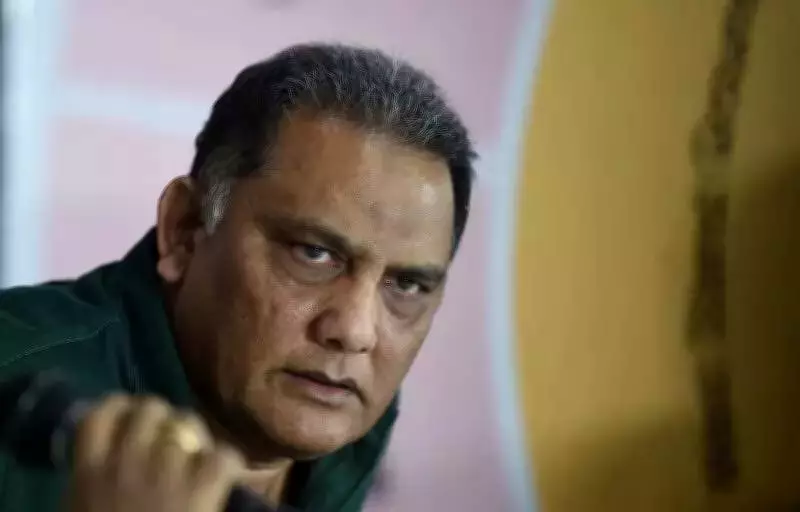
Revanth Reddy's MLC Announcement for Azharuddin Ignites Political Strategy Discussions
In a significant political development, Chief Minister A Revanth Reddy's declaration at a public meeting in Nizamabad on Friday regarding the appointment of Mohd Azharuddin as a Member of the Legislative Council (MLC) has sparked intense debate over the available constitutional pathways to facilitate this move. The announcement has put the spotlight on the intricate political maneuvers required to secure Azharuddin's position in the Upper House of the Telangana state legislature.
Constitutional Deadline and Legal Hurdles
Mohd Azharuddin, who was sworn in as a minister on October 31, 2025, faces a critical constitutional deadline. He must become either an MLC or an MLA before April 30 to retain his ministerial portfolio. This urgency is compounded by an ongoing legal challenge, as the Supreme Court has scheduled a hearing for March 19 to determine the validity of the nomination of Azharuddin and Prof M Kodandaram as MLCs under the governor's quota. The court's decision will significantly influence the political calculus of the Congress party.
Congress Party's Contingency Plans
Sources within the Congress party have revealed that Chief Minister Revanth Reddy and the Telangana Pradesh Congress Committee (TPCC) leadership have devised a multi-pronged strategy. Their primary hope rests on a favorable verdict from the Supreme Court, which would prompt the governor to approve the nominations of Azharuddin and Kodandaram. However, if this legal avenue fails, the party is prepared to execute a resignation-based maneuver.

One of the MLCs elected under the MLAs' quota would resign, thereby creating a vacancy for Azharuddin to be sworn in as an MLC. This contingency plan underscores the party's determination to secure his position through any constitutional means available.
Potential Candidates for Resignation
Although no official confirmation has been provided, internal discussions within Congress circles have identified two prominent names as potential resignees: TPCC president B Mahesh Kumar Goud and Balmoori Venkat. Both individuals were elected as MLCs under the MLAs' quota, making them viable candidates for this strategic move.
- If TPCC chief B Mahesh Kumar Goud is asked to resign, he might be compensated with a Rajya Sabha seat, especially since the term of KR Suresh Reddy of the BRS is set to conclude on April 9.
- In the case of Balmoori Venkat, alternative arrangements such as a chairman's post or an advisory role within the government are being considered to facilitate his resignation.
Additionally, the possibility of requesting a resignation from one of the MLCs nominated under the governor's quota is also under discussion. Both B Dayanand and Basavaraj Saraiah, whose terms are scheduled to end in November, are being evaluated in this context.
Alternative Electoral and Constitutional Options
Beyond resignation strategies, the Congress party is exploring other avenues to ensure Azharuddin's MLC status. One option involves fielding him from the Nizamabad local authorities seat, which was vacated by K Kavitha. However, this path requires the party to win the maximum number of seats in upcoming urban local body polls. Furthermore, the electoral college comprising members from municipal bodies and ex officio representatives must exceed 75% for the election to proceed without MPTC and ZPTC members. The Election Commission of India would also need to issue a formal poll notification for this election to take place.
As a last resort, a constitutional provision allows Azharuddin to resign as minister on April 30 and be re-sworn in after a brief interval, thereby granting an additional six months to secure his position as an MLA or MLC. While this tactic is legally permissible, it has drawn serious commentary from the Supreme Court in the past, highlighting the ethical and legal complexities involved.
The unfolding scenario reflects the high-stakes political environment in Telangana, where constitutional deadlines, legal challenges, and strategic resignations intersect to shape the future of key ministerial appointments.






