

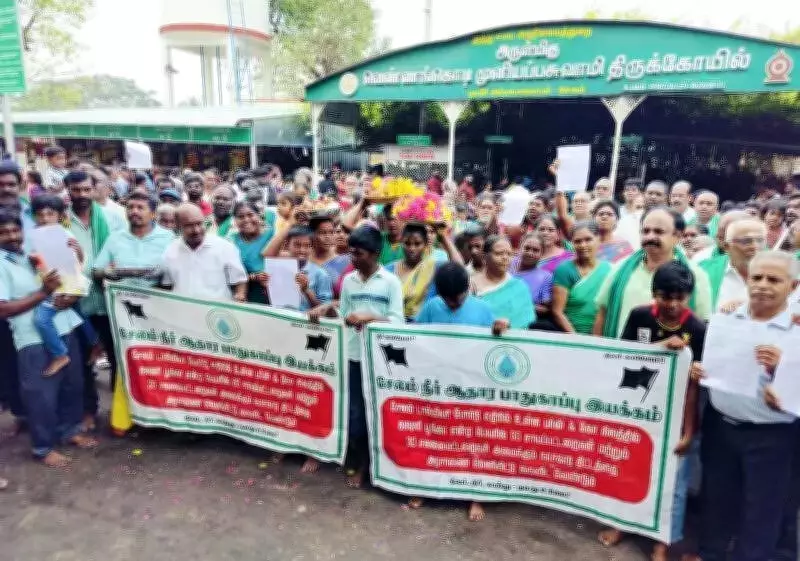
Salem Farmers Stage Symbolic Temple Protest Against Proposed Dyeing Plant
In a powerful display of dissent, more than 200 farmers and local residents, supported by members of the Water Resources Protection Movement, gathered at the Vennangkodi Muniyappan Temple in Salem on Sunday. The group conducted a symbolic protest by submitting a formal petition at the temple, directly opposing the planned construction of a dyeing plant in Jagir Ammapalayam. This act marks a significant escalation in an ongoing agitation that has persisted for nearly five months, as the community voices strong concerns over environmental and health impacts.
Background of the Agitation and Government Inaction
The protest is rooted in a broader movement against the establishment of dyeing units under the guise of developing a textile park. Protesters have consistently alleged that both the district administration and the state government have failed to address their demands, leaving them without any formal response or dialogue. Farmers involved in the demonstration expressed frustration, noting that despite their continuous protests over the past several months, the administration has not extended an invitation for talks or negotiations. This lack of engagement has fueled the community's determination to take their grievances to a sacred space, emphasizing the seriousness of their plight.
Details of the Symbolic Demonstration
As part of the protest, participants organized a solemn procession to the temple, carrying flowers, fruits, puja materials, and the written petition. In a poignant ritual, they symbolically submitted the petition to the deity Muniyappan, seeking divine intervention and highlighting the spiritual and cultural significance of their cause. This method of protest underscores the deep connection between the community's environmental concerns and their cultural heritage, making a compelling statement against industrial encroachment.

- The agitation has been ongoing for five months, with protesters demanding a halt to the dyeing plant construction.
- Farmers accuse the district and state governments of ignoring their pleas, with no official response or dialogue initiated.
- The symbolic temple submission was intended to draw attention to the potential environmental and health risks posed by the plant.
- Participants emphasized the need for sustainable development that does not compromise local resources and livelihoods.
The protest in Salem reflects a growing trend of community-led movements in India, where citizens are increasingly taking proactive steps to protect their environment and hold authorities accountable. As the situation develops, stakeholders await a response from government officials, hoping for a resolution that balances industrial growth with ecological and social well-being.






