

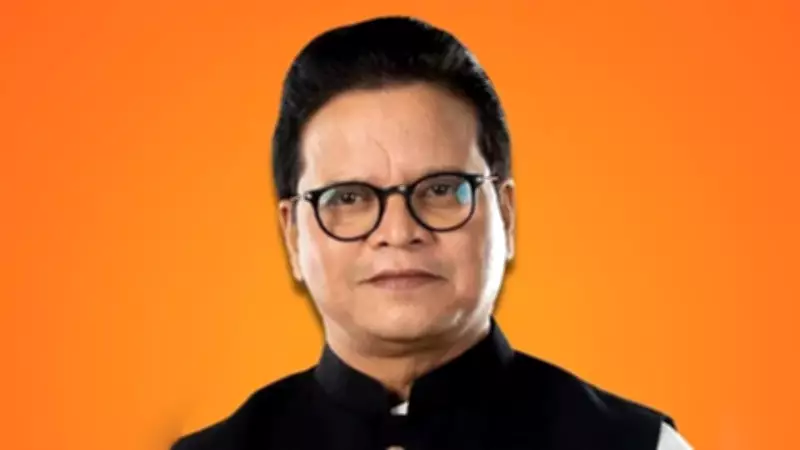
Sanjay Ghadi's Political Transformation: From Shinde Critic to Deputy Mayor
Sanjay Shankar Ghadi's elevation as the Deputy Mayor of Mumbai marks a significant political turnaround, showcasing a journey from vocal opposition to Eknath Shinde during the 2022 Shiv Sena split to securing a key position in the Shinde-led Sena faction three years later. This shift underscores the fluid and often unpredictable nature of Maharashtra's political landscape, particularly in Mumbai's civic governance.
Opposition to Shinde's Rebellion and Early Activism
When the Shiv Sena was still united under Uddhav Thackeray, Ghadi actively opposed Shinde's rebellion. He led a protest outside the public relations office of Magathane MLA Prakash Surve, a prominent supporter of Shinde. During this agitation, his wife, Sanjana Ghadi, was seen hitting a banner featuring Shinde and Surve with shoes, a symbolic act of defiance. After the split, Sanjana became a spokesperson for the Uddhav-led Sena (UBT), regularly criticizing the Shinde faction in public forums and on television.
In a surprising move in April 2025, both Sanjay and Sanjana Ghadi resigned from the UBT and joined the Shinde-led Sena, drawing sharp criticism from former allies. This decision highlighted the personal and political realignments that often characterize Indian party politics.

Background and Political Career
Born and raised in Mumbai, the 57-year-old Ghadi is a Bachelor of Commerce graduate from Siddharth College in Fort. He studied in a BMC school until Class 7 and completed his SSC from Chhabildas High School in Dadar. In his election affidavit, he declared his occupation as trading and transport, with assets worth Rs 12.84 crore, liabilities of Rs 1.81 crore, and an annual income of Rs 43.36 lakh, a notable increase from Rs 3.10 crore in 2017.
Ghadi entered politics in 1988–89 through the Bharatiya Vidyarthi Sena, the student wing of the undivided Shiv Sena. In 1990–91, he became president of the Mumbai University Students' Council and later served as a Senate member. Initially close to Raj Thackeray, he joined the Maharashtra Navnirman Sena (MNS) when it was formed in 2007, serving as state general secretary and contesting elections on an MNS ticket. He later returned to the Shiv Sena, rising to the rank of Deputy Leader, and was elected corporator from 2017 to 2022.
Recent Political Maneuvers and Election Victory
Ahead of the 2026 BMC elections, Ghadi sought to contest from Ward 5, citing his local work and connections. During Mahayuti seat-sharing negotiations, the ward became contentious, with Shinde-led Sena MLA Prakash Surve pushing for a ticket for his son, Raj Surve. Ghadi was initially asked to shift to Ward 4 but refused, insisting on Ward 5. The matter escalated to Eknath Shinde, who eventually cleared Ghadi's candidature, dropping Raj Surve's claim.
Ghadi won the seat, defeating Sena (UBT) candidate and former corporator Sujata Patekar. In Ward 4, the Shinde Sena's Mangesh Pangare also secured a victory. When the Mahayuti alliance finalized the Deputy Mayor post, Ghadi emerged as the consensus choice, reflecting his growing influence and the strategic calculations within the coalition.
Implications and Broader Context
Ghadi's journey—from student politics to the MNS, from opposing the 2022 split to joining the Shinde Sena—exemplifies the shifting alignments in Mumbai's civic politics. His story is a microcosm of larger trends in Maharashtra, where personal loyalties, electoral pragmatism, and coalition dynamics often override ideological consistency.
With no pending criminal cases and a clean public record, Ghadi's appointment as Deputy Mayor positions him as a key figure in Mumbai's governance, potentially influencing future policy decisions and political strategies. This development also signals the Shinde faction's efforts to consolidate power by integrating former critics, a move that could reshape local political equations in the run-up to state and national elections.






