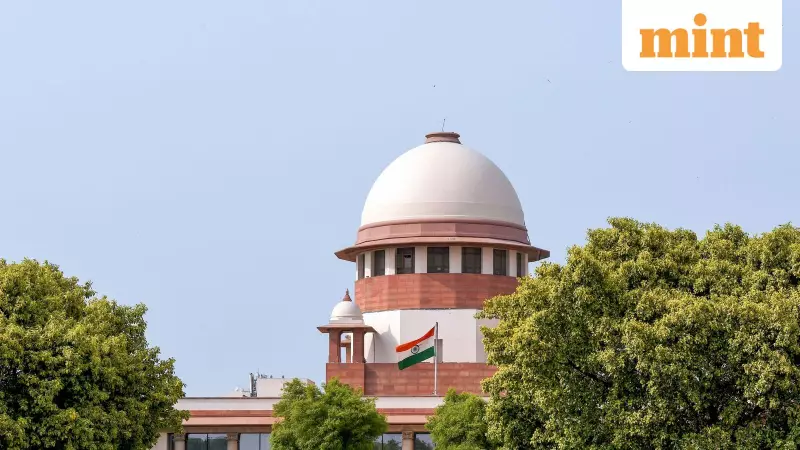
Supreme Court Takes Stern Stand on Telangana Defection Case
The Supreme Court of India has scheduled a crucial hearing for November 17 regarding contempt proceedings against the Telangana Legislative Assembly Speaker. The petition alleges that the speaker failed to comply with the court's directive to decide on disqualification pleas against ten Bharat Rashtra Samithi (BRS) legislators who defected to the ruling Congress party.
Court's Deadline Ignored
On July 31, 2024, a Supreme Court bench led by Chief Justice B R Gavai had issued a clear directive requiring the assembly speaker to resolve the matter of disqualifying the ten BRS MLAs within a strict three-month timeframe. However, according to lawyers representing the petitioners, no substantial progress has been made since the court's order.
During Monday's proceedings, the counsel for petitioners urgently mentioned the contempt petition, highlighting that the speaker had not acted within the stipulated deadline. "List it next Monday," responded CJI Gavai, setting the stage for the November 17 hearing.

Concerns Over Deliberate Delays
The petitioners' legal representatives expressed serious concerns about what they described as intentional delaying tactics. The counsel pointed out that respondents were "dragging the proceedings till the end of the month for obvious reasons" - an apparent reference to Chief Justice Gavai's scheduled retirement on November 23.
Responding to these concerns, CJI Gavai made it clear that "The Supreme Court will not close after the 24th of November," emphasizing the institution's continuity beyond individual tenures.
Additional submissions revealed that despite the court's clear instructions, the speaker has not initiated proceedings on two pending petitions, while others remain at the evidence stage. The counsel stressed that "the MLAs are still continuing" in their positions despite the defection allegations.
Constitutional Significance
The contempt plea originates from the Supreme Court's landmark July 31 judgment delivered by a bench comprising CJI Gavai and Justice AG Masih. The judgment came in response to writ petitions filed by prominent BRS leaders including KT Rama Rao, Padi Kaushik Reddy, and KO Vivekanand.
In its significant ruling, the apex court reiterated that the speaker functions as a tribunal when deciding disqualification matters under the Tenth Schedule of the Constitution, which specifically deals with provisions for disqualification on grounds of defection. The court firmly established that speakers do not enjoy "constitutional immunity" in such matters.
The bench had made strong observations about the fundamental threat to democracy when elected representatives defect yet continue in office without timely adjudication. "The very foundation of our democracy is shaken when elected representatives are allowed to defect and yet continue in office without timely adjudication," the court noted.
Furthermore, the judgment emphasized that "Parliament had trusted the high office of the Speaker to act expeditiously. That trust, in many cases, has not been honored," highlighting a pattern of delays in handling defection cases across various states.
The upcoming November 17 hearing represents a critical test for constitutional accountability and the enforcement of anti-defection laws in Indian politics.