

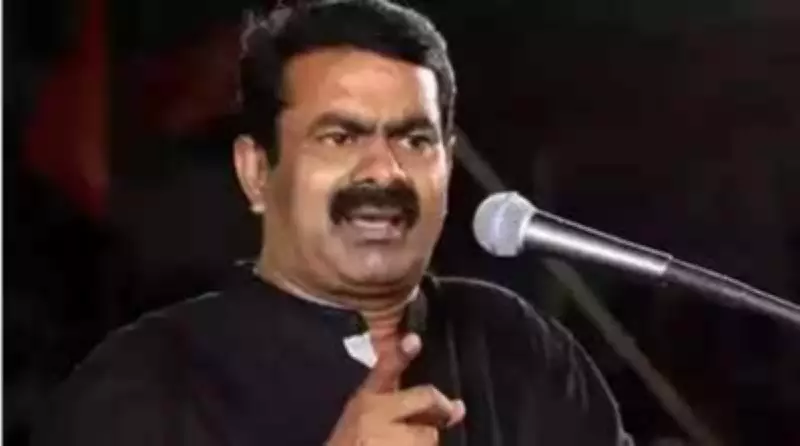
NTK Leader Seeman Raises Concerns Over Permission Denial for TVK President's Event
In a significant development in Chennai's political landscape, Naam Tamilar Katchi (NTK) chief coordinator Seeman has publicly questioned the denial of permission for a program organized by Tamilaga Vettri Kazhagam (TVK) president Vijay in the Perambur area of Chennai. Speaking to reporters during a visit to Kancheepuram on Saturday, Seeman expressed strong dissatisfaction with the decision, highlighting what he perceives as systemic inequality in the treatment of political parties.
Seeman's Allegations of Political Bias
Seeman detailed his own experiences, stating that he has faced similar situations for an extended period, where permissions for political events have been arbitrarily denied or obstructed. He emphasized that this pattern demonstrates a lack of fairness and equal opportunity for all political entities operating within the region. "There is no equality for political parties here," Seeman asserted, suggesting that certain groups might be receiving preferential treatment while others are marginalized.
Health Minister's Clarification on DMK's Role
Responding to these allegations, Tamil Nadu Health Minister Ma Subramanian provided a counterpoint, firmly stating that the DMK government had no involvement in the decision to cancel Vijay's program. According to the minister, the authority to grant or deny permissions for such events lies solely with the Election Commission of India (ECI). He explained that the ECI operates a streamlined system through its Suvidha portal, designed to automate and standardize the permission process for political activities.

ECI's Suvidha Portal and Automatic Permissions
Minister Subramanian elaborated on the functioning of the Suvidha portal, noting that it is intended to ensure transparency and efficiency. He clarified that if any political party submits a proper application through this portal, permissions are granted automatically based on predefined criteria, without manual intervention from state authorities. This mechanism, he argued, eliminates the possibility of political bias or interference by the ruling government, as decisions are driven by the ECI's protocols rather than local administrative discretion.
Broader Implications for Political Discourse
The exchange between Seeman and the health minister underscores ongoing tensions in Tamil Nadu's political environment, particularly concerning access to public spaces for rallies and events. It raises important questions about:
- The implementation of ECI guidelines at the grassroots level.
- The perceived challenges faced by opposition or smaller parties in securing permissions.
- The role of technology, like the Suvidha portal, in democratizing political processes.
As this issue gains attention, it may influence future discussions on electoral fairness and the operational dynamics between state governments and central election bodies. The situation in Chennai serves as a microcosm of broader debates over political equality and administrative transparency in India's democratic framework.






