SP Wanted Nitish Kumar to Become Prime Minister, Reveals Akhilesh Yadav
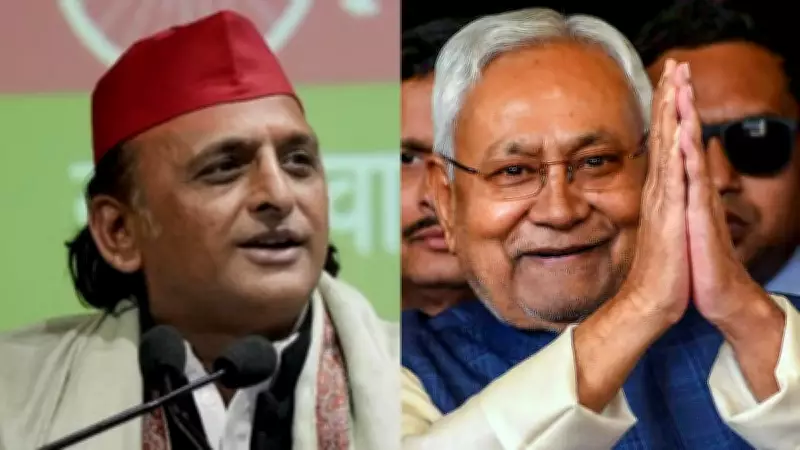
In a significant political revelation, Samajwadi Party (SP) chief Akhilesh Yadav has disclosed that his party had expressed a desire for Nitish Kumar, the Chief Minister of Bihar and leader of the Janata Dal (United), to assume the role of Prime Minister of India. This statement sheds light on the intricate alliance dynamics and strategic considerations within opposition politics, particularly in the context of Uttar Pradesh, a key battleground state.
Details of the Political Aspiration
Akhilesh Yadav made this revelation during a recent interaction, emphasizing that the Samajwadi Party had actively advocated for Nitish Kumar to be elevated to the prime ministerial position. This move was part of broader efforts to consolidate opposition forces against the ruling Bharatiya Janata Party (BJP) at the national level. The disclosure underscores the SP's willingness to support leaders from other regional parties in top roles, reflecting a collaborative approach in Indian politics.
Nitish Kumar, known for his administrative acumen and experience in governance, has been a prominent figure in national politics, often seen as a potential consensus candidate for the opposition. The SP's endorsement highlights his perceived credibility and the strategic importance of Bihar in the political landscape.
Context and Implications for Uttar Pradesh
This revelation comes amid ongoing political realignments in Uttar Pradesh, where the Samajwadi Party is a major player. By expressing support for Nitish Kumar, Akhilesh Yadav may be signaling a shift in alliance strategies or reinforcing existing ties with JD(U) and other opposition groups. It also points to the fluid nature of political partnerships in the state, where regional parties often navigate complex relationships to counter dominant national parties.
The statement could influence future electoral calculations, as it reveals internal discussions and preferences within the SP. It may also impact public perception, showcasing the party's broader vision for national leadership beyond state boundaries.
Broader Political Ramifications
On a national scale, this disclosure adds to the discourse on opposition unity and prime ministerial candidates. It highlights the challenges and opportunities in forming a cohesive front against the BJP, with regional leaders like Nitish Kumar being pivotal figures. The SP's stance could encourage other parties to consider similar endorsements, potentially shaping the narrative for upcoming elections.
Moreover, it reflects the evolving dynamics of Indian federalism, where state-level leaders increasingly aspire to national roles, and regional parties play a crucial role in determining the country's political direction.
In summary, Akhilesh Yadav's revelation about the Samajwadi Party wanting Nitish Kumar as Prime Minister offers a glimpse into the strategic maneuvers within opposition politics. It underscores the importance of alliances, the role of regional leaders, and the ongoing efforts to challenge the current political establishment in India.