

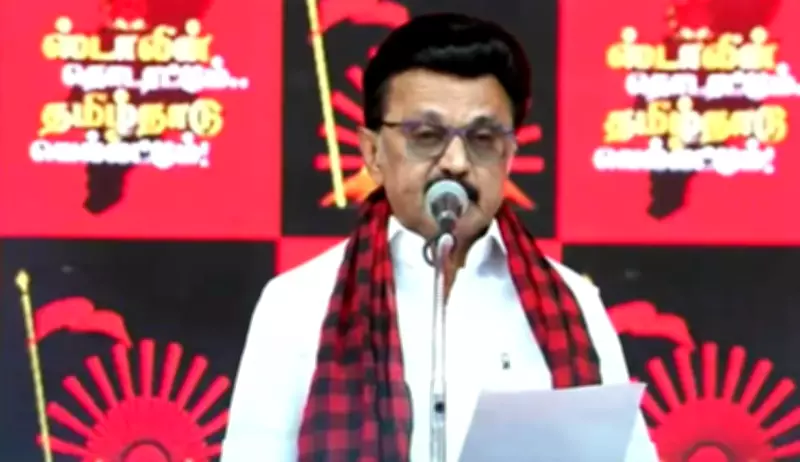
Tamil Nadu CM Stalin Rejects Power-Sharing, Affirms DMK-Congress Alliance for 2026 Polls
Tamil Nadu Chief Minister and Dravida Munnetra Kazhagam (DMK) president M.K. Stalin has categorically ruled out any power-sharing arrangement with the Indian National Congress, emphasizing that the existing alliance between the two parties remains intact and robust ahead of the crucial 2026 state assembly elections. This declaration comes amid swirling speculation and political chatter regarding potential shifts in coalition dynamics within the state's opposition front.
Stalin's Firm Stance on Alliance Structure
In a clear and unambiguous statement, Stalin addressed recent rumors head-on, dismissing any notions of a power-sharing deal that would alter the current leadership framework. He reiterated the DMK's commitment to leading the alliance, with the Congress continuing as a key partner. This reaffirmation is seen as a strategic move to consolidate the coalition's unity and present a united front against rival political forces, particularly the All India Anna Dravida Munnetra Kazhagam (AIADMK) and the Bharatiya Janata Party (BJP).
The Chief Minister highlighted the historical and ideological ties between the DMK and Congress, noting their collaborative efforts in past elections and governance. He stressed that the alliance's strength lies in its shared vision for Tamil Nadu's development and social justice, rather than in divisive power negotiations. This stance aims to quell internal dissent and ensure that all alliance partners remain focused on electoral preparedness.

Implications for the 2026 Tamil Nadu Elections
The 2026 assembly elections in Tamil Nadu are poised to be a high-stakes battle, with multiple parties vying for dominance in the state's politically charged landscape. Stalin's announcement serves multiple purposes:
- Clarifying Leadership Roles: By ruling out power-sharing, Stalin reinforces the DMK's position as the principal party in the alliance, avoiding potential confusion among voters and cadres.
- Strengthening Coalition Cohesion: This move is designed to foster trust and cooperation among alliance members, preventing fragmentation that could benefit opponents.
- Strategic Electoral Planning: It allows the DMK and Congress to begin early campaign preparations, focusing on issues like economic growth, healthcare, and social welfare, rather than internal disputes.
Political analysts suggest that this firm stance may also be a response to increasing pressure from rival parties, who have attempted to exploit perceived weaknesses in the DMK-Congress partnership. By publicly affirming the alliance's stability, Stalin aims to project an image of confidence and control, which could influence undecided voters and bolster the coalition's electoral prospects.
Broader Political Context and Future Outlook
Tamil Nadu has a long history of coalition politics, with alliances often shaping election outcomes. The DMK-Congress partnership has been a cornerstone of the state's opposition politics, particularly in countering the AIADMK and BJP's growing influence. Stalin's rejection of power-sharing underscores a broader trend in Indian politics, where regional parties assert their dominance within coalitions to maintain ideological purity and electoral appeal.
Looking ahead, the DMK and Congress are expected to intensify their grassroots mobilization efforts, with a focus on key voter segments such as youth, farmers, and marginalized communities. The alliance's ability to present a cohesive policy agenda and effectively communicate its achievements in governance will be critical in the run-up to 2026.
In conclusion, Chief Minister M.K. Stalin's unequivocal dismissal of power-sharing talks reaffirms the DMK-Congress alliance's commitment to a united front for the 2026 Tamil Nadu elections. This development not only stabilizes the political landscape but also sets the stage for a fiercely contested electoral battle, with significant implications for the state's future governance and policy direction.






