

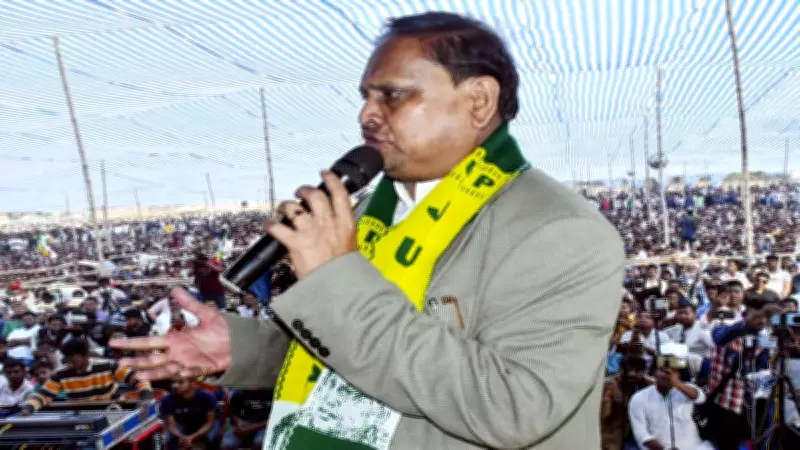
Suspended TMC Leader Humayun Kabir Claims West Bengal to Get Muslim Deputy CM Ahead of 2026 Assembly Elections
In a significant political development, suspended Trinamool Congress (TMC) leader Humayun Kabir has claimed that West Bengal is set to get a Muslim deputy chief minister ahead of the crucial 2026 assembly elections. This assertion has stirred considerable debate and speculation within political circles, as the state prepares for the upcoming electoral battle.
Details of Humayun Kabir's Claim
Humayun Kabir, who was suspended from the TMC, made this claim publicly, suggesting that the ruling party is planning to appoint a Muslim leader as the deputy chief minister. This move is seen as a strategic effort to consolidate Muslim votes, which form a significant portion of the electorate in West Bengal. Kabir's statement comes at a time when political parties are gearing up for the 2026 polls, with alliances and voter outreach becoming key focus areas.
The claim has raised questions about the TMC's internal dynamics and its electoral strategy. While the party has not officially confirmed or denied Kabir's assertion, it has sparked discussions on social media and among political analysts. Some view it as a potential game-changer in West Bengal's political landscape, where communal and caste-based politics often play a pivotal role.

Political Implications and Reactions
If true, the appointment of a Muslim deputy chief minister would be a historic first for West Bengal, potentially reshaping voter perceptions and alliances. The state has a substantial Muslim population, and such a move could influence voting patterns in the 2026 elections. However, Kabir's suspension adds a layer of complexity, as his credibility and motives are being scrutinized by opponents and allies alike.
Opposition parties, including the Bharatiya Janata Party (BJP) and the Left Front, have reacted cautiously, calling for clarity from the TMC leadership. They argue that such claims should be verified and that the focus should remain on governance issues rather than identity politics. Meanwhile, within the TMC, there is speculation about potential candidates for the deputy CM role, with several Muslim leaders' names being floated in political circles.
Background and Context
West Bengal has been a political hotspot in recent years, with intense competition between the TMC and BJP. The 2026 assembly elections are expected to be fiercely contested, and parties are already strategizing to gain an edge. Humayun Kabir's claim aligns with broader trends in Indian politics, where representation and identity often influence electoral outcomes.
It is important to note that Kabir made this claim ahead of the elections, and its timing suggests it could be part of a larger narrative to sway public opinion. As the political climate heats up, such statements are likely to become more frequent, with parties leveraging every opportunity to connect with voters.
Conclusion
Humayun Kabir's assertion about a Muslim deputy chief minister in West Bengal has added a new dimension to the pre-election discourse. While its veracity remains unconfirmed, it underscores the strategic calculations at play as the 2026 assembly elections approach. Voters and political observers will be watching closely to see how this claim unfolds and impacts the electoral dynamics in the state.






