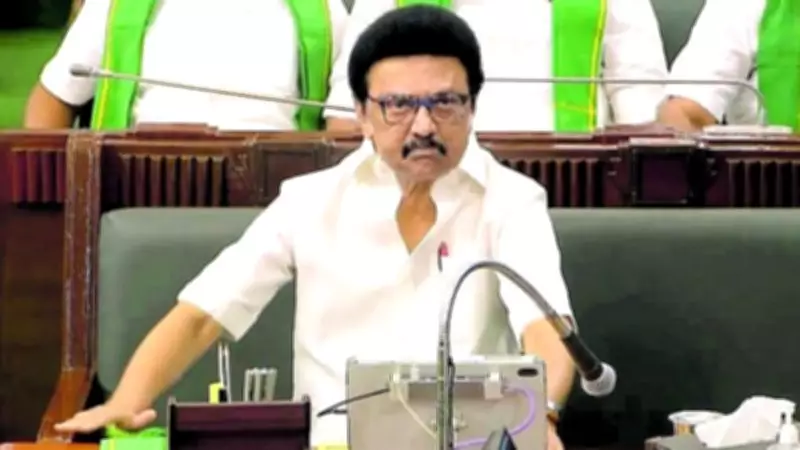
Tamil Nadu Chief Minister M.K. Stalin Slams BJP Government Over Hindi Imposition and 'Kartavya Dwar' Naming
Tamil Nadu Chief Minister M.K. Stalin has launched a sharp critique against the Bharatiya Janata Party (BJP)-led central government, accusing it of "going beyond limits" in imposing Hindi across India. In a recent statement, Stalin expressed strong opposition to what he perceives as an aggressive push for Hindi dominance, which he argues undermines the linguistic diversity and federal structure of the country.
Stalin's Accusations of Hindi Imposition
Stalin highlighted that the BJP government's actions are not merely promotional but represent a systematic effort to marginalize regional languages, particularly Tamil. He emphasized that Tamil Nadu has a long history of resisting Hindi imposition, dating back to the anti-Hindi agitations of the 1960s, and that the current policies threaten to reignite such tensions.
"The imposition of Hindi is an affront to the cultural identity of non-Hindi speaking states," Stalin stated. He called for the central government to respect the linguistic rights enshrined in the Constitution and to promote a multilingual approach that values all Indian languages equally.
Criticism of 'Kartavya Dwar' Arch Naming
In addition to the broader issue of Hindi imposition, Stalin specifically targeted the naming of a newly constructed arch as "Kartavya Dwar" (Gateway of Duty). He argued that this name, which is in Hindi, symbolizes the government's disregard for regional sentiments and its attempt to impose a monolithic cultural narrative.
"Naming structures like 'Kartavya Dwar' in Hindi ignores the rich linguistic heritage of states like Tamil Nadu," he remarked. Stalin suggested that such moves are part of a larger pattern where the BJP prioritizes Hindi over other languages, potentially alienating millions of Indians who speak different mother tongues.
Political and Social Implications
The Chief Minister's comments have sparked a heated debate on linguistic federalism and cultural preservation. Political analysts note that this issue resonates deeply in Tamil Nadu, where language is closely tied to identity and autonomy. Stalin's stance is seen as a rallying cry for regional parties and linguistic groups opposed to centralization.
Key points from his critique include:
- The BJP government's policies are perceived as exceeding constitutional limits in promoting Hindi.
- The naming of 'Kartavya Dwar' is viewed as a symbolic act of imposition.
- There is a call for greater respect for linguistic diversity and federal principles.
Broader Context and Reactions
This controversy comes amid ongoing discussions about language policy in India, including the use of Hindi in official communications and education. Supporters of Stalin's view argue that imposing Hindi could marginalize non-Hindi speakers and disrupt social harmony. Conversely, proponents of Hindi promotion contend that it fosters national unity and integration.
Stalin's remarks are expected to influence political discourse in Tamil Nadu and beyond, potentially shaping upcoming electoral strategies and policy debates. As the issue gains traction, it highlights the delicate balance between national identity and regional diversity in India's democratic framework.