Tamil Nadu Grapples with Massive ₹50,000 Crore Fiscal Burden Amid Central Government Actions
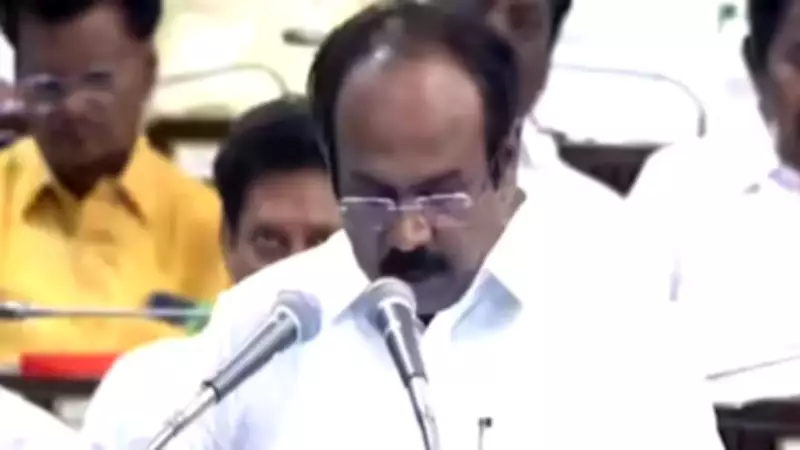
Finance Minister Thangam Thennarasu has disclosed that the Tamil Nadu government is confronting a staggering cumulative fiscal burden of nearly ₹50,000 crore in the current financial year. This financial strain is attributed to a series of actions by the Central Government that have significantly destabilised the state's fiscal health.
Systematic Financial Undermining Alleged
In a detailed statement, Thennarasu expressed frustration over what he described as a concerted effort by the Centre to artificially precipitate a fiscal crisis in Tamil Nadu. "In every field — be it denial of sanction for major infrastructure projects for Tamil Nadu, withholding the release of funds for centrally sponsored schemes, curtailment of tax revenues without due consultation, or the unfair imposition of conditional expenditure mandates — Centre appears to leave no stone unturned," he asserted.
GST Rationalisation and Revenue Shortfalls
A primary contributor to the fiscal pressure is the Goods and Services Tax (GST) rate rationalisation approved by the GST Council. According to Thennarasu, this move, implemented without adequately accommodating the concerns of states, has resulted in a substantial revenue shortfall of approximately ₹9,600 crore for Tamil Nadu in the fiscal year 2025-26. This financial blow has been exacerbated by the conclusion of the GST compensation regime, leaving the state to manage the deficit independently.

Unilateral Deductions and Budgetary Shortfalls
Further compounding the crisis, the Central Government deducted ₹1,709 crore from Tamil Nadu's account with the Reserve Bank of India in April 2025. This deduction was made towards Integrated GST (IGST) settlement without any prior consultation with the state authorities. Additionally, the revised allocation of central taxes in the Union Budget has led to an unexpected shortfall of ₹1,202 crore, adding to the state's financial woes.
Forced Expenditures and Unfunded Mandates
The state has been compelled to incur unbudgeted expenditure of ₹3,087 crore following a central mandate to maintain 5% of outstanding guarantees in the Guarantee Redemption Fund under Article 293(3). An even more significant component of the fiscal burden stems from a directive requiring Tamil Nadu to provide ₹16,290 crore as loss funding to the Tamil Nadu Power Distribution Corporation Ltd. Given that the utility's actual loss was only ₹413 crore, this translated into an additional expenditure of ₹15,877 crore for the state, a move Thennarasu labelled as grossly unfair.
Withheld Funds for Critical Schemes
The Central Government has also withheld or failed to release ₹8,906 crore under various Centrally Sponsored Schemes and grants. This includes:
- ₹3,548 crore under the Samagra Shiksha initiative
- ₹3,112 crore under the Jal Jeevan Mission
- ₹2,246 crore in Finance Commission grants
These withheld funds have severely impacted the implementation of essential development and welfare programs across the state.
Infrastructure Projects and Debt Implications
Tamil Nadu has incurred an expenditure of about ₹9,500 crore towards the Centre's share of the Chennai Metro Rail Phase II project. Despite this outlay, the amount continues to be reflected in the state's debt, adversely affecting its debt-to-Gross State Domestic Product (GSDP) ratio and constraining its borrowing capacity for other critical investments.
Inadequate Disaster Relief and Inequitable Devolution
Thennarasu highlighted the back-to-back natural disasters, including cyclones Michaung, Fengal, and Ditwah, that have struck Tamil Nadu over the past five years. He criticised the Union Government for releasing a "meagre sum" of ₹1,151 crore as relief assistance, despite the state's requests totalling ₹50,922 crore.
Furthermore, the finance minister expressed disappointment with the 16th Finance Commission, which granted Tamil Nadu only a marginal 0.44% increase in devolution. This increase is far lower than the 23.74% granted to Kerala and the 13.27% to Karnataka. "The state is not seeking generosity but fair and equitable treatment," Thennarasu stated, accusing the commission of failing to ensure this principle.

In summary, Tamil Nadu's fiscal landscape is under severe strain due to a combination of central policies, withheld funds, and unfunded mandates, culminating in a near ₹50,000 crore burden that threatens the state's financial stability and developmental aspirations.