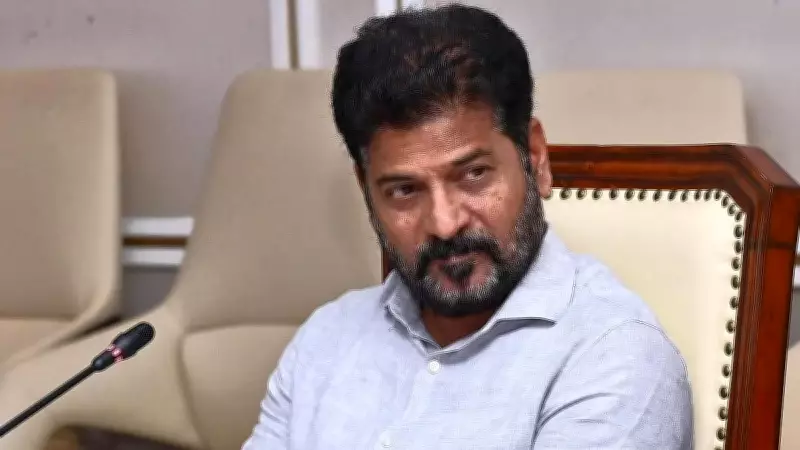
Telangana Chief Minister Issues Direct Challenge to BJP Leadership
In a significant political development, Telangana Chief Minister Revanth Reddy has openly challenged the Bharatiya Janata Party to demonstrate its capacity to form a government while taking strong exception to Union Home Minister Amit Shah's recent statements regarding minority reservations. The remarks were delivered during the Consultative Meeting of Jamiat Ulama Telangana, marking a notable escalation in political rhetoric between the ruling Congress government and the opposition BJP in the southern state.
Direct Confrontation on Government Formation
Revanth Reddy issued a direct political challenge to the BJP leadership, questioning their ability to establish a functional government while simultaneously criticizing their approach to minority issues. The Chief Minister's comments represent a calculated political maneuver aimed at highlighting what he perceives as contradictions in the BJP's governance claims and their stance on reservation policies affecting minority communities.
Strong Objection to Amit Shah's Reservation Remarks
The Telangana Chief Minister took particular exception to Union Home Minister Amit Shah's recent commentary on minority quotas, suggesting that such statements undermine constitutional principles of equality and social justice. Reddy emphasized that reservation policies must be implemented with fairness and transparency, without political manipulation that could potentially marginalize vulnerable communities.

Legislative Initiative Against Hate Speech
In a parallel development with significant legal implications, Chief Minister Reddy announced that he has formally requested former Supreme Court judge Justice Sudarshan Reddy to provide expert assistance in drafting comprehensive legislation aimed at combating hate speech. This proposed legislation represents a proactive approach to addressing inflammatory rhetoric that could threaten social harmony and communal peace within Telangana.
Key Aspects of the Proposed Anti-Hate Speech Legislation
- Comprehensive legal framework to identify and penalize hate speech incidents
- Clear definitions of what constitutes hate speech in various contexts
- Balanced approach protecting both free speech and social harmony
- Implementation mechanisms ensuring effective enforcement
- Educational components promoting inter-community understanding
Political Implications and Context
The Chief Minister's statements come at a time of heightened political activity in Telangana, with the Congress government seeking to consolidate its position while addressing complex social issues. The direct challenge to the BJP reflects ongoing political tensions between the two major parties, particularly regarding their differing approaches to minority rights, reservation policies, and social justice initiatives.
Broader Significance for Indian Politics
This development represents more than just regional political sparring. It highlights fundamental debates within Indian democracy regarding:
- The implementation and purpose of reservation policies
- The balance between free speech and social harmony
- The role of state governments in addressing hate speech
- Political accountability and governance capabilities
- Constitutional protections for minority communities
The consultative meeting with Jamiat Ulama Telangana provided a significant platform for these announcements, emphasizing the government's engagement with religious and community leaders on matters of social policy and legislative development. As these political and legal initiatives progress, they will likely influence broader discussions about minority rights, hate speech regulation, and inter-party dynamics in both Telangana and the wider Indian political landscape.