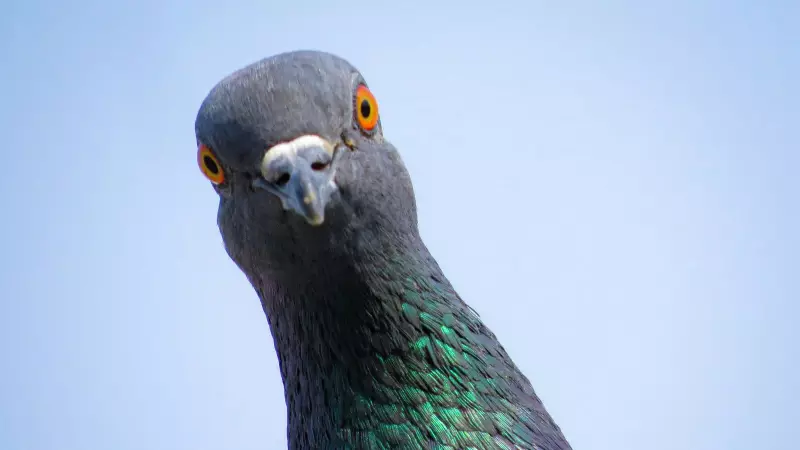
The Telangana High Court has instructed a petitioner raising concerns about the growing pigeon population in Hyderabad to first approach the city's civic body before seeking judicial intervention. The directive came during a hearing on a Public Interest Litigation (PIL) filed by a city-based doctor.
Court's Directive on the PIL
A division bench comprising Chief Justice Aparesh Kumar Singh and Justice G M Mohiuddin issued the order on Wednesday, January 7, 2026. The bench was addressing the court registry's objection to listing the PIL. The matter has now been adjourned for a further hearing after eight weeks.
The bench clearly stated that the petitioner should first notify the Greater Hyderabad Municipal Corporation (GHMC) about the issue. "Let the corporation have a notice from you and let them be ready to respond. They might have taken some steps also. Thereafter, we will enter into the matter, if required," the bench remarked. The judges emphasized underlying reasons for this approach, noting the corporation should be formally apprised of any perceived default in performing its statutory duty, which impacts the public at large.
Petitioner's Grievances and Demands
The PIL was filed by Dr Radheshyam Tapadia, who was represented in court by senior counsel L Ravichander. The petitioner argued that the GHMC has failed to exercise its statutory powers to restrict the feeding of pigeons, particularly in sensitive areas like residential zones, hospitals, and historical monuments.
Dr Tapadia's contention is that the unchecked pigeon population is causing a large-scale menace in the state, leading to the spread of certain diseases. The counsel submitted that there was no alternative remedy available and that the issue required coordinated action from various authorities, which is why no prior representation was made to a single body.
The plea specifically seeks:
- A direction to the GHMC to use its powers under the law to restrict pigeon feeding.
- A declaration that the civic body's inaction is illegal and arbitrary for failing to implement regulations under Section 115(20) of the GHMC Act, 1955.
- An assertion that this inaction violates Articles 14 and 21 of the Constitution and the Epidemic Diseases Act, 1897.
- Enforcement of sanitation drives and penalties for unauthorized feeding that causes environmental pollution, as per legal guidelines.
- Implementation of humane population control measures and public awareness campaigns about the health risks associated with high pigeon concentrations.
Next Steps and Implications
The court's directive sets a procedural precedent, emphasizing the exhaustion of administrative remedies before judicial recourse in civic matters. The petitioner must now formally serve a notice to the GHMC, detailing the grievances and legal demands. The corporation will then have an opportunity to respond and outline any steps it has taken or plans to take regarding the pigeon population issue.
The case highlights the ongoing conflict between urban wildlife and public health in growing metropolitan areas like Hyderabad. The outcome of this process, whether it leads to stricter enforcement by the GHMC or returns to the High Court, could set a significant precedent for managing similar urban environmental challenges across Indian cities. The next hearing is scheduled after an eight-week period, allowing time for this exchange between the petitioner and the municipal corporation.