Thrikkakara Assembly Election 2026: A Comprehensive Constituency Analysis
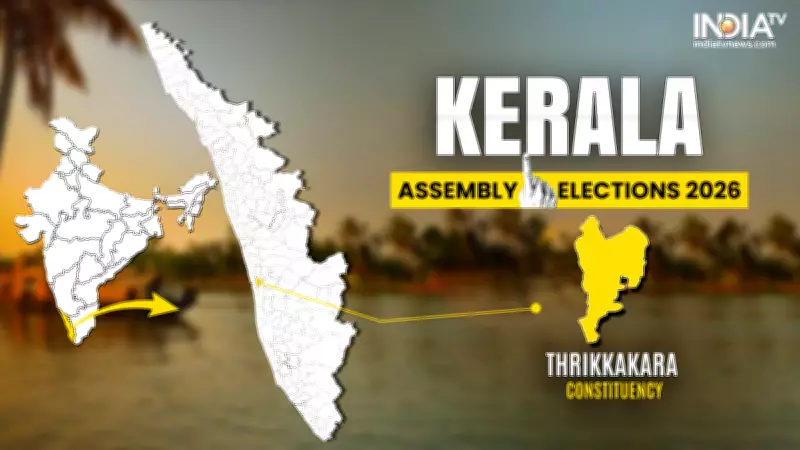
The Thrikkakara Assembly constituency in Ernakulam district, Kerala, is gearing up for the 2026 state elections, with political parties already strategizing for this key seat. Known for its urban and semi-urban demographics, Thrikkakara has been a battleground for major parties, reflecting broader trends in Kerala politics.
Constituency Profile and Demographics
Thrikkakara is part of the Ernakulam Lok Sabha constituency and comprises areas like Kakkanad, Thrikkakara, and parts of Kochi. It has a mixed population with significant numbers of both urban professionals and traditional voters, making it a microcosm of Kerala's diverse political landscape. The constituency has seen rapid development in recent years, with infrastructure projects and IT hubs influencing voter priorities.
Past Winners and Victory Margins
In the 2021 Kerala Assembly elections, P.T. Thomas of the Indian National Congress (INC) won the Thrikkakara seat, defeating his nearest rival by a margin of over 15,000 votes. This victory was notable as it came amid a strong performance by the Left Democratic Front (LDF) in the state. Previous elections have seen close contests, with the INC and the Communist Party of India (Marxist) [CPI(M)] often trading wins. For instance, in 2016, the seat was won by the CPI(M), highlighting the constituency's swing nature.
Party-Wise Candidates for 2026
As the 2026 elections approach, parties are expected to field strong candidates in Thrikkakara. The INC is likely to renominate P.T. Thomas, given his incumbency advantage and local popularity. The CPI(M) may consider a fresh face or a seasoned leader to challenge the Congress, while the Bharatiya Janata Party (BJP) is anticipated to put up a candidate as part of its efforts to expand in Kerala. Other regional parties and independents could also play a role, especially if alliances shift.
Key Issues and Campaign Focus
Voters in Thrikkakara are expected to prioritize issues such as urban development, traffic management, healthcare facilities, and employment opportunities. Environmental concerns, given the area's proximity to water bodies, might also feature in the campaign. Parties will need to address these local grievances while aligning with state-level narratives on governance and economic policies.
Conclusion
The Thrikkakara Assembly election in 2026 is poised to be a closely watched contest, with its outcome potentially influencing Kerala's political dynamics. As parties finalize their candidates and platforms, the constituency's history of competitive politics suggests a vibrant and hard-fought battle ahead.