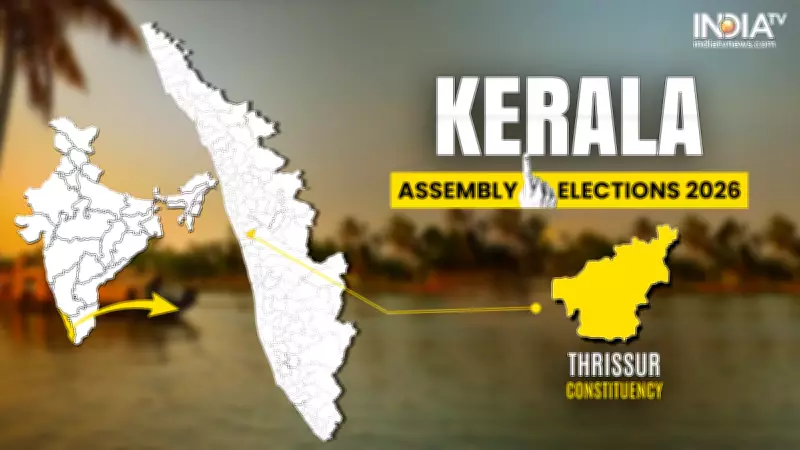
Thrissur Assembly Election 2026: A Comprehensive Constituency Profile
The Thrissur Assembly constituency in Kerala is gearing up for a high-stakes electoral battle in the 2026 state elections. Known for its vibrant political landscape and significant influence in regional politics, this constituency has historically been a key battleground for major parties. As the election approaches, political analysts are closely monitoring the dynamics that could shape the outcome.
Historical Performance and Past Winners
Thrissur has a rich electoral history, with past winners showcasing a mix of political affiliations. In recent elections, the constituency has seen competitive contests between the Left Democratic Front (LDF), United Democratic Front (UDF), and the Bharatiya Janata Party (BJP). For instance, in the 2021 Kerala Assembly elections, the LDF candidate secured victory with a notable vote margin, reflecting the party's strong grassroots support in the region.
Previous winners have included representatives from the Communist Party of India (Marxist) or CPI(M), Congress, and other regional parties, indicating a diverse political base. The vote margins in past elections have often been narrow, underscoring the constituency's unpredictable nature and the importance of strategic campaigning.

Party-Wise Candidates and Key Contenders
As the 2026 election nears, major political fronts are expected to field strong candidates in Thrissur. The LDF, led by the CPI(M), is likely to nominate a seasoned leader with local appeal, while the UDF, spearheaded by the Congress, may opt for a candidate with a strong track record in governance or community service. The BJP, aiming to expand its footprint in Kerala, could introduce a high-profile candidate to challenge the traditional dominance of the LDF and UDF.
Other parties and independent candidates might also enter the fray, adding to the competitive environment. The selection of candidates will be crucial, as voter sentiment in Thrissur often hinges on local issues, development promises, and the candidates' personal rapport with the electorate.
Vote Margin Analysis and Electoral Trends
In past elections, the vote margin in Thrissur has varied significantly, with some contests decided by a few thousand votes. This highlights the constituency's swing nature, where small shifts in voter preference can alter the outcome. Factors influencing vote margins include:
- Local Development Issues: Infrastructure projects, healthcare facilities, and educational institutions often sway voters.
- Political Alliances: The strength of coalition partners within the LDF and UDF can impact vote share.
- Candidate Popularity: The personal appeal and credibility of candidates play a pivotal role.
Analysts predict that the 2026 election might see a close contest, with all parties intensifying their campaigns to secure every possible vote.
Polling Dates and Election Schedule
While the exact polling dates for the 2026 Kerala Assembly elections have not been officially announced, they are expected to align with the state's electoral calendar, typically held every five years. The Election Commission of India will release the schedule closer to the election period, including key dates for nomination filing, campaigning, and voting. Historically, Kerala elections are conducted in a single phase, with Thrissur participating alongside other constituencies.
Voters in Thrissur are advised to stay updated with official announcements to ensure participation in the democratic process. The constituency's high voter turnout in past elections reflects its politically engaged population.
Political Dynamics: LDF, UDF, and BJP Strategies
The political landscape in Thrissur is shaped by the ongoing rivalry between the LDF and UDF, with the BJP emerging as a third force in recent years. The LDF, leveraging its incumbency advantage in the state government, might focus on highlighting developmental achievements and welfare schemes. In contrast, the UDF could campaign on issues of governance, corruption, and promises of better infrastructure.

The BJP, while traditionally weaker in Kerala, has been making inroads by targeting specific voter segments and emphasizing national issues. Its strategy in Thrissur may involve mobilizing support through local leaders and addressing regional concerns to broaden its appeal.
As the election campaign unfolds, these dynamics will be critical in determining the final outcome, making Thrissur a constituency to watch in the 2026 Kerala Assembly elections.