TMC Leader Accuses BJP of Breaking Promises to Rajbanshi Community
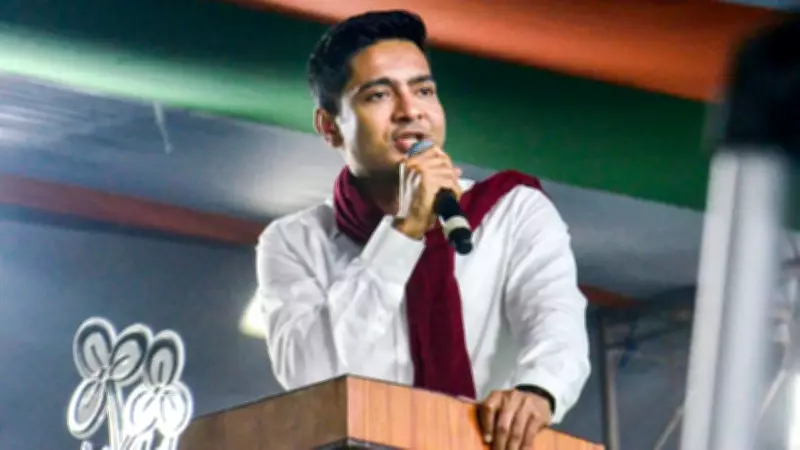
Senior Trinamool Congress (TMC) leader Abhishek Banerjee has launched a scathing attack on the central government, accusing it of severely damaging the pride and self-esteem of the Rajbanshi community in north Bengal. Speaking at a public meeting in the Natabari assembly constituency of Cooch Behar district on Tuesday, Banerjee, who serves as the TMC national general secretary, claimed that the BJP-led Centre has consistently failed to honor commitments made during multiple election campaigns.
Unfulfilled Promises on Military Recruitment and Cultural Recognition
Banerjee specifically targeted Union Home Minister Amit Shah, alleging that the BJP leader made false promises to the Rajbanshis, who constitute a significant voting bloc in the region. According to the TMC leader, Shah had repeatedly pledged during the 2019, 2021, and 2024 election campaigns to establish a Narayani Sena battalion within the Indian Army, recruiting exclusively from the Rajbanshi community. However, Banerjee asserted that this commitment remains unfulfilled.
The TMC leader further criticized the Centre for its apparent neglect of cultural and linguistic concerns. He highlighted that the West Bengal government has been pushing for the inclusion of the Rajbanshi language in the Eighth Schedule of the Constitution, but the central administration has yet to respond positively. Banerjee argued that this disregard has deeply wounded the community's cultural identity and self-respect.

Allegations of Historical and Development Neglect
Banerjee also accused Shah of displaying ignorance about Bengal's indigenous communities and their historical figures. He pointed to the unfulfilled promise of establishing a Panchanan Barma memorial in Cooch Behar, noting that Shah had even mispronounced the revered figure's name during an election rally, causing widespread offense among local residents.
The TMC leader listed several other development projects that he claims have been abandoned by the Modi government:
- Creation of a religious tourism hub centered around popular temples in Cooch Behar
- Establishment of an AIIMS-type hospital in north Bengal
- Addressing the harassment faced by Bengali-speaking migrants in BJP-ruled states
Broader Political Context and Electoral Implications
Banerjee framed the upcoming West Bengal Assembly elections as a fundamental fight between insult and respect, urging voters to reject what he described as the BJP's divisive politics. He warned against falling into what he called the trap laid by the BJP and its allies, who he claims seek to divide communities along ethnic, linguistic, and religious lines.
The TMC leader also made serious allegations regarding citizenship issues, claiming that the BJP has deleted the names of lakhs of Bengalis from citizenship registers under the "under adjudication" clause, including numerous Hindu Bengalis. He contrasted this with the TMC's commitment to continue the state's flagship welfare scheme, Lakshmir Bhandar, despite what he described as central government attempts to withhold Rs 2 lakh crore in funds due to Bengal.
Historical Significance of the Rajbanshi Community
The Rajbanshis, descendants of the Koch dynasty, represent the largest Scheduled Caste group in north Bengal, with significant populations concentrated across four districts:
- Cooch Behar
- Jalpaiguri
- Alipurduar
- Darjeeling
Historically, this community has been at the forefront of campaigns for linguistic recognition and regional development, with periodic movements advocating for either a separate Kamatapur state or an autonomous council. Their political significance is particularly pronounced as West Bengal prepares for two-phase Assembly elections on April 23 and 29, with vote counting scheduled for May 4.

Banerjee's allegations highlight the ongoing political tensions in the region, where development promises and cultural recognition have become central electoral issues. The TMC leader's remarks underscore the party's strategy to position itself as the protector of Bengal's indigenous communities against what it portrays as central government neglect and broken promises.