

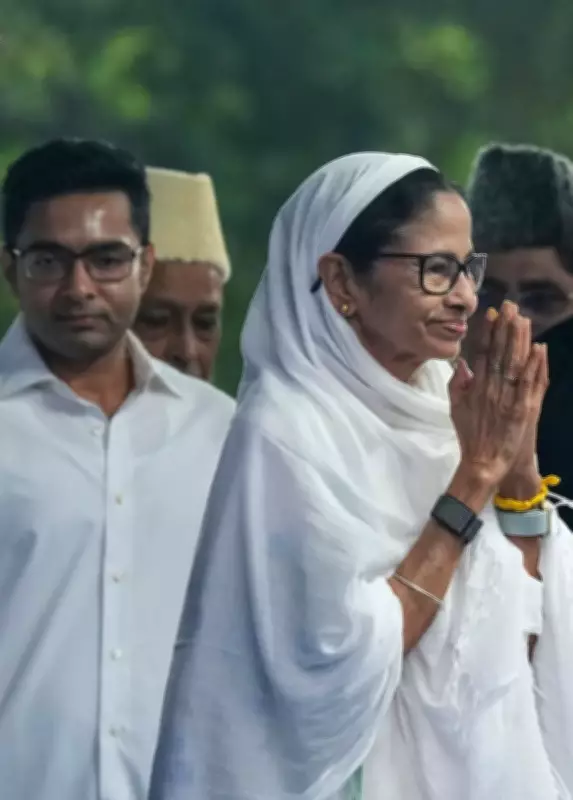
TMC Unveils Strategic Twin-Front Campaign for West Bengal Assembly Elections
With the first phase of the West Bengal assembly elections looming just a month away, the ruling Trinamool Congress (TMC) is gearing up for an aggressive dual-pronged campaign offensive. This meticulously planned strategy will see party supremo and Chief Minister Mamata Banerjee spearheading efforts in the northern districts, while her nephew and national general secretary Abhishek Banerjee takes charge in the southern regions. The move is a clear tactical response to counter the Bharatiya Janata Party (BJP) across two distinct and crucial electoral battlegrounds in the state.
Mamata Banerjee's Northern Onslaught to Reclaim Political Ground
Party insiders have confirmed that Mamata Banerjee will formally inaugurate the campaign in north Bengal, a territory long considered a BJP stronghold, with a massive rally scheduled at the Alipurduar Parade Ground on March 24. On the same day, the chief minister is also slated to address key gatherings at Matigara in Darjeeling district and Maynaguri in Jalpaiguri. This concerted push signals the TMC leadership's determined attempt to wrest back political dominance in the northern belt, where the BJP had made significant inroads during the 2019 Lok Sabha polls and maintained a robust presence through the 2021 assembly elections.
Political analysts highlight that despite the TMC's improved performance in the 2024 parliamentary elections, north Bengal remains a pivotal theatre of contest. The BJP aims to consolidate its foothold among diverse communities, including the Rajbanshi, tribal, and migrant populations. "Mamatadi herself leading the charge from Alipurduar sends a powerful message that the party is taking the BJP's challenge in north Bengal with utmost seriousness," remarked a senior TMC leader, underscoring the strategic importance of her direct involvement.

Before departing for north Bengal, Mamata Banerjee will address a crucial workers' conference in her own Bhabanipur constituency on Sunday evening. This meeting at Ahindra Mancha in Chetla is expected to bring together booth workers and local leadership, including state TMC president Subrata Bakshi, Kolkata Mayor Firhad Hakim, South Kolkata district president Debasish Kumar, and area councillors. The mobilisation holds particular significance as Bhabanipur, traditionally viewed as Mamata Banerjee's political stronghold, has emerged as a closely monitored constituency following the BJP's decision to field Leader of Opposition Suvendu Adhikari against her.
Abhishek Banerjee's Southern Campaign Focuses on Organisational Strength
While the chief minister commands the northern front, Abhishek Banerjee, widely regarded as the party's chief campaign strategist, will kick off his campaign from Patharpratima in South 24 Parganas on March 24. From there, he is expected to swiftly move into the politically volatile Medinipur belt, addressing rallies in Daspur, Keshiary, and Narayangarh on March 25, followed by a workers' meeting in Nandigram.
The visit to Nandigram carries profound symbolic and political weight. This constituency served as the epicentre of the 2021 assembly election when Mamata Banerjee suffered a defeat at the hands of Suvendu Adhikari in a high-voltage contest that came to symbolise the intense TMC-BJP rivalry in Bengal. In a strategic move, the TMC has fielded Pabitra Kar, a former associate of Adhikari who recently switched camps and joined the ruling party in the presence of Abhishek Banerjee, setting the stage for another closely watched and fiercely contested battle.
Political observers believe Abhishek's early emphasis on the Medinipur region reflects the party's concerted effort to blunt the BJP's organisational strength in the Jangalmahal and coastal belts. "Abhishek's style of campaigning is more organisational and cadre-driven. He tends to focus on consolidating the booth network and energising the grassroots machinery," noted a political analyst, highlighting his methodical approach.

Strategic Division and High-Stakes Electoral Battle
Sources indicate that Abhishek Banerjee will also travel to north Bengal later in the month, with plans to address rallies and roadshows in at least nine assembly segments across the region on March 26, 28, and 31. This staggered campaign schedule, with Mamata concentrating on the northern districts and Abhishek covering southern Bengal, is being perceived within the party as a strategic division of political turf ahead of what the TMC terms a battle to retain power for a fourth consecutive term.
The upcoming elections carry immense stakes for all political factions involved. The TMC is banking on its welfare-driven governance model and Mamata Banerjee's personal popularity to secure victory. Conversely, the BJP is striving to convert its parliamentary gains into a broader electoral consolidation across the state. With the first phase of polling scheduled for April 23 across 152 assembly constituencies, the coming weeks are poised to witness an intense campaign battle that will rigorously test the TMC's organisational muscle against the BJP's expanding political footprint in Bengal.
Adding to the complexity, the Election Commission's Summary Revision of electoral rolls reportedly led to the deletion of approximately 47,000 names from Bhabanipur's voter list, a development that has heightened the party's vigilance. TMC sources reveal that Banerjee has already conducted multiple meetings at her Kalighat residence with booth-level agents and organisational coordinators to assess the impact of this revision and streamline ground mobilisation efforts. In the 2024 Lok Sabha polls, TMC candidate Mala Roy secured a lead of about 6,500 votes in Bhabanipur, but the BJP surged ahead in five municipal wards, prompting the TMC to assign specific responsibilities to senior leaders for key wards in preparation for the assembly battle.





