Tamil Nadu Assembly Erupts in Debate Over Medical Admission Quota
The Tamil Nadu Legislative Assembly witnessed a fiery exchange on Wednesday as the AIADMK and the ruling DMK clashed over the contentious issue of the 7.5% horizontal reservation for government school students in medical admissions. The debate, which unfolded during discussions on the interim budget for 2026–27, saw both political parties fiercely contesting ownership of the landmark quota policy.
AIADMK Accuses DMK of Claiming Undue Credit
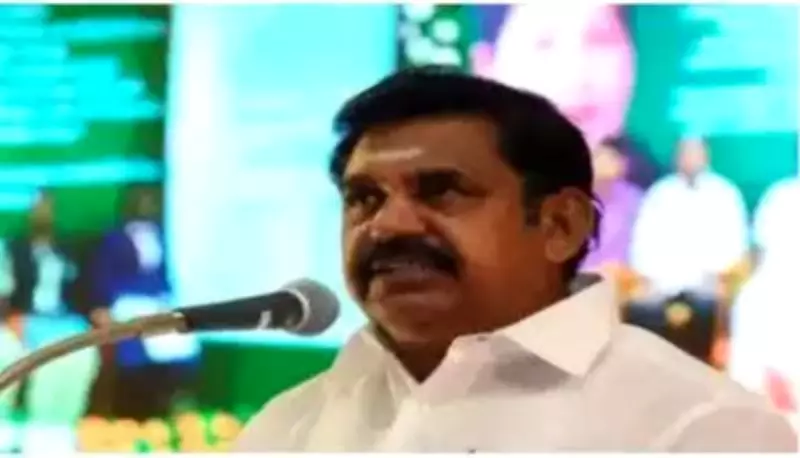
AIADMK General Secretary and former Chief Minister Edappadi K. Palaniswami launched a sharp attack against the DMK government, accusing it of attempting to take credit for the reservation initiative. The confrontation was ignited by remarks from AIADMK MLA K. P. Munusamy, who highlighted the achievements of the previous AIADMK regime.
"Without any external demand, EPS introduced the 7.5% reservation specifically for government school students," Munusamy asserted during the budget debate. He further contrasted the two administrations by noting, "The AIADMK government established 11 new medical colleges, whereas the current DMK government has failed to secure even a single medical college in the past five years."

DMK Counters, Credits Stalin for Quota Pressure
Health Minister Ma. Subramanian swiftly intervened to counter the AIADMK's claims, presenting a different narrative regarding the origins of the reservation policy. He argued that the quota was a direct result of persistent pressure exerted by the then opposition leader and current Chief Minister M. K. Stalin.
"It was M. K. Stalin who consistently demanded reservation for government school students in medical admissions," Subramanian stated emphatically. "Only after the DMK announced plans for a protest did the previous AIADMK government finally announce the quota."
Regarding the 11 medical colleges cited by the AIADMK, Subramanian attributed their establishment to the legacy of former Chief Minister M. Karunanidhi. "These medical colleges are merely a continuation of Karunanidhi's visionary initiative to establish a medical college in every district of Tamil Nadu," he clarified, framing the AIADMK's efforts as an extension of DMK's foundational policies.
Broader Implications of the Political Clash
The heated exchange underscores the deep political divisions in Tamil Nadu, where credit for social welfare policies often becomes a battleground between rival parties. The 7.5% horizontal reservation for government school students is a significant policy aimed at enhancing educational equity and access to medical education for economically disadvantaged students.
This Assembly clash not only highlights the ongoing tension between the AIADMK and DMK but also reflects the broader struggle over legacy and governance in the state. As both parties vie for public support, such debates are likely to continue shaping the political discourse in Tamil Nadu, with each side seeking to bolster its credentials on education and social justice.