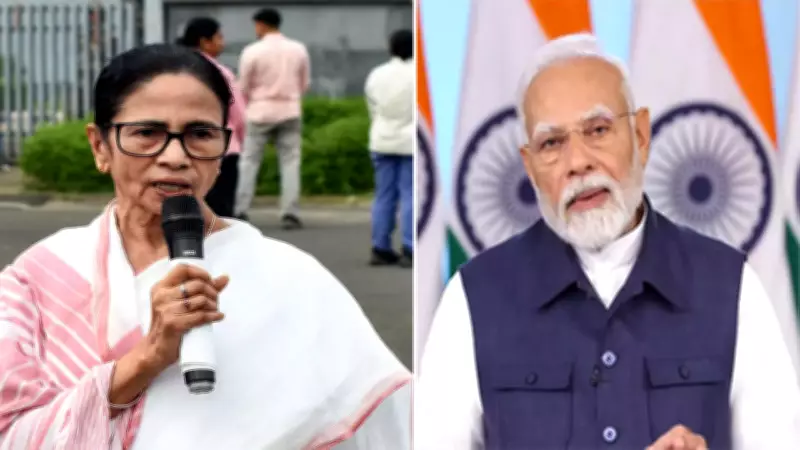
KOLKATA: Trinamool Congress stoked fears that Bengal's identity was under threat from the BJP, but in doing so, found its own identity fading. While Mamata Banerjee emphasized 'maachh' (fish), the BJP countered with both 'maachh' and 'muri' (puffed rice).
The Failure of Fear Mongering
The ruling party's fear mongering failed miserably. What mattered was the near-empty plate, not the palate. Unemployment, lack of industries, and rampant corruption could no longer be ignored. Fifteen years of inertia that had left Bengal comatose proved to be Didi's undoing.
Mamata's Strategy
Mamata framed the contest as a battle for Bengali identity against a hostile central government. She highlighted Bengali migrant workers being targeted in other states, the BJP's alleged dictates on non-vegetarian food, and the Centre's apathy in releasing funds. Trinamool's slogan, 'Jato karo hamla, ebar jitbe Bangla' (however much you attack, this time Bangla will win), was meant as a war cry of Bengali resistance.

BJP's Counterattack
BJP lost no time in joining the battle. When Prime Minister Narendra Modi ate 'jhalmuri' at Jhargram, it was not mere optics. When he raised the fish debate, the BJP think tank knew its goal. When Bidhannagar BJP candidate Sharadwat Mukhopadhyay walked around with a fish, the party aimed for a bigger catch, which it finally netted on Monday. To BJP's 'ghuspaithiya' (infiltrators) pitch was added the message that the allegation of Bengal's cultural and culinary identity being under threat was a ruse to divert attention from the state government's failures.
Key Factors in BJP's Victory
Union Home Minister Amit Shah fortified the assurance by declaring that a son of the soil would be the next BJP Chief Minister. During the last Lok Sabha polls, Trinamool had already conceded leads in over 60% of wards across 125 municipal bodies, including its bastions in south Kolkata. BJP saw its chance and went for the kill.
The RG Kar tragedy, which evolved from a law-and-order failure into an indictment of a culture of impunity within the state administration, decaying infrastructure, and the unresolved teachers' recruitment dispute, kept the pot boiling. These factors produced distrust among the educated middle class that Trinamool had rarely encountered. 'The city, like the state, was not making much progress. Basic infrastructure got neglected because of the burden of doles. They said 'khela hobe' and now the game is over,' said PhD scholar Aniket Banerjee, who is forced to search for a job outside the state.
Follow the latest election results 2026, live updates, winner lists, constituency-wise results, party-wise trends, and full coverage for Tamil Nadu, West Bengal, Kerala, Assam, and Puducherry elections on Times of India.