

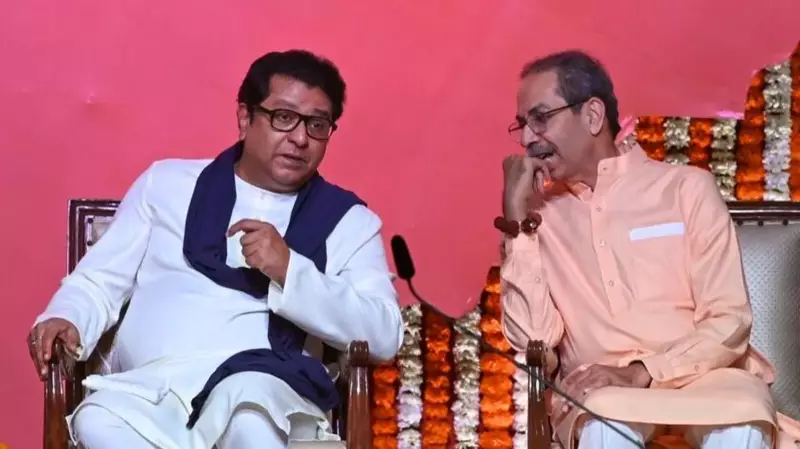
In a dramatic political development that is set to reshape Mumbai's civic landscape, estranged cousins Uddhav Thackeray and Raj Thackeray have officially joined forces. The leaders announced a formal alliance for the upcoming Brihanmumbai Municipal Corporation (BMC) elections, marking an end to their nearly two-decade-long separation.
A Historic Press Conference
The landmark announcement was made by Shiv Sena (UBT) chief Uddhav Thackeray and Maharashtra Navnirman Sena (MNS) chief Raj Thackeray at a joint press conference in Mumbai on 24 December. The visual of the two leaders sharing a stage sent shockwaves through the state's political circles. “We have come together to stay together,” declared Uddhav Thackeray, succinctly capturing the significance of the reunion.
Seat-Sharing Formula for 227 Seats
The alliance has finalized a seat-sharing pact for the BMC polls, which are scheduled for January 15 next year. According to reports, Uddhav Thackeray's Shiv Sena (UBT) will contest 150 seats, while Raj Thackeray's MNS will field candidates in the remaining 77 seats. The Brihanmumbai Municipal Corporation, India's richest civic body, has a total of 227 electoral wards.

Background of a Two-Decade Rift
The political reconciliation holds profound symbolic weight. The cousins had parted ways in 2006 when Raj Thackeray was reportedly upset over Uddhav's elevation as the working president of the undivided Shiv Sena. Raj subsequently walked out and founded his own party, the Maharashtra Navnirman Sena (MNS). Their rivalry since then has been a defining feature of Mumbai's and Maharashtra's politics, often splitting the Marathi vote.
The reunion after two decades is widely seen as a tectonic shift in Mumbai's political landscape. By combining their strengths, the Thackeray cousins aim to present a formidable front against their common opponents in the crucial civic polls. The BMC elections are often considered a bellwether for state politics, and this alliance could significantly alter the existing equations.
The move signals a strategic consolidation aimed at reclaiming political ground in Mumbai. Analysts suggest this pact could unify a fragmented voter base and intensify the competition for control of the prestigious civic body. The political ramifications of this alliance are expected to extend far beyond the BMC, potentially influencing the state's broader power dynamics.






