

Election Commission Grants Fourth Extension for Uttar Pradesh Voter Roll Revision
The Election Commission of India (EC) has announced a fourth extension to the schedule for the Special Intensive Revision (SIR) of electoral rolls in Uttar Pradesh. The deadline for filing claims and objections has been pushed by another month, now set for March 6, 2026. Consequently, the final electoral roll will be published on April 10, 2026, according to official statements.
Revised Timeline and Official Communication
This extension follows a previous decision in December, where the EC had set February 6 as the last date for claims and objections, with publication scheduled for March 6. In a communication to the Uttar Pradesh Chief Electoral Officer (CEO) on Thursday, the EC stated it had considered the CEO's request and "other relevant factors" before revising the schedule. The period for issuing notices to electors will now extend until March 27, 2026.
The SIR of electoral rolls was initially announced in October last year for nine states, including Uttar Pradesh, and three Union Territories. While the electoral rolls for the other states and UTs are slated for publication on February 14, Uttar Pradesh's process has been extended based on suggestions from political parties.

Political Parties' Role and Voter Data
During a meeting with the UP CEO on January 27, the ruling Bharatiya Janata Party (BJP) and opposition parties, including the Samajwadi Party and Congress, advocated for an extension. They cited a high volume of Form 6 submissions for name additions, as well as claims and objections for deletions and additions.
The draft electoral roll published in Uttar Pradesh revealed a significant reduction, with 19% of electors deleted, bringing the total down from 15.44 crore to 12.55 crore. Additionally, 3.36 crore electors, or 26%, have been flagged for notices. If these individuals fail to attend hearings or provide necessary eligibility documents, they may also be removed from the final rolls.
CEO Addresses Concerns Over Form 7 Misuse
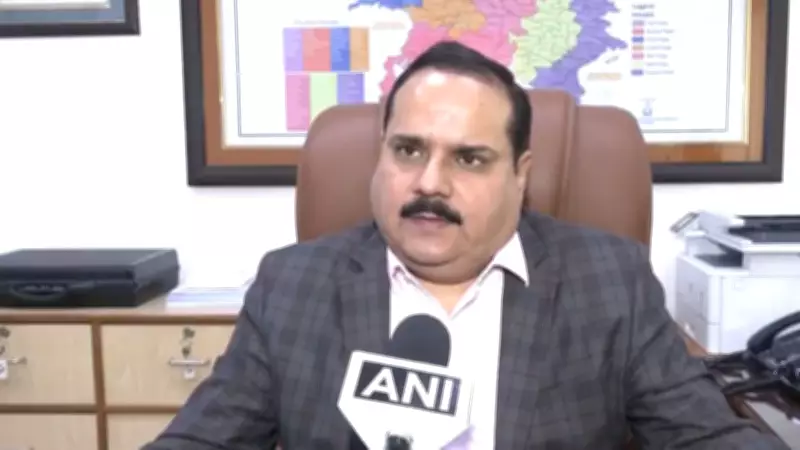
Speaking to media in Lucknow on Friday, CEO Navdeep Rinwa directly addressed concerns raised by political parties, particularly the Samajwadi Party, regarding the alleged misuse of Form 7 for bulk deletions of targeted voters. Rinwa clarified that Form 7 is not accepted in bulk and outlined strict protocols.
He explained that booth-level agents (BLAs) deployed by political parties can collect and submit a maximum of 10 Form 7s per day. However, they must also file an undertaking affirming the genuineness and validity of the reasons provided. From January 6 to February 4, BLAs submitted only 1,567 Form 7s and 37,779 Form 6s with these undertakings. In contrast, individual voters directly filed 82,684 Form 7s.
Rinwa emphasized the procedural safeguards: "It is not possible that the name of an elector can be deleted on a Form 7 filed secretly by someone. On receiving Form 7, the Electoral Registration Officer (ERO) issues notice to both the filer and the person named. During the hearing, the objector must present evidence, and the ERO then makes a decision. The apprehensions that Form 7 was being filed in large numbers for bulk deletions are not correct."
Operational Measures and Submission Statistics
To facilitate the revision process, booth-level officers (BLOs) have been instructed to be present at polling stations from 10 am to 12 pm on every working day. They will assist electors with access to draft rolls and lists categorizing voters as "absent," "shifted," "deceased," "duplicate," or "refused-to-sign," along with those having mapping discrepancies.
The state has appointed 403 Electoral Registration Officers (EROs) and 8,990 Assistant Electoral Registration Officers (AEROs), with plans to deploy more to expedite hearings. Political parties have mobilized approximately 5.80 lakh BLAs across Uttar Pradesh.

Regarding submission trends, Rinwa noted that from January 6 to February 4, a total of 82,684 Form 7s and 37.80 lakh Form 6s were received. The rate of Form 6 submissions is rising, with 3.51 lakh forms submitted on Thursday alone, indicating active public participation in the revision process.





