

Uttar Pradesh Fuel Situation: A Crisis of Consumption, Not Supply
The fuel scenario in Uttar Pradesh has escalated into a significant disruption, but authorities emphasize this is not a crisis of supply. Instead, it stems from a sudden and excessive surge in consumption, primarily fueled by widespread rumors and misinformation circulating among the public.
Sharp Spike in Fuel Consumption in Lucknow
In Lucknow alone, the daily fuel consumption at Indian Oil Corporation Limited (IOCL) stations witnessed a dramatic increase between March 21 and March 25. Consumption jumped from approximately 7.23 lakh litres per day to nearly 12.07 lakh litres, highlighting the intensity of the panic-driven demand.
Officials and fuel dealers have pointed out that this spike, triggered by panic buying, rapidly emptied retail tanks faster than usual. This depletion, in turn, fueled further rumors of an impending shortage, creating a vicious cycle of rush and anxiety among motorists.

Statewide Rush and Long Queues Reported
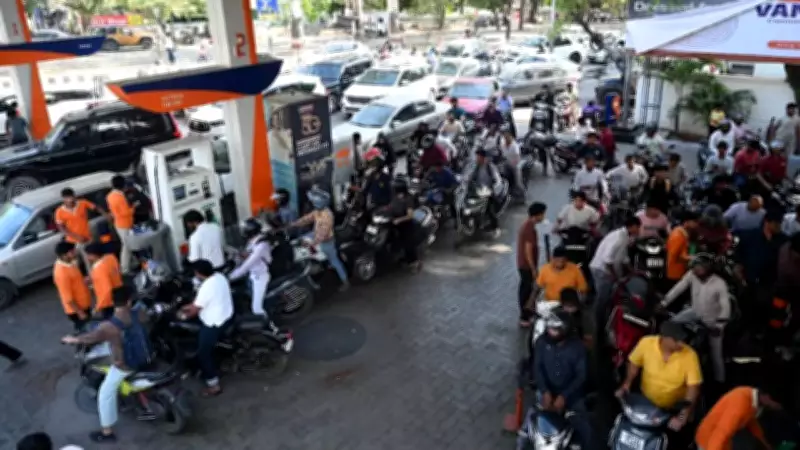
What began as scattered messages on social media platforms soon escalated into a statewide rush. Motorists scrambled to fill their tanks amid fears of a fuel shortage, leading to long queues, anxious conversations, and briefly dry fuel stations reported on Thursday from several districts including:
- Lucknow
- Ayodhya
- Basti
- Gonda
- Prayagraj
This occurred despite repeated assurances from authorities that supplies remained normal and stable across the state.
Traffic Disruptions and Police Intervention in Lucknow
In the state capital, queues of two-wheelers and cars were observed outside fuel stations in areas such as Aliganj, Gomti Nagar, Hazratganj, Telibagh, Ahmamau, and Patrakarpuram. Waiting times stretched up to 30–40 minutes, and in some locations, queues spilled onto main roads, causing traffic congestion and disruptions during peak hours.
By evening, local police in Lucknow stepped in to calm public anxiety. Police patrol vehicles made announcements through loudspeakers in several neighborhoods, urging residents not to engage in panic-buying and assuring them that petrol and diesel were available in sufficient quantities across the city.
Lucknow District Magistrate Vishak G reinforced this message, urging residents to ignore rumors. “Supplies are stable, with no purchase limits imposed,” he stated, clarifying that there is no petrol or diesel shortage in the city.
Dealers Attribute Crisis to Rumors and Changed Consumption Patterns
According to Alok Trivedi, General Secretary of the Lucknow Petrol Dealers Association, the situation was driven entirely by rumors. “Motorists are increasingly opting to fill their tanks to full capacity, which has sharply pushed up demand,” he explained.
Trivedi noted that petrol pumps with an average storage capacity of 20,000 to 40,000 litres, which earlier lasted two to three days, are now running dry much sooner due to this heightened consumption.
At a privately owned Bharat Petroleum Corporation Limited (BPCL) fuel station near South City, fuel sales were halted by 1 pm on Thursday. An attendant mentioned that the last tanker had arrived three days ago, though advance payments had already been made for replenishment from the Kanpur depot.
State Authorities Confirm Adequate Fuel Reserves
Despite these local disruptions, state-level coordinator Sanjay Bhandari maintained that there was no fuel shortage in Uttar Pradesh. He reported that the state's 13,168 petrol pumps currently have sufficient reserves, with a total availability of around 20 to 22 days. Retail outlets hold an average of five days of stock, while oil company depots maintain an additional 16–17 days.
Bhandari acknowledged a nearly 30% rise in fuel demand over the past three days due to panic buying. Data reveals that in Uttar Pradesh:

- Petrol consumption rose from an average of 1.7 crore litres per day till March 22 to 2.2 crore litres on March 25.
- Diesel consumption increased from 3.1 to 4 crore litres per day over the same period.
Supply Mechanism Adjustments and Public Response
Lucknow Petrol Dealers Association chairman Virendra Pratap Singh highlighted that the supply mechanism has changed since the West Asia conflict. “Earlier, tankers were dispatched proactively. Now, stations are supplied against credit limits or advance payments,” he said.
Bhandari clarified that once an indent is placed, fuel is supplied within three days of payment. Oil marketing companies are attempting to supply up to 2.5 times the usual volume to meet the sudden spike in demand.
Many consumers admitted the rush was fear-driven. Rajeev Verma in Gomti Nagar shared, “I saw WhatsApp messages warning of shortages. I didn’t want to risk it.” Others, like delivery drivers and commuters, complained that panic buying by some inconvenienced those who genuinely needed fuel for daily operations.
Ranjeet Kumar, President of the UP Petrol Dealers Association, urged the public, “People should not believe unverified information,” and insisted that supplies from IOCL, Hindustan Petroleum Corporation Limited (HPCL), and BPCL remain smooth, with the fuel supply situation normal in Uttar Pradesh.





