Uttar Pradesh's Monumental Budget: A ₹9.12 Lakh Crore Vision for Development
The Uttar Pradesh government has unveiled an expansive and ambitious budget totaling ₹9.12 lakh crore, designed to consolidate the state's development trajectory across multiple sectors. This comprehensive fiscal blueprint includes substantial allocations for MSMEs, the innovative One District One Cuisine (ODOC) initiative, urban development and housing, agriculture and dairy, food storage infrastructure, and medical education and research.
Historic Allocation for Law and Order: Over ₹44,000 Crore
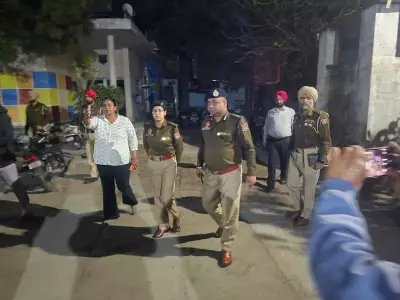
However, the most consequential and groundbreaking feature of this year's budget is the earmarking of over ₹44,000 crore specifically to strengthen law and order through smart, technology-enabled policing. This represents the highest allocation for policing in the entire history of Uttar Pradesh, signaling a clear and decisive policy priority: establishing citizen safety as the foundational pillar of governance.
Specific provisions within this massive allocation include:
- ₹95.16 crore for establishing a state-of-the-art Cyber Security Operations Centre
- ₹12.15 crore for modernizing cyber police stations with advanced resources and specialized vehicles
- ₹25 crore dedicated to vehicles for women beat personnel under the Mission Shakti initiative
- ₹25.71 crore for new vehicles to enhance the UP 112 emergency response system
- ₹15 crore for operationalizing three new State Disaster Response Force teams
The National Policing Context: Addressing Critical Shortfalls
The importance of this unprecedented investment becomes clearer when examined against the national policing landscape. Data compiled by the Bureau of Police Research and Development (BPR&D) reveals that the national police-to-population ratio stands at approximately 197 sanctioned personnel per lakh population. However, the actual strength on the ground is significantly lower, often cited in the range of 155 to 197 per lakh.
This falls substantially short of the United Nations' recommended benchmark of roughly 222 to 350 police personnel per lakh population observed in many global contexts. These numerical gaps translate directly into operational strain, resulting in overburdened officers, extended working hours, delayed emergency responses, limited investigative capacity, and reduced community engagement.
In states with large populations and complex socio-economic challenges like Uttar Pradesh, these shortages compound pressure on law enforcement agencies, creating a cycle of fatigue, reactive policing, and public dissatisfaction.
Strategic Significance: Beyond Infrastructure to Capacity Building
Uttar Pradesh's decision to invest massively in policing acquires strategic significance that extends beyond mere infrastructure or vehicle procurement. This allocation represents a fundamental commitment to capacity building, recognizing that 21st-century policing must be technology-driven, data-informed, and agile.
The establishment of a Cyber Security Operations Centre and strengthening of cyber police stations reflect a sophisticated understanding that future threats will be increasingly virtual, borderless, and complex, requiring advanced response mechanisms to combat cybercrime, financial fraud, organized crime networks, and misinformation ecosystems.
Human Resource Development: Youth Recruitment and Gender Sensitivity
Equally important is the state's ongoing drive for large-scale recruitment of young personnel into the police organization. Uttar Pradesh has been leading the country in inducting new constables and sub-inspectors in significant numbers. This infusion of youth is critical because young recruits, when properly trained, demonstrate greater adaptability to technology, increased receptiveness to new policing models, and enhanced capability for sustaining long-term institutional transformation.
The emphasis on women beat personnel under Mission Shakti carries both symbolic and practical weight. Dedicated mobility for women officers strengthens community outreach, improves responsiveness to crimes against women, and signals a clear commitment to gender-sensitive policing. Similarly, strengthening the UP 112 emergency response system enhances real-time citizen interface and reduces critical response times—key indicators of public trust and operational efficiency.
Economic Implications: Policing as Central to Growth
A strong and tech-savvy police force is not a peripheral element of economic planning but rather central to sustainable development. Investors consistently seek predictability and security when making decisions. Industrial corridors, urban expansion projects, tourism initiatives, logistics hubs, and digital enterprises all require a stable law and order environment to thrive.
Crime and insecurity function as invisible taxes on economic growth, while efficient policing lowers transaction costs, enhances business confidence, and improves overall quality of life for citizens. This creates a virtuous cycle where security investments yield economic dividends.
Broader National Implications: Setting a New Benchmark
The broader message from Uttar Pradesh's budget extends well beyond state boundaries. At a time when India aspires to become a $5 trillion economy, states that are performing well economically must also invest boldly in policing reform. Modern command-and-control centres, forensic capabilities, integrated databases, body-worn cameras, predictive analytics, and specialized disaster response units are no longer optional add-ons but rather foundational investments in governance architecture.
This development also presents an opportune moment to revive the national discourse on structural police reform—including organizational autonomy, accountability frameworks, professional training standards, and insulation from undue political pressures. While technology cannot substitute for institutional reform, it can significantly accelerate transformation when aligned with clear policy intent and strategic vision.
Conclusion: An Investment in India's Future
Higher expenditure on policing should not be viewed as a drain on the exchequer but rather as a strategic investment in India's future. Every rupee spent on strengthening law and order contributes directly to safer streets, quicker justice delivery, greater social stability, and enhanced economic opportunity for all citizens.
By allocating over ₹44,000 crore toward building a robust, technology-enabled police force, Uttar Pradesh has powerfully demonstrated that development and security are inseparable components of progressive governance. The state has decided to lead by example, showing that bold investment in policing is not merely about control but about building confidence, fostering growth, and fulfilling the promise of a secure and prosperous society for generations to come.