

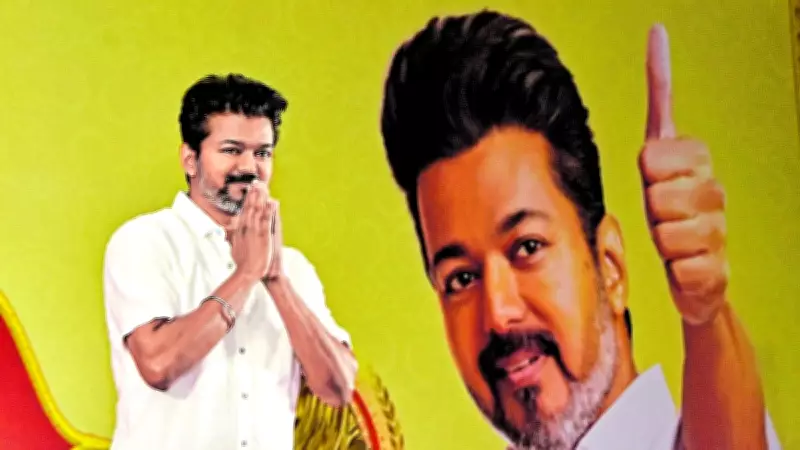
Vijay's Fan Clubs: A Game-Changer for TVK in Tamil Nadu's Political Arena?
Actor-politician Vijay has emerged as a significant force in Tamil Nadu politics with his party, Tamilaga Vettri Kazhagam (TVK), posing a formidable challenge to the long-standing dominance of the two major Dravidian parties, the Dravida Munnetra Kazhagam (DMK) and the All India Anna Dravida Munnetra Kazhagam (AIADMK). As the political landscape evolves, Vijay raises two critical questions that could reshape the state's electoral dynamics.
Will TVK Upset the Dravidian Duopoly?
TVK, under Vijay's leadership, is strategically positioning itself to disrupt the traditional two-party system in Tamil Nadu. With a focus on grassroots mobilization and anti-corruption platforms, the party aims to capitalize on voter dissatisfaction with established political entities. Analysts suggest that TVK's appeal among youth and urban voters could erode the support bases of both DMK and AIADMK, potentially leading to a more fragmented political scene in upcoming elections.
Re-establishing the Importance of Fandom in Politics
Vijay's entry into politics highlights the enduring influence of film fan clubs in Tamil Nadu, a phenomenon deeply rooted in the state's cultural fabric. His fan clubs, which have long been active in social welfare and community engagement, are now being leveraged as a political machinery to drive TVK's campaigns. This move raises questions about whether fandom can translate into sustained political success, reviving a trend seen in the past with other actor-politicians like M.G. Ramachandran and J. Jayalalithaa.

Key factors in TVK's strategy include:
- Utilizing fan clubs for voter outreach and mobilization.
- Focusing on issues like governance transparency and economic development.
- Building a narrative of change against perceived political stagnation.
As Tamil Nadu gears up for future electoral battles, the interplay between celebrity influence and political ideology will be closely watched. Vijay's TVK not only tests the resilience of Dravidian parties but also rekindles debates about the role of populism and personal charisma in Indian democracy.






