

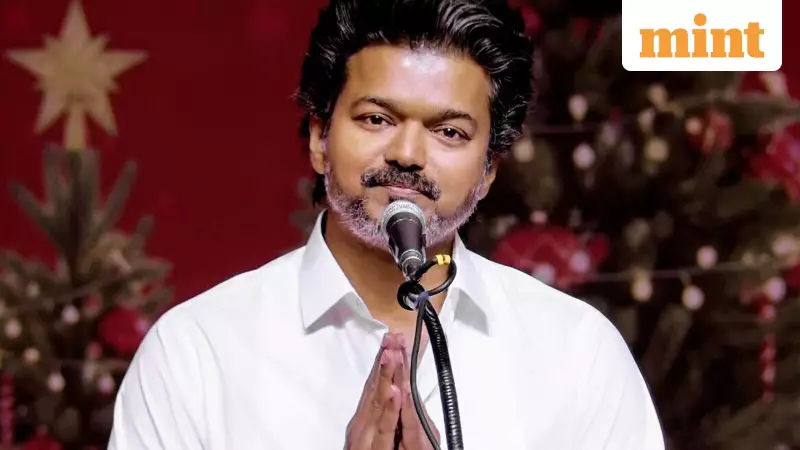
The political landscape of Tamil Nadu, which had found a fragile balance following the AIADMK's 2017 split, was jolted anew in February 2024 with the entry of a formidable screen presence. The announcement by top actor Vijay of his political party, the Tamilaga Vettri Kazhagam (TVK), continues to send ripples of intrigue and uncertainty through the established Dravidian political order nearly two years later.
The Star's Gambit: Popularity Versus Political Machinery
Following a well-trodden path in the state's history, Vijay is placing a significant bet. His strategy hinges on the premise that immense mass popularity, cultivated over a decades-long film career, can be successfully converted into electoral votes. The TVK is positioning itself as a credible third force to challenge the long-standing dominance of the DMK and AIADMK ahead of the crucial 2026 Tamil Nadu Legislative Assembly election.
However, the historical record offers a note of caution. In the annals of Tamil Nadu, only two film personalities have made the triumphant leap from cinema to sustained political power: the legendary M.G. Ramachandran (MGR) and his protege, J. Jayalalithaa. Numerous other stars with similar ambitions have seen their political ventures falter, unable to replicate that unique alchemy.

Vijay undeniably brings powerful assets to the arena. He commands a vast and deeply loyal fan network that functions as a ready-made grassroots base. His appeal among the youth demographic is particularly strong, a segment often courted by all parties. Yet, critical gaps remain. The TVK currently lacks a proven, ground-level political organisation comparable to its rivals. Furthermore, the party has yet to articulate a clear and compelling alternative governance model that distinguishes it substantively from the existing options.
Alliance Arithmetic and the Disruptor's Role
Political analysts suggest that even potential pre-poll alliances with smaller or regional parties may not immediately catapult TVK to frontrunner status. In the immediate future, its most likely impact is that of a significant disruptor. The party's presence could split the vote in key constituencies, altering the calculus for both the DMK and AIADMK, rather than sweeping to power on its own.
The central question that will define the next two years is whether Vijay's cinematic stardom can successfully reshape the entrenched political script of Tamil Nadu, or if it will fade on its electoral debut. The answer rests on his ability to build a robust party machinery, craft a resonant political narrative beyond his personal image, and navigate the complex alliance politics of the state.
Beyond Cinema: Other Key Developments in Focus
While Tamil Nadu's political theatre unfolds, other significant stories are shaping India's economic and policy landscape. In the pharmaceutical sector, Natco Pharma's legal challenge against Novo Nordisk's patent for semaglutide (the drug used in Ozempic and Wegovy) has become the latest flashpoint. This case continues India's intense drug patent wars, where courts perpetually balance innovation incentives against public access to affordable medicine, guided by precedents like the landmark Novartis Glivec ruling against evergreening.
In financial policy, the Union Budget 2026 may bring a crucial boost for microfinance. The finance ministry is reportedly considering a one-time credit guarantee scheme, potentially larger than the ₹7,500 crore pandemic-era package, to help NBFC-MFIs secure bank funding. This move aims to revive lending to low-income borrowers as the sector's loan book has shrunk by a staggering nearly ₹1 trillion in just 20 months.

The startup ecosystem is witnessing a strategic shift. A growing cohort of mid-sized Indian startups with revenues in the ₹300–400 crore range, such as Scripbox, MyGate, and ClassPlus, are now eyeing earlier IPOs. This breaks from the previous trend of staying private to chase unicorn valuations. With public markets offering strong domestic liquidity and credibility, founders now view listing as a rational growth lever rather than a last resort.
Furthermore, 2026 is being viewed as a potential inflection point for Indian reforms. Policymakers are expected to use the Union Budget to intensify efforts on simpler taxes, lighter regulation, faster approvals, and stronger support for MSMEs. The goal is to lift productivity and private investment, aiming for the sustained 8% growth needed to meet long-term national ambitions.





