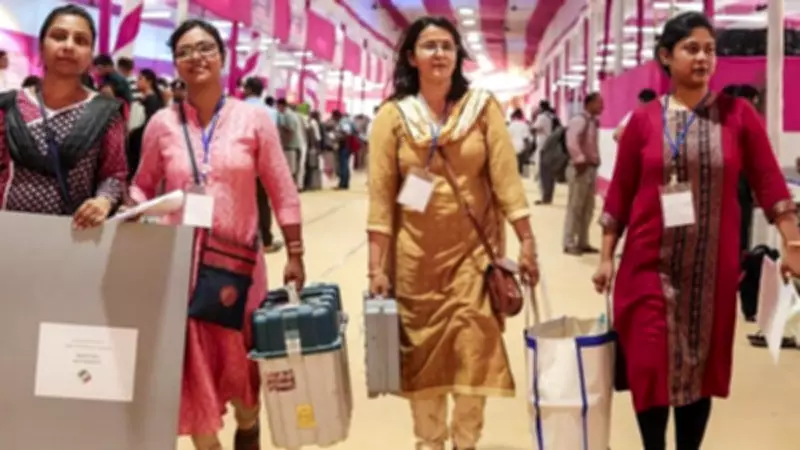
The upcoming West Bengal Assembly Elections in 2026 are witnessing a significant shift in the women's vote segment, driven by the Bharatiya Janata Party's (BJP) promise of higher financial assistance. In its recently released manifesto, the BJP pledged a monthly dole of Rs 3,000 under its proposed 'Annapurna' scheme. This strategic move appears to be making notable inroads into the traditional voter base of the Trinamool Congress (TMC), which has long enjoyed strong support among women in the state.
BJP's Annapurna Scheme: A Game Changer?
The 'Annapurna' scheme, if implemented, would provide direct cash transfers of Rs 3,000 per month to eligible women. This promise is seen as a direct challenge to the TMC's existing welfare programs, such as the 'Lakshmir Bhandar' scheme, which offers Rs 1,000 per month to women from general category families and Rs 1,200 to those from Scheduled Caste and Scheduled Tribe families. The BJP's higher dole could potentially attract women voters who are looking for more substantial financial support amidst rising inflation and economic pressures.
Shifting Sentiments Among Women Voters
Political analysts note that women voters in West Bengal have traditionally leaned towards the TMC, largely due to the party's focus on women-centric welfare schemes and the leadership of Chief Minister Mamata Banerjee. However, the BJP's aggressive outreach and promises of enhanced benefits are beginning to change this dynamic. The party has been actively campaigning in rural and semi-urban areas, highlighting the inadequacy of current support and promising a better future under the 'Annapurna' scheme.

Interviews with women voters across several districts reveal a mixed response. While many remain loyal to the TMC, a growing number are considering the BJP's offer. "The current assistance is not enough to run a household. If the BJP can deliver on its promise, it might be worth a try," said a housewife from North 24 Parganas. Another woman from Bankura added, "We have seen many promises before, but this time the amount is significant. It could make a real difference."
TMC's Response and Strategy
The TMC has dismissed the BJP's promise as an election gimmick, pointing to the party's track record in other states where similar schemes were announced but not fully implemented. Mamata Banerjee has accused the BJP of trying to buy votes with false promises. In response, the TMC has announced an increase in its own 'Lakshmir Bhandar' scheme, raising the monthly amount to Rs 1,500 for general category women and Rs 1,800 for SC/ST women, effective from the next financial year. The party is also highlighting its other welfare measures, such as free education for girls and subsidized food grains.
Impact on Election Outcome
The women's vote constitutes a significant portion of the electorate in West Bengal, with women turning out in large numbers in previous elections. Any shift in this segment could have a substantial impact on the final results. The BJP's 'Annapurna' promise is particularly appealing to lower-income households, where women often manage the family budget. If the party can convince voters of its credibility, it could potentially swing several key constituencies.
However, experts caution that the BJP faces an uphill battle. The TMC has a strong grassroots presence and a proven track record of implementing welfare schemes. Moreover, the BJP's national image and handling of issues like inflation and unemployment could influence voter perception. The coming months will be crucial as both parties intensify their campaigns to win over the women's vote.
As the election approaches, the focus will remain on how effectively each party can address the aspirations and concerns of women voters. The higher dole promise by the BJP has undoubtedly reshaped the discourse, but its ultimate impact will be determined by the voters' trust and the parties' ability to deliver on their commitments.