

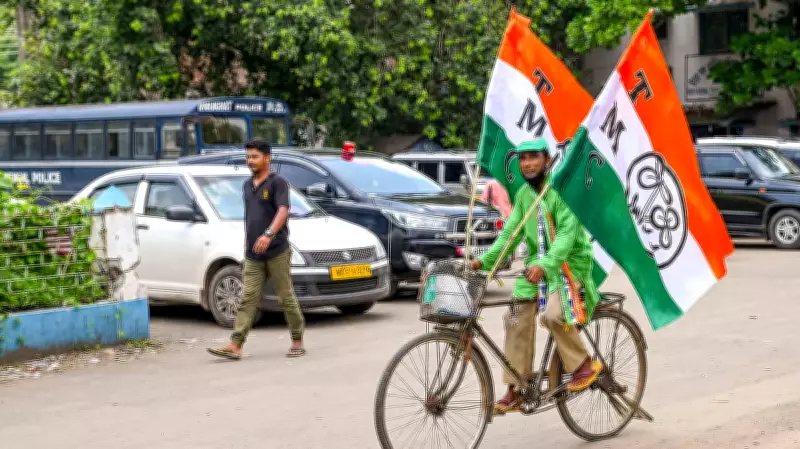
West Bengal Assembly Elections 2026: The Crucial Role of Left-Congress Alliance Dynamics
The political arena in West Bengal is heating up as the 2026 Assembly Elections approach, with all eyes on the strategic maneuvers of major parties. A critical factor shaping this electoral battle is the potential tie-up between the Left Front and the Indian National Congress, or the significant consequences of its absence. This alliance dynamic is poised to have a profound impact on the ruling Trinamool Congress (TMC) and its leader, Chief Minister Mamata Banerjee.
Mamata Banerjee's Dominant Position Within I.N.D.I.A Bloc
So far, Chief Minister Mamata Banerjee has meticulously crafted a political environment that leaves little room for other partners within the I.N.D.I.A-bloc to gain substantial ground in West Bengal. Her assertive leadership and the TMC's strong organizational presence have effectively marginalized potential challengers, consolidating her party's dominance in the state. This strategic positioning has made it increasingly difficult for allies to assert their influence, setting the stage for a complex pre-election scenario.
The Potential Left-Congress Alliance: A Game-Changer
The speculation around a formal alliance between the Left parties and the Congress is generating significant buzz in political circles. Such a coalition could potentially:

- Unify Opposition Votes: By combining their voter bases, the Left and Congress might present a more formidable challenge to the TMC, preventing the fragmentation of anti-incumbency votes.
- Revive Historical Strengths: Both parties have deep-rooted historical support in various regions of West Bengal, and an alliance could help reactivate these traditional voter segments.
- Create a Multi-Pronged Strategy: A coordinated campaign could allow them to target different demographic and geographic areas more effectively than if they contested separately.
Consequences of No Alliance: A Fragmented Opposition
Conversely, the absence of a Left-Congress tie-up could play directly into the TMC's hands. A divided opposition would likely:
- Benefit TMC's Electoral Arithmetic: With anti-TMC votes split among multiple parties, Mamata Banerjee's party could secure victories even with a reduced vote share, similar to past electoral patterns.
- Weaken Anti-Incumbency Momentum: Without a unified front, public dissatisfaction with the ruling party might not translate into electoral gains for any single opposition entity.
- Allow TMC to Focus Resources: The TMC could concentrate its campaign efforts more efficiently against multiple weaker opponents rather than a single strong challenger.
Strategic Implications for TMC's Campaign
Regardless of the alliance outcome, the TMC is expected to adapt its strategy accordingly. If an alliance forms, the party might intensify its outreach to specific voter groups and highlight its development achievements more aggressively. If the opposition remains divided, the TMC could focus on consolidating its existing support base while making incremental gains in contested areas. Chief Minister Banerjee's personal charisma and direct connection with voters will remain a central pillar of the TMC's campaign, potentially offsetting any organizational advantages an opposition alliance might bring.
The evolving dynamics between the Left, Congress, and TMC will undoubtedly shape the narrative of the 2026 West Bengal Assembly Elections, making this one of the most closely watched political developments in Indian state politics.






