

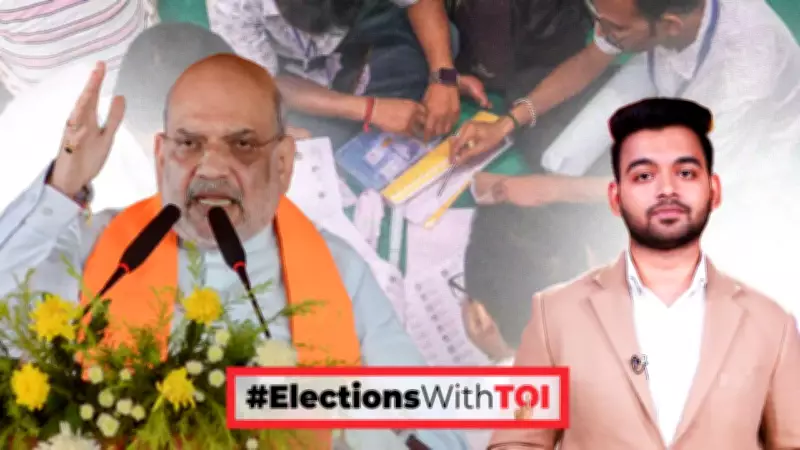
After the first phase of the 2026 West Bengal Assembly elections, Union Home Minister Amit Shah claimed that the BJP could win over 110 seats out of 152 in the early phases, signalling strong confidence of forming the next government in the state. The party has based its optimism on several key factors, including record voter turnout of around 92%+, strong expected performance in regions like North Bengal and Junglemahal, reported return of migrant workers for voting, enhanced security arrangements with heavy CAPF deployment, and a campaign focused on anti-incumbency and governance issues. This report explains the five main reasons behind the BJP’s bullish post-Phase 1 assessment and how the party is interpreting early voting trends in West Bengal’s 2026 election.
Record Voter Turnout
The first phase witnessed an unprecedented voter turnout of over 92%, which the BJP interprets as a sign of public enthusiasm for change. The party believes that high turnout traditionally benefits the opposition, as it indicates voters coming out to oust the incumbent. In contrast, the ruling Trinamool Congress (TMC) has cited the high turnout as a validation of its governance, but the BJP argues that the surge is driven by anti-incumbency sentiments, especially in rural areas where the TMC's grassroots machinery is strong.
Strong Performance in North Bengal and Junglemahal
BJP strategists point to early trends showing significant gains in North Bengal districts like Darjeeling, Jalpaiguri, and Cooch Behar, as well as in the Junglemahal region (Purulia, Bankura, Jhargram). These areas have historically been BJP strongholds or have seen the party make inroads in previous elections. The party expects to win a majority of the 40-odd seats in these regions, providing a solid foundation for its overall tally. Amit Shah specifically highlighted the party's improved prospects in these areas during his post-Phase 1 press conference.

Return of Migrant Workers
Reports indicate that a large number of migrant workers from West Bengal, who had returned home during the COVID-19 pandemic and subsequent economic disruptions, have stayed back and are voting in large numbers. The BJP claims these workers are disillusioned with the TMC's failure to provide adequate employment opportunities and are backing the BJP's promise of development and job creation. The party's campaign has specifically targeted this demographic with messages about economic revival and anti-corruption.
Enhanced Security Arrangements
The deployment of over 1,000 companies of Central Armed Police Forces (CAPF) in the first phase ensured what the BJP terms as a 'fear-free' voting environment. The party has consistently alleged that the TMC uses muscle power and intimidation to influence voters, and the heavy security presence has neutralised this advantage. Amit Shah praised the Election Commission for ensuring a level playing field, which he said allowed voters to exercise their franchise without fear. The BJP believes this has helped it win over voters who were previously reluctant to support the party due to fear of reprisals.
Anti-Incumbency and Governance Campaign
The BJP's campaign in West Bengal has heavily focused on anti-incumbency against the TMC's 15-year rule, highlighting issues such as corruption, the 'Sandeshtali' (Bhaipo) tax, law and order problems, and alleged appeasement politics. The party has also capitalised on the RG Kar rape-murder case, with Prime Minister Modi holding a rally alongside the victim's mother. This narrative appears to have resonated with voters, especially women and the middle class, who are seeking change. The BJP's promise of a 'double-engine' government with the Centre and state working in tandem has also been a key message.
While the TMC has dismissed the BJP's claims as premature and baseless, the saffron party's confidence after Phase 1 is evident. With four more phases to go, the BJP is hoping to maintain its momentum and achieve its target of winning over 110 seats in the early phases, setting the stage for a close contest in the remaining phases. The final outcome will depend on how the voting trends evolve and whether the BJP can sustain its aggressive campaign strategy.






