

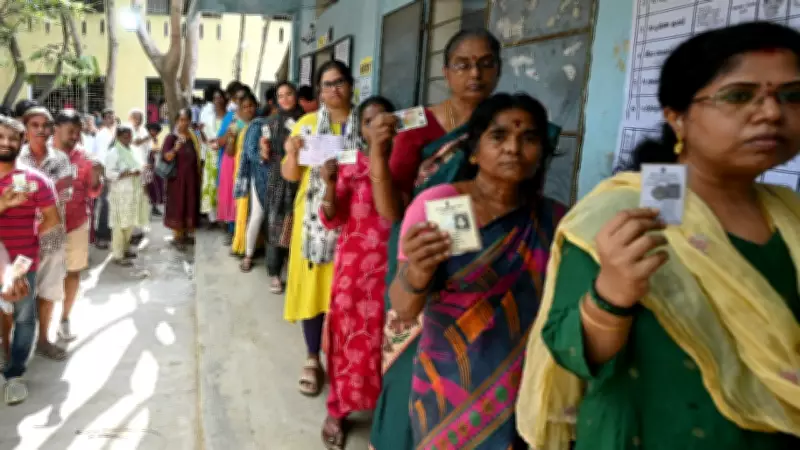
CHENNAI: Women outvoted men by more than 17 lakh in Thursday's polling to elect members for the state's 17th Assembly. It represented a 2.19% higher turnout than that of their male counterparts, continuing the trend of women leading democratic participation since the 2011 general elections.
On Thursday, a total of 4.85 crore voters exercised their franchise in 234 constituencies. Of this, men accounted for 2.34 crore, representing 83.57% of the 2.8 crore registered male voters. As many as 2.51 crore women voters — 85.76% of the 2.93 crore registered — cast their ballots to elect representatives to the TN assembly.
EC data shows that rural women participated in greater numbers than men. For instance, rural constituencies in the Trichy district such as Thuraiyur, Manapparai, Lalgudi and Musiri saw women voters outpace men by nearly 2% (compared with the 84.5% male polling average). Increased awareness, welfare schemes targeting women and more women candidates are attributed as reasons for the rise in female voters choosing to vote.

Tirupur district, which recorded the highest overall polling, followed a similar pattern. In the district, all eight constituencies witnessed high women turnout, boosting the district's overall percentage to 88.52%. Tiruvarur in the central region also exhibited a similar trend, while Salem district, which registered an overall voting percentage of 90.75, too showed the same pattern. However, constituencies such as Veerapandi, Mettur, Omalur and Yercaud witnessed a higher number of male voters.
In Ramanathapuram district, as many as 4,69,852 women voted compared 3,97,964 men, recording a margin of little more than 70,000 votes than their male counterparts. Several other districts showed a similar polling trend.
Chief election commissioner Gyanesh Kumar had commended the high level of women participation and their record of outvoting their male counterparts during his earlier visit to review election preparedness.
According to the special summary revision published on Jan 6, the state initially had 6,36,12,950 electors. The SIR exercise weeded out approximately 63 lakh “ghost” or deceased voters, bringing the final roll to 5.73 crore: 2,80,30,658 men, 2,93,04,905 women and 7,728 third-gender voters.
The trend of more women voting than men, which began in the 2011 assembly elections, continued through all subsequent general and Lok Sabha polls. However, the trend was the opposite in general elections from 1971 to 2009. During this period, which spanned 20 general elections, men consistently outvoted women, with the margin of difference ranging from 2% to 5%.






