

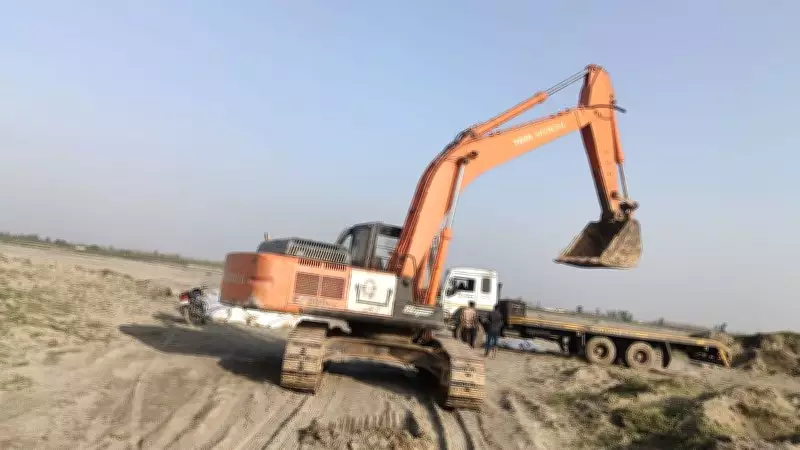
Yamuna Border Demarcation Project Faces Delays as Deadline Lapses
The ambitious initiative to install boundary pillars along the Haryana-Uttar Pradesh border in the Yamuna region has encountered significant delays, with authorities failing to meet the February 28 deadline. This project, aimed at permanently resolving decades-old land disputes between farmers of the two states, is now under scrutiny for its slow progress.
Pillar Installation Status in Karnal District
In Karnal district alone, a total of 604 boundary pillars are slated for installation, with Haryana and Uttar Pradesh each responsible for 302 pillars. Haryana is tasked with erecting the odd-numbered pillars, while Uttar Pradesh handles the even-numbered ones. So far, Haryana has completed only 120 of its 302 pillars in Karnal, leaving a substantial backlog of 182 pillars yet to be installed.
Wider Scope Across Multiple Districts
The demarcation exercise extends beyond Karnal, encompassing several other districts along the border. According to official reports, the project includes 202 pillars in Panipat, 173 in Sonepat, 159 in Faridabad, and 385 in Palwal. This comprehensive effort is designed to provide a clear and permanent boundary line to prevent future conflicts.

Official Response and Revised Timeline
Despite the delays, officials remain optimistic about completing the project. Sandeep Singh, Executive Engineer (XEN) of the Public Works Department (B&R), stated, "We are working on erecting pillars at the points identified by the Survey of India and will complete the remaining work before the monsoon." This revised timeline aims to accelerate progress and ensure the pillars are in place to withstand seasonal challenges.
Deputy Commissioner's Directive for Faster Execution
Taking note of the sluggish pace, Deputy Commissioner Uttam Singh has issued a stern directive to Public Works Department officials to expedite the work or face potential action. He emphasized, "It is an ambitious project and should have been completed before the deadline. Officials have been asked to accelerate the pace while maintaining quality." This move underscores the urgency of resolving the boundary issues to mitigate tensions among local farmers.
Historical Context of Border Disputes
The disputes along the Haryana-UP border trace back to the 1950s, often leading to tensions and clashes among farmers. A key factor has been the shifting course of the Yamuna River, which frequently alters land positions and creates confusion over ownership. To address this, the Dixit Committee was established in the 1970s, resulting in the Dixit Award of 1979 that formally demarcated the boundary based on the river's course at that time under the Haryana-UP Alteration of Boundaries Act, 1979.
Challenges and Renewed Efforts
Over the years, several pillars were washed away in floods or allegedly removed, reigniting disputes. In January 2020, both states agreed to jointly reconstruct the missing pillars with technical support from the Survey of India. This current project is a continuation of those efforts, aiming to establish a durable solution to prevent recurring conflicts.
The delay in the Yamuna pillar project highlights the complexities of inter-state boundary management and the need for coordinated action. With the Deputy Commissioner's intervention, there is renewed hope for timely completion to bring long-awaited clarity and peace to the region.






