Yogi Adityanath Invokes Mirza Ghalib's Poetry in Fiery UP Assembly Exchange
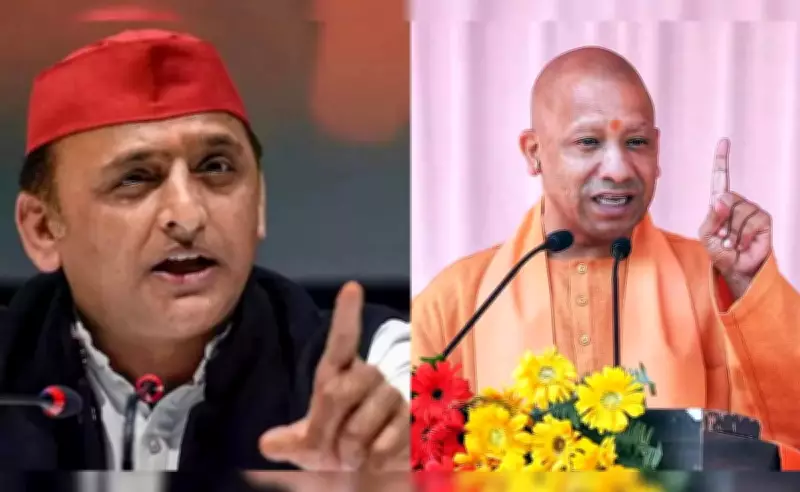
In a dramatic session of the Uttar Pradesh Legislative Assembly, Chief Minister Yogi Adityanath employed the timeless verses of renowned poet Mirza Ghalib to launch a pointed critique against the opposition Samajwadi Party. The poetic reference, 'Umar Bhar Yahi Bhool' (a lifelong mistake), became the centerpiece of a heated political debate, highlighting the deep ideological divides within the state's political landscape.
Poetic Critique of Governance Record
Adityanath specifically invoked Ghalib's famous couplet about wiping a mirror while dust remains on the face, using this metaphor to accuse the Samajwadi Party of ignoring its own governance shortcomings while criticizing others. "The opposition conveniently forgets its own record while pointing fingers at our administration," Adityanath stated during the debate on the Governor's address.
The Chief Minister elaborated that Uttar Pradesh's historical reputation for lawlessness and fear didn't emerge spontaneously but was rather "a direct consequence of the political culture cultivated by previous regimes." He emphasized that transforming this perception required systematic efforts over time, which his government has been implementing through various development and security initiatives.
Defending Development Achievements
In his comprehensive defense of the current administration's performance, Adityanath presented multiple data points to substantiate his claims:
- Citing authoritative figures from NITI Aayog, he revealed that more than six crore residents of Uttar Pradesh have risen above multidimensional poverty during the past eight years
- He highlighted consistent improvements in security parameters across the state
- The Chief Minister detailed welfare program expansions that have reached previously underserved populations
"Our commitment to development remains unwavering, and the benefits of our welfare schemes will continue to reach every eligible citizen without any form of discrimination," Adityanath assured the assembly members, specifically mentioning the uninterrupted distribution of ration and other essential benefits.
Political Theater with Poetic Undertones
The assembly exchange represented more than just routine political sparring—it demonstrated how cultural references can be weaponized in legislative debates. By invoking Ghalib, a literary figure respected across political spectrums, Adityanath attempted to elevate his criticism beyond mere partisan rhetoric.
This incident underscores the increasingly sophisticated nature of political discourse in India's most populous state, where historical references, statistical data, and cultural symbols are becoming integral components of legislative arguments. The session concluded with the poetic metaphor lingering in the political atmosphere, symbolizing the ongoing struggle between competing narratives about Uttar Pradesh's past, present, and future trajectory.
As Uttar Pradesh continues to play a pivotal role in national politics, such exchanges in its legislative assembly offer revealing glimpses into the strategies and messaging that will likely shape political campaigns and governance debates in the coming years.