At 70, Visually Impaired Runner Amarjeet Singh Chawla Completes 103rd Half Marathon in Mumbai
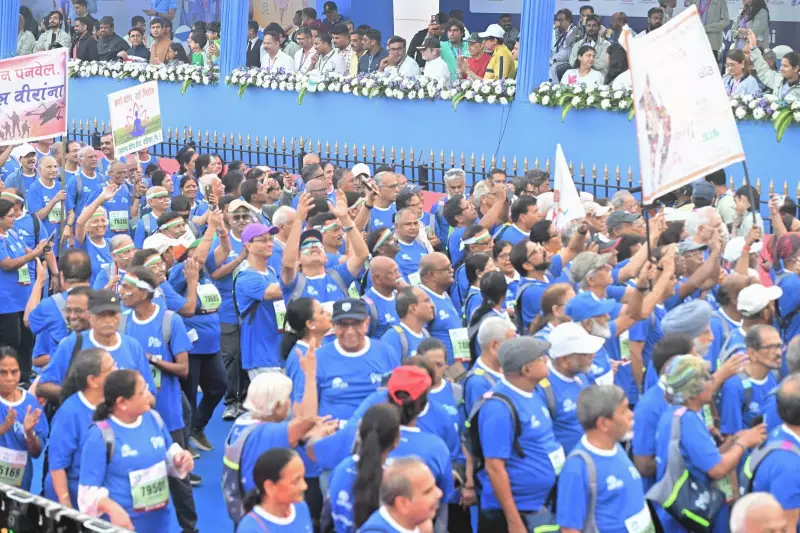
On a bright Sunday morning in Mumbai, 70-year-old Amarjeet Singh Chawla crossed the finish line at the Tata Mumbai Marathon. This marked his 103rd half marathon, a remarkable milestone in a running career that began late in life. Chawla, who is visually impaired, now boasts an impressive tally of 269 marathons. This total includes six ultramarathons, 163 half marathons, and, just last week, his 100th 10-kilometer run.
A Late Start and a Demanding Schedule
Chawla first laced up his running shoes at the age of 49. At that time, he balanced his training with work as a lottery shop owner and insurance agent. What began as a casual interest quickly evolved into a rigorous commitment. Today, he runs between 20 and 25 marathons every year. His running journey has taken him across 13 states and 33 cities, showcasing his dedication and love for the sport.
"The run was good," Chawla said after finishing the Mumbai event. "But it was quite crowded, which can become a problem for visually impaired people like me."

Navigating Crowds and Modern Challenges
Chawla highlighted a significant issue faced by runners in today's races. Crowding poses risks that many participants might not consider. "Normally, people say 'excuse me' if you are too close," he explained. "But nowadays, everyone has earbuds in. They don't hear me when I ask for space."
He recalled a frightening incident during the marathon. "A couple overtook me at an unnatural pace. I couldn't see them, and they didn't hear me coming. We banged into each other. We could have fallen and been gravely injured, but thankfully that was avoided."
The Special Appeal of Mumbai's Course
Despite these challenges, Chawla holds a deep affection for the Mumbai marathon route, particularly one demanding section. "Peddar Road is the best part of the run," he said with enthusiasm. "The local people come down to cheer, and many of them recognise me from all these years. That makes the whole experience special."
Reflecting on Two Decades of Change
Chawla started running in 2004, and over the past twenty years, he has witnessed significant transformations in both the sport and the city. "In many ways, things have become much better. Potholes and bad roads are now a rarity," he observed. However, he noted exceptions. "But places like BKC are still a huge problem. There are too many potholes and those small yellow reflectors on the road. You keep banging into them."
The running landscape itself has expanded dramatically. "Twenty years ago, there were four or five marathons in a year. Now there are probably that many every week," Chawla remarked. Yet, environmental factors present new hurdles. "Lung capacity has been affected because of pollution. People can't run as fast or as much as they used to."
Favorite Cities and Lasting Motivation
Among the numerous cities where Chawla has competed, he has clear preferences. "Jaipur is the best, because of its butter-like roads," he stated. "Second is Bathinda, for the roads but also because the people are very supportive and beautiful. And then Vasco in Goa, which is also one of the best."
For Amarjeet Singh Chawla, the numbers continue to accumulate. But beyond the statistics, it is the course, the people, and his own unwavering persistence that keep him moving forward. His story serves as an inspiration, proving that age and disability are no barriers to achieving extraordinary feats in sports.