AFI Implements Rigorous Selection Criteria for 2026 Commonwealth Games
The Athletics Federation of India (AFI) has announced exceptionally stringent qualification rules for the upcoming 2026 Commonwealth Games in Glasgow, establishing a clear mandate that only the nation's elite athletes will secure spots on the Indian team. With the athletics program significantly scaled down and each participating country permitted to send just thirty-two competitors, the AFI has deliberately raised the performance benchmarks to unprecedented levels.
Record-Breaking Requirements Across Multiple Events
In a decisive move to ensure peak performance, the federation has mandated that athletes competing in seventeen different track and field events must either equal or surpass existing Indian national records to earn selection. This policy creates substantial challenges for numerous prominent athletes who must now push beyond their personal bests.
For men's sprint and middle-distance events, the qualifying times have been set at levels that actually exceed current national records. This means that even established record holders face the daunting task of improving their performances. Notable athletes such as Animesh Kujur in sprint events and Tejas Shirse in hurdles find themselves needing to achieve times faster than their own national benchmarks to qualify.

Women Athletes Confront Historic Barriers
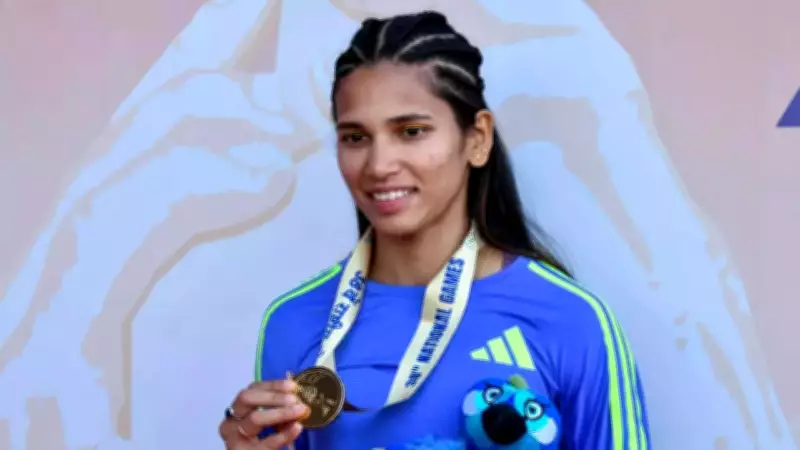
On the women's side, the challenges are equally formidable. Asian Games medalist Jyothi Yarraji, returning from injury, must now better her own national record in the 100-meter hurdles to secure her place. Meanwhile, Vithya Ramraj faces the extraordinary challenge of surpassing the legendary PT Usha's long-standing 400-meter hurdles record—a mark she had previously equaled—to meet the new qualification standard.
Key Qualification Standards for Selected Events
The AFI has released specific performance benchmarks that athletes must achieve:
- Men's 100m: 10.16 seconds
- Women's 100m: 11.17 seconds
- Men's 400m: 44.96 seconds
- Women's 400m: 51.36 seconds
- Men's 1500m: 3 minutes 30.82 seconds
- Women's 1500m: 4 minutes 5.09 seconds
- Men's 5000m: 13 minutes 19.64 seconds
- Women's 5000m: 14 minutes 56.60 seconds
- Men's 10,000m: 27 minutes 39.03 seconds
- Women's 10,000m: 31 minutes 14.14 seconds
Selective Flexibility in Field Events and Selection Process
While track events face extremely rigorous standards, some field events offer slightly more attainable targets. In men's javelin, for instance, the qualifying mark of 82.61 meters has already been surpassed by Olympic champion Neeraj Chopra and several other Indian throwers, providing some breathing room in this discipline.
The AFI has designated the Federation Cup in Ranchi, scheduled from May 22 to 25, as the final selection trials. Notably, even athletes who have already met the qualification standards must participate in these trials to demonstrate competitive readiness. However, the selection committee retains discretionary power to make exceptions in special circumstances, particularly for athletes considered strong medal contenders.
Context and Historical Perspective
Unlike the Olympic Games where qualification standards are set globally, each participating nation establishes its own criteria for the Commonwealth Games. India's decision to implement such demanding standards reflects a strategic approach to improving upon the country's eight athletics medals achieved during the 2022 Commonwealth Games. The 2026 event is scheduled to take place from July 23 to August 2 in Glasgow, Scotland.
This rigorous qualification process represents a significant shift in India's athletic selection philosophy, prioritizing proven excellence over broader participation. By setting standards that require athletes to challenge national records, the AFI aims to ensure that only those capable of competing at the highest international level represent the country, potentially leading to improved medal prospects in Glasgow.