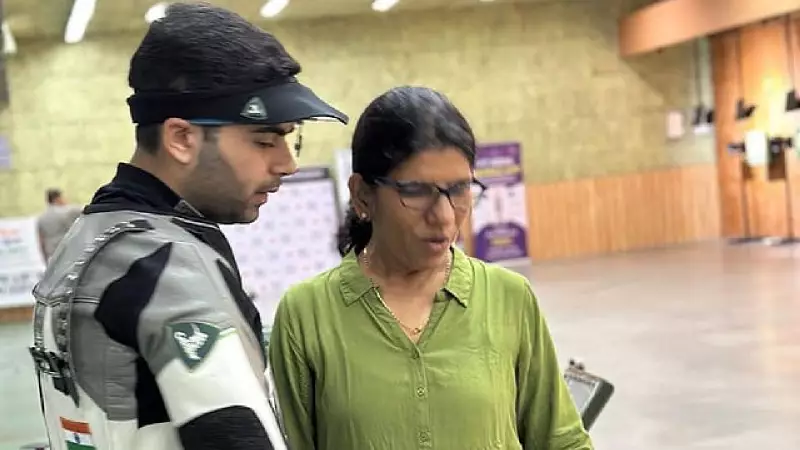
Toxic Air Cripples Indian Athletes: Shooting Coach Reveals Pollution's Devastating Impact on Training
India's national rifle coach Deepali Deshpande has issued a stark warning about how the country's toxic air conditions are severely impacting the health and training of athletes, particularly shooters. As India prepares its bid for the 2036 Olympics, the shrinking window for outdoor training in polluted regions like the National Capital Region poses a critical challenge to athletic development and performance.
The Precision Sport Under Siege
Deepali Deshpande emphasizes that extreme weather conditions don't merely test endurance—they fundamentally alter the nature of shooting sports. In a discipline where success hinges on precision, calmness, and fine motor control, environmental factors quietly emerge as the most formidable opponents. While 10-meter events enjoy the protection of indoor facilities, outdoor disciplines at 25 and 50 meters face direct confrontation with the elements.
"The impact is profoundly uneven," Deshpande notes, highlighting how athletes from milder climates often find it impossible to train in Delhi during peak winter months. The biting cold transforms everything—from human physiology to equipment behavior—creating unpredictable training conditions.

Seasonal Challenges Amplified by Pollution
The transition between seasons presents distinct obstacles:
- Winter's Dry Grip: Northern India's winters bring extreme dryness that strips away essential grip—on rifles, clothing, and between athletes and their equipment. This creates a general numbness where fingers lose sensitivity, making trigger control inconsistent in a sport fundamentally about feel.
- Summer's Oppressive Heat: When temperatures soar, sweat becomes a constant distraction, and even minor sensations like hair sticking to the face become unbearable intrusions that overwhelm the body's ability to maintain focus on motor skills.
Training Disruptions and Health Consequences
Training schedules have been forced into constant adaptation. Summer sessions are curtailed outdoors, with early morning training groups moving to partially covered, air-conditioned facilities. Winters bring different compromises—delayed starts to escape the cold, but with early daylight fading creating time pressures.
The most critical issue emerges from pollution itself. Fog, dust, and smog frequently delay or disrupt sessions entirely. In shooting, visibility is non-negotiable—if sighting becomes unclear, matches cannot proceed. Deshpande reveals that at 50-meter ranges, smog often prevents proper target sighting, forcing training delays.
"Then there's the eye irritation from pollution," she explains, "which causes blurring and directly impacts shot accuracy." This physiological effect represents a direct threat to performance in a sport where millimeters determine victory.
Broader Athletic Community Concerns
The problem extends beyond shooting. International badminton stars competing in Delhi recently complained to the International Olympic Committee about air pollution and health concerns. Coaches and athletes across multiple sports—including boxing, wrestling, athletics, para-athletics, cycling, and hockey—have reported similar challenges affecting health and training regimens.
Seeking Solutions for Olympic Ambitions
Currently, teams relocate to cities like Bhopal during winters where weather and air quality offer better conditions. However, Deshpande identifies the long-term solution as clear: indoor training facilities. She points to European models where harsh winters have been addressed through comprehensive indoor ranges, protecting the precise conditions essential for shooting sports.
As India makes its pitch for the 2036 Olympics, addressing these environmental challenges becomes crucial not just for athlete welfare, but for the nation's competitive aspirations on the global sporting stage.