Mayank Chakraborty Makes History as First Grandmaster from Assam and Northeast India
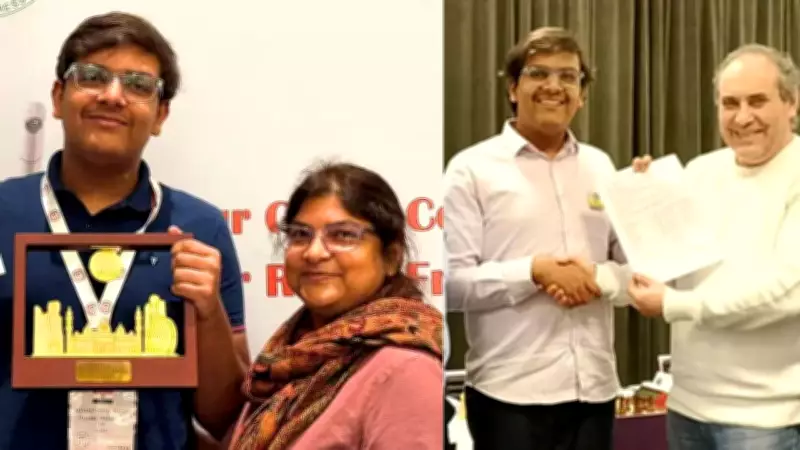
In a landmark achievement for Indian chess, 16-year-old Mayank Chakraborty has secured his final Grandmaster norm at the 8th GM Tournament in Sweden, becoming the first-ever Grandmaster from Assam and Northeast India. This milestone marks him as the 94th Grandmaster for the country, sparking inspiration and regional pride.
A Dream Awakens: From Sleep to Inspiration
On Saturday morning, Rajib Dhar, the general secretary of the All Assam Chess Association, was enjoying a well-deserved rest after his protégé's success. However, his sleep was interrupted by his young daughter, who, clutching a chessboard, expressed her own aspirations. "Papa, you teach me too, as you did with Mayank Dada. I will also become the first Woman Grandmaster from Assam," she said, highlighting the ripple effect of Mayank's achievement on the next generation.
The Spark in Pandu: Early Beginnings and Development
Mayank's journey began in Pandu, a small locality in Guwahati, when he was around seven years old. His mother, Dr. Monomita Chakraborty, a gynaecologist, reached out to Dhar via Messenger seeking guidance for her restless son. Dhar, who has trained Assam's star International Master Shahil Dey, recognized Mayank's potential early on. "In the beginning, his tactical skills were great, but he was a bit impatient and very restless, as kids that age are. But he later developed himself beautifully," Dhar recalled.

Mayank quickly rose through the ranks, becoming a three-time national champion across various age categories in the domestic circuit. His confidence at the board was notable, with Dhar stating, "He has that high confidence level; he’s never afraid of who is sitting across the board."
Financial Support and Strategic Investment
Sensing Mayank's innate potential to become a Grandmaster, Dhar approached the All India Chess Federation (AICF) president Nitin Narang for financial assistance last year. "We told him he has the talent to become a Grandmaster, so we need a sponsor. He immediately said, 'Okay, I will give Rs 2.5 lakh for his next tournaments,'" Dhar revealed. This investment proved crucial, enabling Mayank to compete in key tournaments that led to his success.
The Mother’s Gambit: Sacrifices and Dedication
Behind Mayank's success stands his mother, Monomita, whose dedication is nothing short of extraordinary. Dhar shared a poignant memory: "I remember going to give a ChessBase pendrive to her. She was in the middle of a surgery, and she came out for a second with her gloves still stained with blood just to make sure Mayank got his materials."
When Monomita was on night duty at the hospital, Mayank would often practice chess in the ward room. However, balancing work and her son's career became impossible, leading her to leave her government job in 2022 to travel full-time with Mayank. "There was no one else to take Mayank to tournaments," Dhar explained. "Her dedication is tremendous. She left everything because chess was the number one priority for them. This achievement is completely because of her."
Monomita elaborated on the family's challenges, noting that her husband, Keshab Chakraborty, initially accompanied Mayank to tournaments. After her father-in-law passed away, family difficulties arose, and Mayank faced health issues like sinusitis and severe allergies, making her presence essential during travels abroad. "The cold, especially when we travel abroad, often triggers his cold allergy. Sometimes he needs medical attention, and managing that in a foreign country can be quite difficult and expensive for us," she said.
Culmination of a Quest: Overcoming Obstacles
For Monomita, the victory in Sweden represents the culmination of a quest driven by regional pride. "Since 1988, when Viswanathan Anand became India’s first GM, Assam and the entire Northeast have been waiting," she said. Mayank's aim was clear: to become the first Grandmaster from Assam and the Northeast.

The path was fraught with challenges, including a two-year halt due to the COVID-19 pandemic and psychological hurdles in transitioning from International Master to Grandmaster. Between August 2023 and early 2026, Mayank's rating fluctuated, leading to a demotivating phase. "He was a bit skeptical because when you play too forcefully or aggressively, you lose rating points," Monomita admitted. "I told him, 'Once you touch 2500, the rest is just a matter of months.' Once he passed that, he performed brilliantly in Prague and then Sweden."
In Sweden, Mayank secured the norm with a round to spare, turning the final round into a victory lap for a journey that began in childhood.
Financial Realities and Calls for Support
Despite the achievement, the financial burden of elite chess remains a significant challenge. The Chakraborty family has exhausted their savings, liquidating Fixed Deposits to fund trips to Europe for competitive tournaments. "Chess is very expensive and time-consuming," Monomita acknowledged. "To reach 2600, he needs to play in elite tournaments against the top 20 players in the world. But that requires significant funds."
While infrastructure in the Northeast is improving through initiatives like the Khel Mahotsav, it still lacks the corporate backing seen in states like Tamil Nadu or Maharashtra. Monomita made a heartfelt appeal: "I have reached a level where I have to choose priorities. My son is doing something for Assam as a whole. I’ve liquidated what I could from my government job savings. Now, his future depends on government help and corporate support. My son has the capacity, and he believes in himself. If people believe in him, I will just follow him and let him continue his journey."
Inspiring a New Generation
Back in Guwahati, Mayank's success is already inspiring young chess enthusiasts. Children are waking up their parents with chessboards in hand, ready to follow the path cleared by the 94th Grandmaster. This achievement not only marks a personal triumph but also signals a new era for chess in Northeast India, fostering hope and ambition among aspiring players.