Ben Johnson's Olympic Saga: A Mother's Dream and Seoul's Scandal
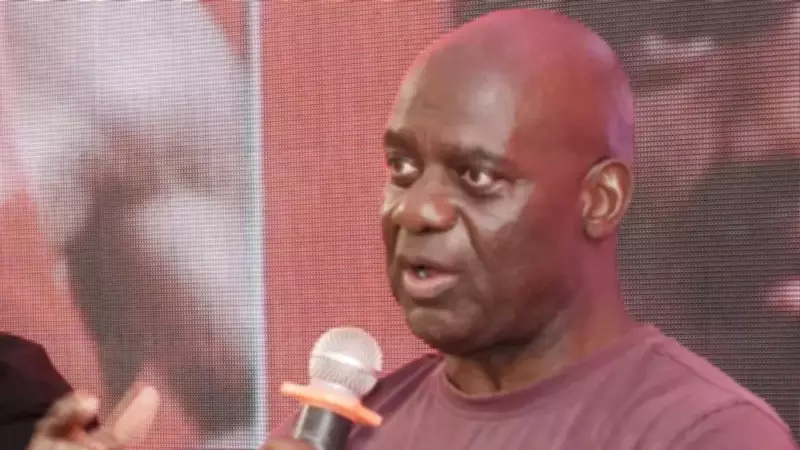
In the sweltering summer of 1988, as the world's attention fixated on sprinter Ben Johnson's preparations for the Seoul Olympics, his mother Gloria experienced a startling vision. "My mother saw the sky being split by a sword and a flash of light, with me standing at the centre," Johnson revealed during an event in Muvattupuzha, addressing school students and journalists. Gloria interpreted this vivid dream as a powerful omen, a premonition that would foreshadow the dramatic events to unfold on the global stage.
The Seoul Explosion and Immediate Suspicion
Johnson's performance in Seoul detonated Olympic records, but suspicion trailed him almost immediately. Whispers circulated from the preliminary heats regarding his water, his food, and his physical condition. Johnson himself concedes that something felt amiss even before the official test. He vividly recalls experiencing intense thirst and grabbing water that "could have been spiked." In a particularly memorable detail, he describes how a Carl Lewis aide handed him a beer before he provided his urine sample—an incident that remains firmly lodged in his memory.
Then came the catastrophic fall. Seoul, 1988 became a date permanently stamped beside his name, as inseparable as the final digits of a telephone number. His Olympic gold medal was stripped, and his athletic legacy was forever altered.

Unwavering Defence and Maternal Faith
Johnson's defence has never softened across the decades. "I ran for my mother," he asserts emphatically. "So, I will never dope." He maintains that the system required a scapegoat, and as the most visible athlete, he became that target. The situation mirrored his mother's dream—a sword fight with flashing light, exactly as Gloria had envisioned.
"Faith and my mother's love carried me through the wreckage," Johnson recalls with evident emotion. Gloria, a devout Christian, believed that survival held greater importance than reputation. "Not a day goes by when I don't think of my mother," Johnson laments, highlighting the enduring bond that sustained him through his most challenging periods.
Mental Races and Bolt Challenge
Decades after his competitive career ended, Johnson continues to run races in his mind. Sometimes, Usain Bolt appears in the adjacent lane during these mental competitions. When questioned whether he could defeat Bolt in his prime, Johnson fires back confidently: "I think I could."
This audacious claim exemplifies why Johnson, now 64, refuses to fade from athletics folklore. Long after his Olympic gold was revoked, the former Canadian sprinter continues to surface in unexpected contexts—including Bolt's frequently discussed "dream 100m lineup" and, most recently, at the Kozhikode Literature Festival.
Skepticism Toward Modern Athletics
Johnson acknowledges Bolt's greatness—the fluid stride, the charismatic showmanship. "But I was stronger," he quips with characteristic defiance. He observes modern athletics with considerable skepticism, noting that "they have the same timings I did 37 years ago" while emphasizing that "rules are different" in today's sporting landscape.
For Johnson, the sport's original sin wasn't individual cheating but institutional complicity. "Everyone doped during my time," he argues provocatively. He presents a shocking figure, claiming that "at least 60 per cent of today's elite athletes are using something illicit," according to the 1986 Commonwealth gold medallist.
Lifetime Ban and Philosophical Perspective
His lifetime ban prevents him from formal coaching or systematically passing on the knowledge he insists extends beyond mere technicalities—encompassing strength development, refined technique, and mental preparation. "Every failure teaches you something," he reflects philosophically.
The ultimate lesson he carries forward isn't about speed or medals. "I have no negativity...just happy to be alive," Johnson concludes, demonstrating a perspective forged through decades of controversy, reflection, and personal growth.