Braves and Yankees Explore Major Infield Swap as 2026 Season Nears
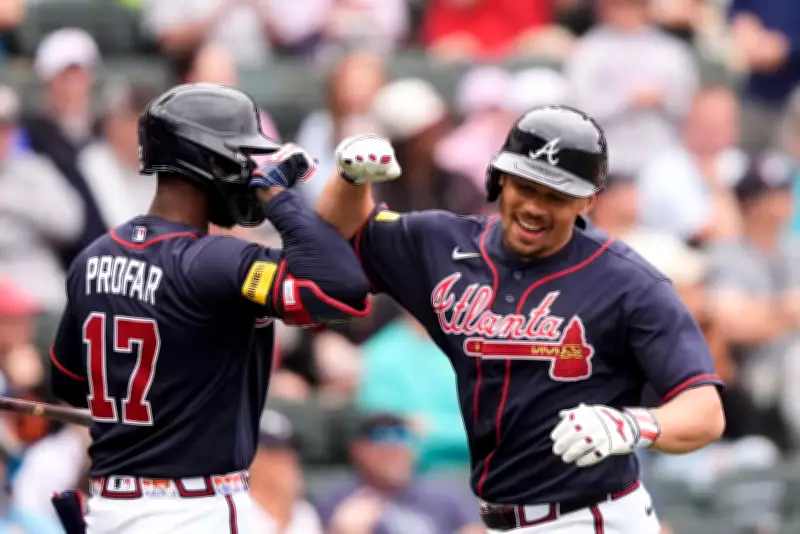
In a significant development within Major League Baseball's offseason landscape, trade discussions between the Atlanta Braves and New York Yankees have intensified throughout March 2026. The focal point of these negotiations centers on a potential player exchange that would send Yankees shortstop Anthony Volpe to Atlanta in return for Braves infielder Mauricio Dubon. This proposed transaction addresses critical roster needs for both franchises as they prepare for the upcoming campaign.
Atlanta's Shortstop Dilemma Fuels Trade Speculation
The Atlanta Braves find themselves at a crossroads regarding their shortstop position. Mauricio Dubon, who joined the organization late in the 2025 season, has demonstrated exceptional defensive capabilities and positional versatility. The 31-year-old veteran maintains strong defensive metrics, particularly at shortstop where he has posted impressive defensive runs saved numbers.
However, offensive production has emerged as a legitimate concern. Dubon's batting average of .241, combined with limited power output, has created uncertainty about his long-term fit in Atlanta's lineup. With the Braves positioned as legitimate contenders in the National League, front office executives recognize the need for upgraded production from the shortstop position to complement their core offensive weapons.

New York's Infield Evaluation Creates Opportunity
Meanwhile, the New York Yankees have conducted thorough assessments of their infield configuration following multiple seasons of inconsistent production from Anthony Volpe. The 25-year-old shortstop, while demonstrating defensive prowess and occasional power surges, has struggled to maintain offensive consistency at the major league level.
Volpe's offensive metrics reveal concerning trends, with his on-base plus slugging percentage remaining below .670 across three full seasons. Even after recovering from labrum surgery, the young infielder has failed to establish himself as a reliable offensive contributor. This performance evaluation has prompted Yankees management to explore alternative infield arrangements, opening the door for potential trade scenarios.
Proposed Trade Framework and Financial Considerations
The most straightforward version of this potential transaction involves a direct one-for-one exchange, with Dubon heading to New York and Volpe moving to Atlanta. However, more complex iterations could include additional components such as mid-level pitching prospects or financial considerations to balance the exchange.
Contractual elements significantly influence this trade discussion:
- Anthony Volpe remains under team control through the 2028 season with a relatively modest salary structure
- Mauricio Dubon enters his final arbitration year with a $6.1 million salary commitment
- Volpe's extended team control provides substantial long-term value for any acquiring organization
Statistical Comparison Highlights Complementary Strengths
A detailed examination of both players' statistical profiles reveals complementary skill sets that could benefit their potential new organizations:
Anthony Volpe (Age 25):
- Demonstrated power potential with 19 home runs during the 2025 season
- Strong defensive metrics at shortstop position
- Strikeout rate exceeding 25% remains a significant concern
- Projected for approximately 1.9 fWAR in the 2026 season
Mauricio Dubon (Age 31):
- Superior contact skills and defensive versatility across multiple positions
- Consistent defensive performance with excellent range
- Limited power production compared to contemporary middle infielders
- Proven ability to contribute in various defensive alignments
Strategic Benefits for Both Franchises
For the Atlanta Braves: Acquiring Anthony Volpe would address their immediate need for a younger, more dynamic shortstop with long-term control. Volpe's defensive capabilities and power potential would complement Atlanta's existing offensive core featuring Ronald Acuña Jr. and Ozzie Albies. The move represents an opportunity to upgrade offensive production from a position that has underperformed while maintaining defensive stability.

For the New York Yankees: Obtaining Mauricio Dubon would provide valuable defensive versatility across multiple infield positions. His ability to play shortstop, second base, and potentially third base would offer manager flexibility in constructing daily lineups. Dubon's reliable defense would support a crowded Yankees infield that includes Jazz Chisholm Jr., Paul Goldschmidt, and Ryan McMahon in various hypothetical configurations.
Potential Risks and Rewards
Advantages of the Proposed Transaction:
- Atlanta secures a younger shortstop with extended team control and offensive upside
- New York acquires defensive depth without sacrificing premium prospects
- The financial structure remains relatively straightforward for both organizations
- Both players address specific roster weaknesses for their potential new teams
Potential Concerns:
- Anthony Volpe's elevated strikeout rate and inconsistent offensive production
- New York surrenders a young player who could still develop into a more complete contributor
- Mauricio Dubon's limited power production might not adequately address Yankees' offensive needs
- Both franchises assume risk by exchanging established players for unproven fits
Broader Context and Future Implications
This trade speculation occurs within a broader context of both franchises evaluating their competitive windows. The Atlanta Braves, positioned as National League contenders, seek immediate upgrades to maximize their championship potential. The New York Yankees, meanwhile, appear focused on roster optimization and defensive stability as they navigate a competitive American League landscape.
While this potential transaction remains speculative, it reflects the strategic thinking of both front offices as they address roster construction challenges. The proposed Volpe-Dubon exchange represents a classic baseball trade scenario where both organizations attempt to convert surplus value into areas of need, with each player potentially benefiting from a change of environment and altered expectations.
As the 2026 MLB season approaches, industry observers will monitor whether these discussions evolve into concrete negotiations or remain part of the broader offseason speculation that characterizes professional baseball's transactional landscape.