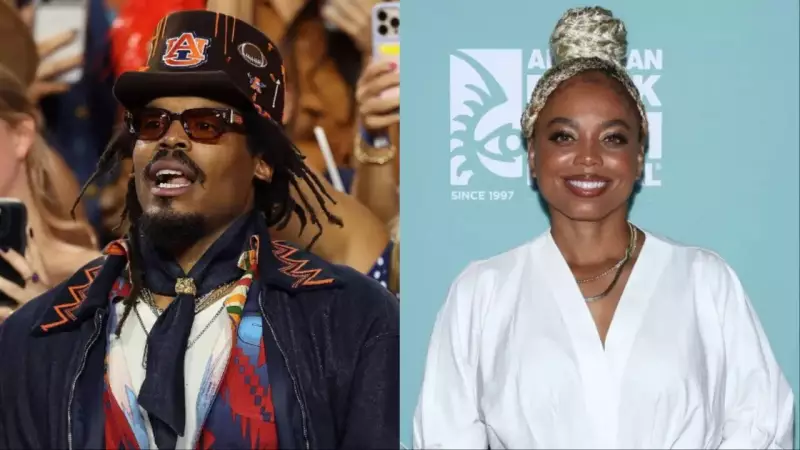
In a candid conversation on his Funky Friday podcast, former NFL MVP Cam Newton and sports journalist Jemele Hill tackled the glaring lack of representation and a significant racial pay gap for Black former quarterbacks in sports broadcasting. The discussion highlighted Newton's unique position and the financial chasm between his deal and those of his white counterparts.
The Sole Voice: Newton's Unique Position in Broadcasting
Jemele Hill pointed out a stark reality during the interview: Cam Newton is currently the only Black former quarterback providing analysis on a major television network. She contrasted his role with the prominent presence of white ex-quarterbacks like Tom Brady, Tony Romo, and Terry Bradshaw on network broadcasts. Newton, a regular on ESPN's First Take, acknowledged this fact with a smile, responding, "I'll take that."
Hill emphasized that the experience Newton brings to the table as a Black former MVP quarterback in the NFL is fundamentally different. She argued that major networks have not extended the same high-profile, high-value opportunities to Black quarterbacks, regardless of their charisma or credentials. "When you think about maybe the Black quarterbacks that will be out of the game, I don't see a Black quarterback getting those types of deals," Hill concluded.

A Stark Financial Divide: Multi-Million Dollar Disparities
The conversation took a pointed turn towards economics. Newton openly addressed the enormous disparity between his broadcasting contract and those signed by legends Tom Brady and Tony Romo.
- Tom Brady signed a monumental $375 million media deal with FOX.
- Tony Romo secured a $180 million contract with CBS.
- In contrast, Cam Newton's multi-year deal with ESPN is reportedly valued at about $2 million per year.
"Yeah, but…can we keep it funky?" Newton said. "I don't get no Brady deal. I don't get no Romo deal. That's just facts." However, he was quick to clarify that his acknowledgment of the gap was not born of bitterness. He expressed deep respect for the work ethic and technical expertise both Brady and Romo bring to their broadcasting roles.
Newton specifically praised Romo's ability to dissect the game from a quarterback's perspective on air, stating that he can appreciate why Romo commands such a high salary. "Am I bitter? Hell no!" Newton asserted.
Breaking Barriers for the Next Generation
Beyond acknowledging the present disparity, Newton framed his mission in broader terms. He shared his commitment to working tirelessly to break down barriers and ensure future generations of Black quarterbacks have more equitable pathways into sports media after their playing days end.
He emphasized the importance of authenticity, even in his appearance—noting he grew his hair after retiring from the NFL. Newton wants to empower others to pursue their goals despite systemic barriers. "I don't want people to look at me as being rebellious more than I'm empowering people to say, 'You can do this, too, bro,'" he explained.
His goal is to normalize the presence and unique perspective of Black analysts. "I would want the narrative to be, 'We need to go get somebody like Cam Newton,'" he said, referencing how the narrative around Black quarterbacks has evolved since he entered the league.
Jemele Hill encouraged him to embrace this approach fully. She noted that his status as an accomplished athlete affords him a degree of grace to challenge norms, and urged him not to let the industry suppress his unique voice. "Don't let them change you from doing that either," Hill advised. "So run with it. So that, like you said, the next person doesn't have to deal with being suppressed or silenced in some kind of way."
The discussion on Funky Friday goes beyond a simple interview; it serves as a pointed commentary on race, opportunity, and representation in the lucrative world of post-retirement sports broadcasting, with one of the game's most charismatic figures vowing to change the landscape for those who follow.