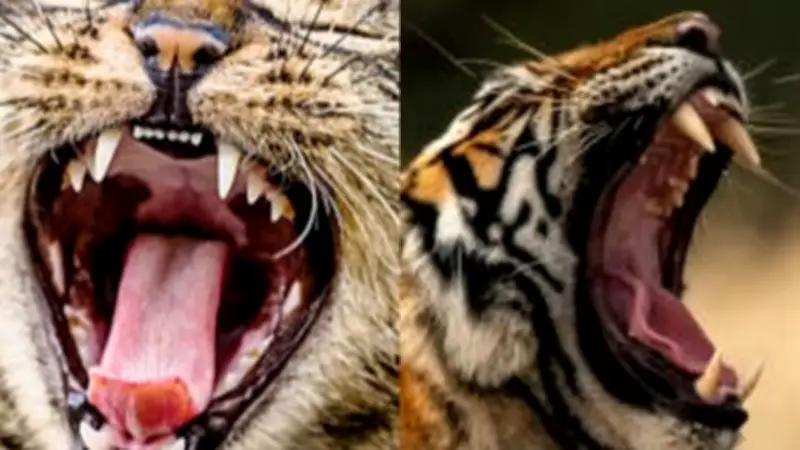
Cat Teeth vs Tiger Teeth: Inside Nature's Two Fierce Carnivore Designs
From domestic cats chewing their food to tigers ripping prey into pieces in the wild, teeth play a vital role in determining how these animals from the same biological family survive. Although both belong to the felid family, their evolution led to key differences in dentition due to variations in lifestyle and diet. This article explores how cat teeth differ from tiger teeth and how each predator evolved unique dental features to thrive in its environment.
The Felid Family Connection
Despite considerable differences in body size and features, domestic cats and tigers share the same biological family, Felidae. As obligate carnivores, both possess similar dental equipment, including canine teeth, incisors, and carnassials. However, a remarkable distinction exists in the size and power of their teeth, directly related to the type of prey they consume. While cats rely on agility and multiple bites, tigers depend on sheer strength and leverage.
Cat Teeth Structure
Domestic cats have 30 specialized teeth adapted for hunting small prey. Their small incisors are used for grooming and nibbling, while the sharp canines are designed to kill small animals quickly. The premolars and molars function as scissor-like carnassials that slice meat into swallowable pieces. Notably, cats lack teeth dedicated to crushing bones; instead, they break down prey through numerous small bites. This dental arrangement supports their hunting style, which involves rapid, repetitive attacks.

Tiger Teeth Structure
Tigers possess one of the largest dental systems among felids, with fewer but significantly larger teeth than domestic cats. Their canines can reach several inches in length, capable of piercing the thick hide and flesh of large ungulates. The carnassials are highly developed with a shear-type function, allowing efficient slicing of skin and muscle. Additionally, tigers have robust jaw muscles and a stronger bite force, enabling them to crush bones and access marrow. This dental power is essential for subduing and consuming prey as large as buffalo or deer.
Bite Force and Function Differences
A primary difference between cat and tiger dentition lies in bite force. A domestic cat's bite force is relatively weak, around 10-15 PSI, sufficient for small prey. In contrast, a tiger's bite force exceeds 1,000 PSI, allowing it to crush bone and deliver a fatal bite to large animals. This disparity reflects their hunting strategies: cats use agile, fast attacks, while tigers rely on stealth and a powerful killing blow. The dental structure of each species is finely tuned to its ecological niche.
Predatory Adaptations
The differences in teeth directly correlate with predatory skills. Domestic cats are ambush predators that strike quickly and use repeated bites to dispatch prey. Their dentition supports this with sharp, slender canines and efficient carnassials for cutting meat. Tigers, on the other hand, are solitary hunters that stalk and ambush large prey, delivering a single, devastating bite to the throat or neck. Their robust teeth and powerful jaws ensure a quick kill, minimizing risk of injury. These adaptations highlight the diversity within the felid family.
Evolutionary Summary
In conclusion, the teeth of domestic cats and tigers demonstrate natural selection in action. Cats evolved dentition optimized for hunting small, agile prey, emphasizing speed and precision. Tigers evolved large, strong canines and high bite force to take down large herbivores. Despite these differences, both species retain the fundamental felid dental formula: canines, incisors, and carnassials. Understanding these variations provides insight into how form follows function in the animal kingdom.