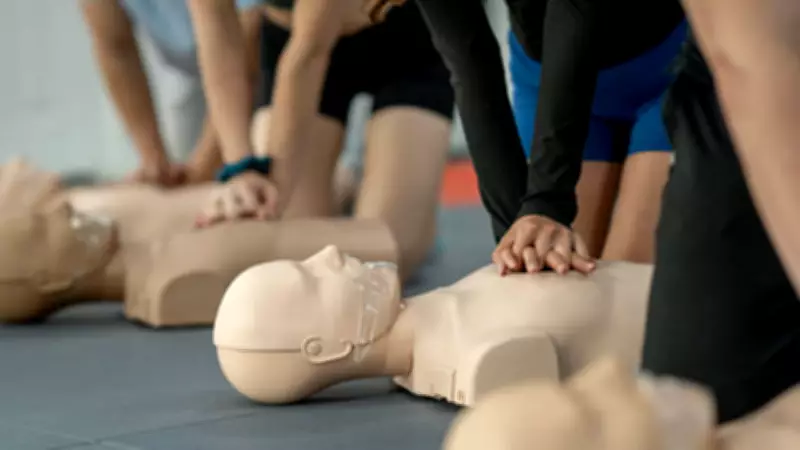
Karl Arps was doing what he had done countless times before: teaching a CPR class and demonstrating the signs of a heart attack to a group of students at Fox Valley Technical College in Appleton, Wisconsin. He was walking them through what to look for, what to do, and how to respond. Midway through his demonstration, Arps's hand curled outward, his face contorted, and he started snoring, according to CBC Canada. The room transformed from a classroom to an emergency in seconds. The students realized almost immediately that this was not part of the lesson plan.
The Instructor's Experience
"The last thing I remember is feeling dizzy and hearing a student say I didn't look right. The next thing I remember is waking up in an ambulance," the 72-year-old instructor later said. He had suffered a heart attack and gone into cardiac arrest.
Recognizing the Crisis
Logan Lehrer, a firefighter training to become an Emergency Medical Technician, was the first to notice something was genuinely wrong. He watched Arps's hand curl and his face contort, initially thinking it might be part of the demonstration or a test. Another instructor, Traci Blondeau, tried to snap Arps out of it. When she realized he was not acting, everyone moved. There was no hesitation, panic, or confusion—just action.

"We all had our tasks, and we all knew what to do," Lehrer said. "There was not a student out there that was fumbling." Six students in total got involved. Lehrer called 911 while the others started CPR. They took turns administering chest compressions and used a defibrillator under their instructor's guidance.
Understanding Cardiac Arrest
Cardiac arrest occurs when the heart suddenly stops beating effectively. It is different from a heart attack, though one can trigger the other. During a heart attack, blood flow to part of the heart is blocked, damaging heart muscle. In cardiac arrest, the heart malfunctions—it either stops beating or beats so irregularly that it cannot pump blood to the brain and other vital organs. Without immediate intervention, brain damage and death can occur within minutes. That is why CPR and defibrillators are so critical; they keep blood flowing and can help restart a normal heart rhythm.
According to the American Red Cross, fewer than 10 percent of people who go into cardiac arrest outside a hospital survive. However, when bystanders immediately start CPR and use a portable defibrillator, the survival rate triples. Those numbers exist because of people like Arps's students—individuals who were trained, paid attention, and acted without hesitation when it mattered.
Recovery and Gratitude
Arps underwent triple-bypass surgery in the hospital. Seven days later, he walked out. Now, as he recovers, Arps has returned to the school twice, both times to thank his students. He brought them life-saving pins from the college and sugary treats, trying to express gratitude for something that truly cannot be repaid. "Thank you does not seem enough," he told As It Happens host Nil Köksal. "They saved my life, period."