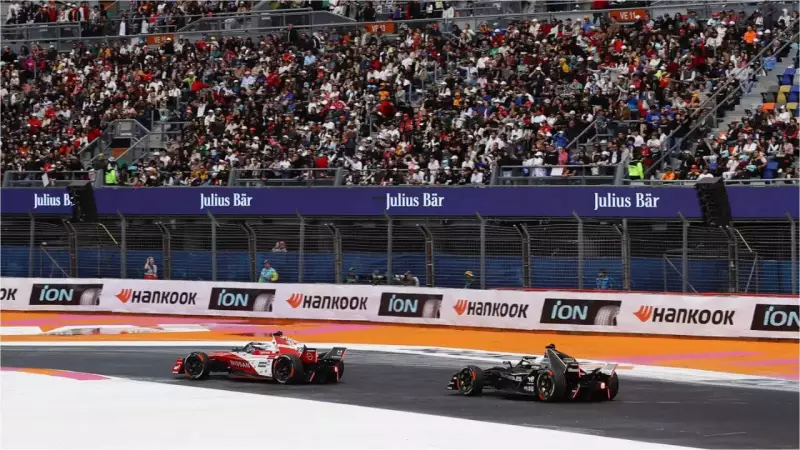
The holiday cheer has faded, but the high-voltage excitement of electric racing is back. The ABB FIA Formula E World Championship resumes with its second round this season, heading to the vibrant capital of Mexico. This event is not just another race on the calendar; it marks a monumental milestone as the 150th race in the series' history, a journey that began on the streets of Beijing back in 2014.
A Decade of Speed: Mexico City's Pivotal Role
This weekend's event will be the tenth running of the Mexico City E-Prix, a fixture since the championship's second season in 2016. The Autodromo Hermanos Rodriguez circuit has proven to be a harbinger of success. An impressive seven different drivers have stood on its podium, with the last three winners—Jake Dennis, Pascal Wehrlein, and Oliver Rowland—using the victory as a springboard to clinch the Formula E World Championship title in their winning seasons.
The Evolution of an Electric Pioneer
Over 12 years and 11 completed seasons, Formula E has transformed from a novel concept into a world-class sporting spectacle. The statistics speak volumes: 10 different champions have been crowned, with only Jean-Eric Vergne managing to secure consecutive titles. The grid has seen 24 different race winners, 38 podium finishers, and 89 drivers who have taken a starting lights.

The most visible evolution is in the machinery. The championship has leapfrogged from the days of mid-race car swaps to the cutting-edge GEN3 Evo car, which now dominates the track. This beast can rocket from 0 to 60 mph in a mind-bending 1.82 seconds. It boasts a more aggressive aerodynamic package and introduces all-wheel drive capability during critical moments like race starts and Attack Mode activations. With the GEN4 car already slated for a debut next season, the innovation curve shows no signs of flattening.
From Track to Road: Building a Global Legacy
Formula E's mission has always extended beyond the racetrack. The series has been a catalyst for race-to-road technology transfer, attracting a formidable roster of manufacturers committed to electric mobility. Giants like Stellantis, Porsche, Nissan, Mahindra, Jaguar, and Lola Cars are now integral to the championship's engineering fabric.
Its global footprint is undeniable. The series has brought thrilling street racing to iconic cities across the globe, including Paris, Rome, Berlin, London, Cape Town, New York, and Seoul. Perhaps one of its most significant achievements was acting as a catalyst to lift a 60-year ban on motorsport in Switzerland, following the tragic 1955 Le Mans disaster, bringing racing back to the country.
As the cars line up in Mexico City for this historic 150th race, Formula E stands as a testament to the rapid advancement and growing appeal of sustainable, high-performance electric motorsport. The journey from a bold idea in 2014 to a global championship celebrating a sesquicentury of races is a story of speed, sustainability, and spectacular racing.