From Suitcase to Starting Line: The Global Journey of Modern Racing Bikes
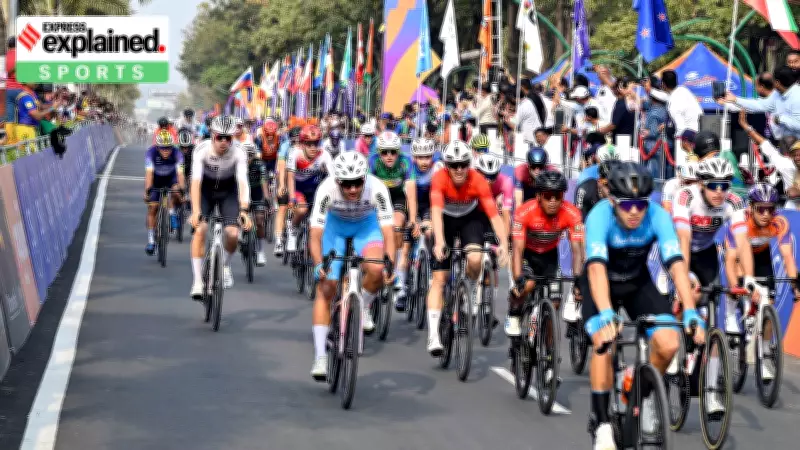
Sleek, modern racing cycles — like those showcased at the recent Pune Grand Tour — undergo a remarkable transformation during international travel. Rather than rolling down cargo ramps, these high-performance machines are carefully packed into cases resembling 55-71 inch LED TV boxes, ensuring they remain pristine until race day.
The Art of Dismantling and Reassembly
Modern racing cycles are engineered for easy disassembly and reassembly, with fully assembled bikes weighing a mere 7 to 8 kilograms — lighter than many hexagonal dumbbells. This design philosophy marks a significant departure from traditional bicycles.
Consider the experience of Malaysian cyclist Nur Aiman Rosli, whose Team Terengganu secured third place at the Pune Grand Tour. Rosli began his career on a 3,000 Malaysian ringgit bike (approximately Rs 70,000) but now rides a Polygon model costing around 40,000 ringgit (over Rs 9 lakh).

"The biggest change is that the bike now fits in a suitcase," Rosli marvels. The bicycle emerges from its compact case — reminiscent of Hermione Granger's magical beaded bag — and is meticulously reassembled into a machine capable of reaching speeds up to 80 km/hour.
The Intricate Unpacking Process
The unpacking procedure follows a precise sequence:
- The rear wheel is removed and placed into a circular sleeve
- The handlebar, customized to the cyclist's shoulder and limb measurements, is detached from the main frame
- The specialized saddle comes off separately
Racing cycle saddles prioritize aerodynamics, featuring long, narrow designs with minimal padding to reduce chafing and optimize power transfer. Most incorporate cutouts or slits along the vertical middle to alleviate pressure on nerves and arteries.
Additional components packed in the suitcase include:
- Customized jerseys and toolboxes
- Approximately 40 nuts and bolts with assorted spare parts
- A battery circuit running through the V frame
- Portable battery charger resembling a chunky mobile power bank
- Removable rotors and foam-covered hydraulic brakes
- Bicycle pedals and cycling shoes with three-slot cleats
- Personalized water bottles, helmets, sunglasses, and maintenance tools
The shift to electronic gear systems — replacing traditional cable mechanisms — enables modern cycles to feature up to 12 or 13 gears, with transmission components traveling securely in the case.
Logistical Considerations and Team Preparations
Teams arriving for the Pune Grand Tour adopted cautious packing strategies. "We thought India had a reputation for potholes, so we carried six to eight extra wheels to replace in case of punctures," explains Rosli. While the roads proved pleasantly smooth, these contingency measures increased equipment weight from the standard 10-kg limit to approximately 25 kg.
Rosli acknowledges that reassembling the cycle requires specialized expertise, highlighting the crucial role of team mechanics in the preparation process.
The Evolution of Racing Bicycle Technology
Indian cyclists vividly recall the technological transformation their equipment has undergone. Promising rider Vishwajeet Singh, representing three generations of cycling enthusiasts, remembers beginning with Viner bikes featuring thin steel pipes.
"Patli pipe waali (thin pipes)," he laughs, contrasting them with today's titanium, carbon, and aluminum constructions.
Fellow Indian cyclist Surya Thathu emphasizes how reduced weight enables suitcase transportation. He started with a Rs 40,000 steel Atlas and now rides a Rs 2.5 lakh GIANT carbon model. "It's as different as a Maruti Suzuki and a BMW. The weight that used to be 12-13 kg is now 7 kg, compact," he observes.
Modern bearings have transitioned from ceramic to carbon materials, enhancing stiffness and stability while eliminating wobble during high-speed racing.
Similarly, Naven John recalls beginning with a second-hand steel Raleigh from the 1960s — a bicycle that would be impractical to transport across continents in today's suitcase-based system.

India's third-place finisher, Dinesh, started with a BSA Mac gifted by his grandfather and now rides the exquisitely crafted Cervelo S5, whose packing and unpacking ritual he describes as "as meditative as cycling along the soothing lakes of Khadakwasla."
Pre-Race Preparations and Final Adjustments
Before competition, cycles undergo thorough washing, with gears meticulously checked and lubricated. Teams select wheels based on race segments — thicker models for sprints and sleek, narrow options for climbs — optimizing performance for each stage's demands.
This sophisticated transportation and preparation system demonstrates how modern racing bicycle logistics have evolved to support international competition, ensuring elite athletes can compete with equipment that arrives in race-ready condition regardless of global travel distances.