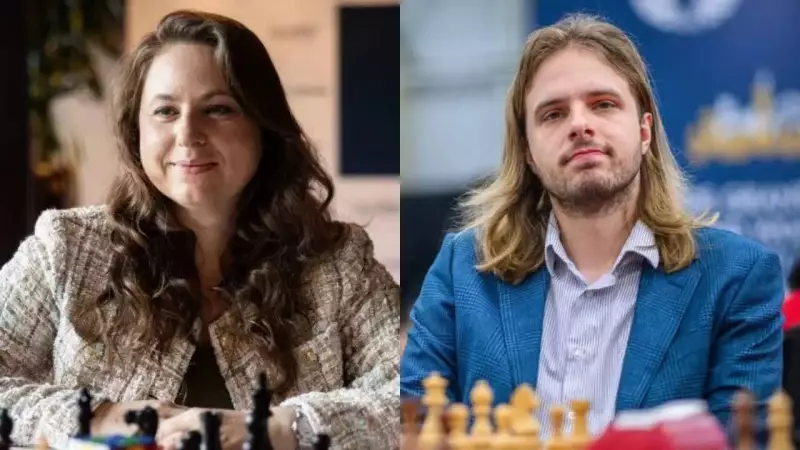
In the world of chess, Hungary has long been a paradox. A nation of just 10 million people, it has consistently produced grandmasters who challenged the world's best, despite lacking the vast resources of superpowers like the former Soviet Union. This tale of fierce, underdog excellence is now at a crossroads, as explained by its current standard-bearer, World No. 13 Grandmaster Richárd Rapport.
The Golden Age: A Small Country's Giant Footprint
Hungary's influence on global chess culture was firmly established by the mid-20th century. Budapest's cafes buzzed with strategic innovation, nurturing players renowned for their deep understanding and original ideas. The post-World War II decades marked a visible golden age.
Lajos Portisch, the legendary nine-time Hungarian champion, led the charge. A global icon nicknamed the "Hungarian Botvinnik," he was ranked world number two or three at his peak and contested the World Chess Championship Candidates cycle an impressive eight times between 1966 and 1990.

He was not alone. Players like Zoltán Ribli and Gyula Sax regularly featured in the world's top ten, forming a formidable Hungarian contingent that punched far above its weight.
The Polgár Phenomenon and the Silver Generation
The next chapter was revolutionary. Judit Polgár, refusing to compete in women-only events, took on the strongest male players in the world. Her achievements remain unmatched: she broke into the global top ten, became the first woman to cross the 2700 Elo rating barrier in July 2005, and defeated 11 world champions, including Garry Kasparov and Viswanathan Anand.
Alongside her, Peter Leko emerged, later challenging Vladimir Kramnik for the world title in 2004. This era of quiet excellence seemed to have a natural successor.
The peak of modern Hungarian chess, according to Rapport, was the 2014 Chess Olympiad in Tromsø, Norway. The Hungarian team, featuring Rapport, Leko, Almási, Balogh, and Polgár, clinched the silver medal. Remarkably, the team boasted four players rated above 2700—an elite benchmark—a rare feat for a small nation.
The Sudden Silence and a Missing Generation
What followed was not a slow decline but a startling evaporation. "From that team, I’m still okay above 2700," Rapport noted. "And Peter, let’s say, came back to play... But the other guys just quit. Just altogether. They didn’t even lose their rating. They just vanished."
An entire generation of elite players, now in their late 30s and 40s, stepped away from top-level chess. For a country built on continuity, the gap became starkly visible. Rapport, now 29, finds himself as a lone torchbearer from that celebrated batch.
The Root Cause: A Lack of Foundation
Rapport identifies a critical weakness in Hungary's chess success story: the absence of a strong institutional support system. "I don’t think we really had a support built around chess," he admitted. "Professional support... We never really had support for climbing the highest of the heights."
For decades, success was driven by individual sacrifice—parents investing time and money, players funding their own journeys. This patchwork approach worked in a different era. However, modern chess, amplified by technology and intense competition, demands more structured support, which Hungary lacks.
The consequence is a worrying vacuum. "We don’t really have the next generation," Rapport stated bluntly. "We have some players, sure, but it’s not quite the same flavour... Some talented kids are leaving chess for one reason or the other."
A Leader's Hope and Responsibility
Despite the challenges, Rapport is not without hope. He believes revival requires effort from the entire ecosystem—administrators, players, and grassroots organizers. "Anyone could do more," he emphasized.
As the nation's top-ranked player, he acknowledges his pivotal role. "As they say, the fish stinks from its head. If we are doing well, more people will get inspired," he remarked. Rapport sees his mission as reigniting Hungary's chess flame. "It’s a very difficult mission to accomplish," he concluded. "But I’m kind of hoping to help our chess, and maybe bring it back to its former glory."

The story of Hungarian chess is a powerful reminder that talent can defy scale, but without a nurturing foundation, even the brightest legacy risks fading into silence.